
Pruning
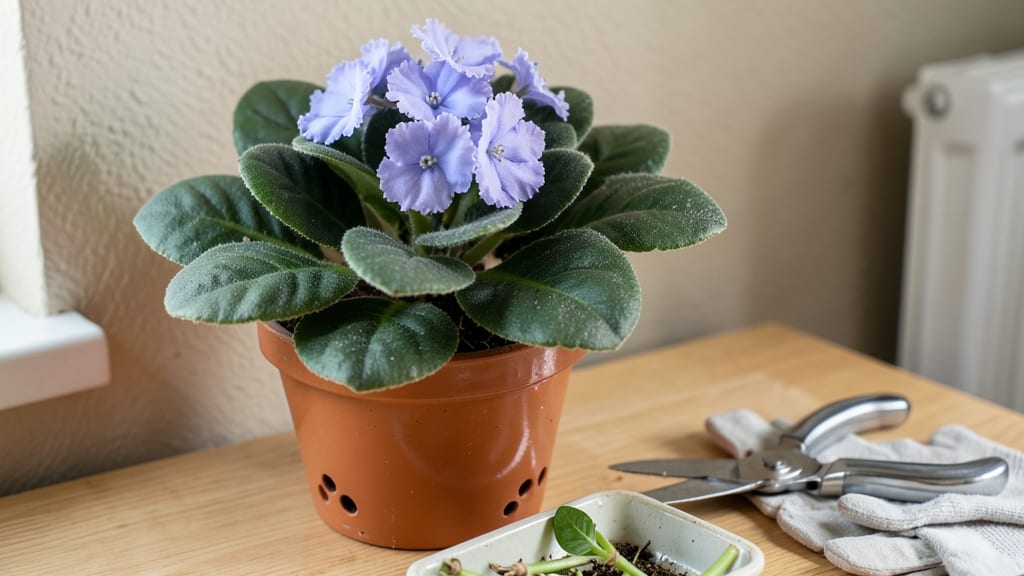
Pruning African violets keeps them blooming like clockwork—year-round—if you do it right. ✂️ I’ve learned the hard way that snipping too much or at the wrong time turns those velvety leaves into sad, leggy messes. The secret lies in timing, tools, and respecting their rosette shape.
You’ll need sharp scissors (dull blades crush stems), a clean cutting surface, and a steady hand. After blooms fade, trim spent stems at the base where they meet the leaves—never above a leaf node. African violets are forgiving, but they’ll reward precision with nonstop blooms and bushier growth.
Post-pruning, give them bright, indirect light and water from below to avoid leaf spots. Avoid overcrowding—if the center gets bare, gently tease apart the leaves to open up the plant. The goal is lush, compact rosettes that keep producing those iconic purple (or pink, or white) flowers.
Common mistakes? Cutting into the crown or using dirty tools. Stick to the rules, and your violets will outperform store-bought plants—every season.
📚 In This Guide
- What you need
- Instructions
- Tips and common mistakes
- Wrapping up and next steps
What you need
- ● African Violet plant – Healthy, mature plant with visible overgrowth or spent blooms (1-3 plants, depending on size).
- ● Sharp pruning shears – Bypass pruners (not anvil-type) with a 1/8" to 1/4" blade for clean cuts. Sterilize with rubbing alcohol before use!
- ● Clean, sharp scissors – For trimming smaller stems or deadheading (backup option if shears aren’t available).
- ● Rubbing alcohol (70% isopropyl) – 1 small bottle (2 oz) to disinfect tools and prevent disease.
- ○ Gloves (optional but recommended) – Lightweight gardening gloves to protect hands from sap or thorns.
- ● Small container or tray – 6"–8" wide to hold trimmed stems or debris (for easy cleanup).
- ○ Rooting hormone – Optional for propagating cuttings (gel or powder form).
- ● Small pots (2"–3" diameter) – If you plan to propagate trimmed stems (2-3 pots per plant).
- ● Well-draining potting mix – African Violet-specific mix (or cactus/succulent mix + perlite) for repotting cuttings.
- ● Spray bottle with water – To mist cuttings if propagating (light misting only!).
- ● Plant markers – If labeling propagated cuttings (e.g., "African Violet – Pruned 2024").
- ● Disposable tray liner – For easy cleanup of fallen debris.
Instructions for pruning African violets
Here's my foolproof method for keeping these delicate beauties blooming all year—no guesswork, just precise cuts.
✂️ Step 1: Identify and Remove Dead or Damaged Leaves
Start by examining each leaf from the base to the tip. Look for leaves that are yellowed, browned at the edges, or completely crispy—these are dead and need to go. I always use clean, sharp scissors or pruning shears to make a clean cut right at the base of the leaf stem. This prevents tearing and keeps the plant looking tidy.
Don't skip this step—dead leaves sap energy from your plant. You'll know you've done it right when the plant looks fresh and only vibrant green leaves remain. If you're unsure whether a leaf is salvageable, gently tug on it. If it comes away easily, it's time to remove it.
✂️ Step 2: Trim Leggy Stems for Better Shape and Growth
Leggy stems are the thin, stretched-out stems that grow between the leaves and flower spikes. These develop when your African violet isn't getting enough light. To fix this, use your pruners to cut the stem just above a set of leaves—about 1/4 inch above—to encourage bushier growth. This is where new branches will sprout, giving your plant a fuller, more compact shape.
Here's the thing—don't cut too much at once. Trim only the most leggy stems to avoid shocking the plant. After trimming, you'll notice the plant looks more balanced. Within a few weeks, you should see new growth emerging from the spots where you made your cuts.
✂️ Step 3: Deadhead Spent Blooms
After your African violet finishes flowering, the spent blooms turn brown and wilt. To encourage more blooms, snip off the entire flower stem right at the base where it meets the plant. This might seem harsh, but it redirects the plant's energy toward producing new flowers instead of seeding. Use clean pruners to avoid damaging the plant.
You'll know you're doing it right when you see fresh, healthy buds forming at the base of the plant. Don't worry if you accidentally leave a tiny bit of stem—it won't harm the plant, but removing as much as possible helps keep things tidy. This step is especially important if you want your African violet to bloom continuously.
✂️ Step 4: Prune Overcrowded Foliage
African violets can become overcrowded as they grow, with leaves pressing too closely together. This can lead to poor air circulation and increase the risk of disease. To fix this, gently separate the leaves and identify any stems that are growing too close to each other. Use your pruners to trim back the overcrowded stems just above a set of leaves, leaving room for the plant to breathe.
This step is all about balance. You don't want to remove too much foliage at once, as this can stress the plant. Instead, focus on creating space between the leaves. After pruning, your African violet should look more open and airy, which helps it stay healthier and more vibrant.
💧 Step 5: Post-Pruning Care
After you've finished pruning, give your African violet a light watering to help it recover. Water the soil until it's evenly moist but not soggy—African violets hate sitting in water. Avoid getting water on the leaves, as this can cause spotting or encourage fungal growth. Instead, water at the base of the plant.
Place your African violet in a spot with bright, indirect light for a few days after pruning. This helps it adjust without the stress of direct sunlight. You'll notice new growth within a few weeks, and your plant will start to look fuller and healthier. This is the moment that matters—your patience now will pay off with continuous blooms.
Tips & tricks for precision African violet pruning
These simple strategies will help you avoid common mistakes and keep your African violet thriving after every trim.
Tool Prep: Always sterilize your pruning shears with rubbing alcohol before and after use. I learned this the hard way when my plant developed brown spots from contaminated tools. A quick wipe-down prevents bacterial infections that can weaken your violet. For extra safety, use a different pair of shears just for your African violet if you have other plants.
Visual Pruning Guide: In Step 1, when removing dead leaves, look for the telltale "V" shape where the leaf meets the stem—this is your perfect cutting line. For leggy stems in Step 2, imagine drawing an invisible line 1/4 inch above a leaf node before making your cut. This ensures you're always cutting at the right angle for optimal regrowth.
Seasonal Timing: The best time to prune is in early spring when your African violet naturally begins its growth cycle. This gives the plant plenty of time to recover before summer heat stress. Avoid heavy pruning in fall or winter when the plant is already slowing down for dormancy.
Recovery Signs: After pruning, watch for these three signs your plant is recovering well: new leaf buds forming at the base, existing leaves perking up, and no yellowing within 5-7 days. If you see wilting or browning after pruning, you may have cut too aggressively—focus on smaller trims next time.
Pro Tips for Prune African Violet
- These simple strategies will help you avoid common mistakes and keep your African violet thriving after every trim.
- Tool Prep: Always sterilize your pruning shears with rubbing alcohol before and after use. I learned this the hard wa...
- Visual Pruning Guide: In Step 1, when removing dead leaves, look for the telltale "V" shape where the leaf meets the ...
Frequently asked questions
Got questions about pruning your African violets? You’re not alone! Here are some of the most common concerns—and straightforward answers to keep your plants thriving.
When is the best time to prune my African violet?
Prune your African violet after blooming, typically in late spring or early summer. This gives the plant time to recover before its next growth cycle. Avoid pruning during winter dormancy—your plant needs all its energy to survive the colder months.
How much should I trim off my African violet?
Remove only the spent blooms and up to 1/3 of the stem at a time. Never cut into the leaves or healthy growth—this can stress the plant. If you’re dealing with leggy stems, trim just above a leaf node to encourage bushier growth. Pro tip: Use clean, sharp scissors to avoid crushing stems.
What if my African violet looks sad after pruning?
Don’t panic! A little post-pruning shock is normal. Move your plant to a bright, indirect light spot and avoid watering for 2–3 days. If yellow leaves appear, it’s likely natural shedding—just trim those off too. With proper care, new growth should sprout within weeks!
Can I propagate my African violet from cuttings?
After pruning, save healthy stems (3–4 inches long) and dip the cut end in rooting hormone. Plant in moistened sphagnum moss or perlite, cover with a plastic bag, and keep in warm, humid conditions. Roots should form in 4–6 weeks—then pot them up!
What if my African violet never blooms after pruning?
Check these common culprits: low light, overwatering, or lack of fertilizer. African violets need 6+ hours of bright, indirect light daily and a balanced fertilizer (like 10-10-10) every 4–6 weeks. If conditions are right, blooms should return in 8–12 weeks!
Wrapping up and next steps
Pruning your African violet isn’t just about tidying up—it’s the secret to keeping those vibrant blooms coming year-round! 🌸 With the right tools, timing, and technique, you’ll encourage healthier growth, more flowers, and a bushier plant.
Remember, less is more—over-pruning can stress your violet, so always trim with confidence and care.
Ready to put your new skills to the test? Grab your shears and give your African violet the love it deserves—your plant (and your green thumb!) will thank you. Start pruning today and watch it thrive!