
Trees
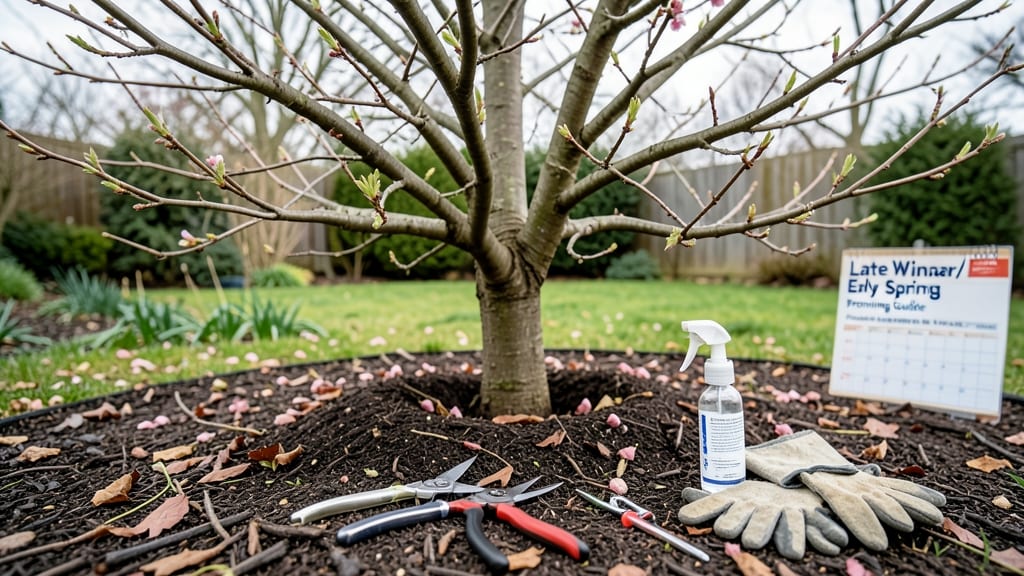
To prune cherry trees in Washington State, aim for late winter—between February and April—when the tree is still dormant but before buds swell. This timing is critical for disease prevention and maximizing next year’s fruit.
Picture this: you’ve just finished pruning, only to wake up to a surprise frost that turns your clean cuts into open wounds for bacteria.
That’s why Washington’s 6b-8b climate demands patience—pruning too early risks exposing the tree to winter dieback, while waiting too long stresses it before spring growth kicks in.
Sweet cherries like Rainier and tart varieties such as Montmorency each have their own pruning quirks. Sweet cherries need careful attention to branch angles to prevent fruit rot, while tart cherries can handle a bit more aggressive shaping.
I’ll break down the exact techniques for each, plus how to spot the signs of over-pruning before it’s too late.
By the end, you’ll know not just when to prune—but how to do it in a way that keeps your 🍒 cherry tree thriving for decades. Let’s get started.
Optimal late winter pruning timeline for Washington cherry trees
Washington State’s late winter offers the perfect window to prune cherry trees—sweet cherries like Rainier and tart varieties like Montmorency—before bud break. Pruning during dormancy minimizes stress and reduces disease risks like silver leaf fungus, which thrives in open wounds.
The key is acting after hard frosts but before swollen buds appear, typically between February and early April.
Timing varies slightly by USDA zone: In Zone 6b (e.g., Spokane), prune by mid-March; in Zone 8b (e.g., Vancouver), wait until late February. Always check for bud swell—if buds are plump, you’ve missed the window.
Pruning too early can expose trees to cold damage, while waiting too long stresses the tree as it prepares for growth.
Here’s your month-by-month pruning guide tailored to Washington’s climate, including ideal temperatures and critical tasks to prioritize:
For sweet cherries, focus on opening the canopy to improve sunlight penetration and fruit quality. Remove suckers (shoots from the base) and crossing branches that rub together. Tart cherries, like Montmorency, benefit from light heading cuts to encourage bushier growth and easier harvests.
Always cut back to a bud or lateral branch—never leave stubs.
Washington’s late winter rains can make pruning messy, but avoid working during freezing temps (below 20°F). If you’re unsure about bud stages, use a magnifying glass to inspect buds—if they’re green and swollen, it’s too late.
Post-prune, apply a 2-inch layer of mulch around the base to retain moisture and suppress weeds, which compete for nutrients.
One common mistake is over-pruning to “open up” the tree too aggressively. Limit removals to 20–25% of the canopy per year. For young trees (3–5 years old), prioritize structural shaping over fruit production.
Mature trees (>15 years) may need rejuvenation pruning, but this should be done gradually over 2–3 years to avoid shock.
After pruning, sterilize tools with rubbing alcohol to prevent spreading bacterial canker or silver leaf disease. Store pruned branches in a dry, shaded area for 2–3 weeks before composting to kill any latent pathogens.
In Zone 7b (e.g., Yakima), watch for late frosts—prune early enough to finish before mid-March to avoid frost damage to fresh cuts.
Pro tip: Mark your pruning calendar with local last frost dates (e.g., March 20 in Zone 7b).
If you miss late winter, your next window is summer pruning (June–July) for tart cherries, but this is less ideal for sweet varieties. Never prune during wet conditions—wait for dry, calm days to reduce fungal spores in the air.
Finally, celebrate your pruned tree with a post-prune care ritual: Apply a balanced fertilizer (10-10-10) in early spring to replenish nutrients lost during dormancy. Water deeply once a week until new growth appears
How to prune sweet vs. tart cherries: key differences for Washington growers
Washington’s sweet cherries (like Rainier and Lambert) and tart cherries (such as Montmorency and Balaton) require distinct pruning approaches. Sweet cherries thrive with open-center canopies for better sunlight penetration, while tart cherries benefit from central leader pruning to maintain a strong trunk.
The branch angles also differ—sweet cherries often have wider angles, while tart cherries develop narrower, more upright branches.
For sweet cherries, focus on removing dead or crossing branches first, then thin out excessive fruiting spurs to improve air circulation. Tart cherries, however, need summer pruning to control vigorous growth, often between June and August.
This timing helps prevent silver leaf disease, common in Washington’s humid summers.
Here’s a quick comparison to guide your pruning strategy:
Sweet Cherries (Rainier, Lambert)
- Late winter pruning (Feb-Apr)
- Open canopy for sunlight
- Remove crossing branches first
- Avoid heavy pruning in summer
- Susceptible to frost if pruned too late
- Thinning spurs can reduce yield if overdone
Tart Cherries (Montmorency, Balaton)
- Summer pruning (June-Aug)
- Central leader shape for strength
- Better disease resistance with air flow
- Requires more frequent pruning
- Branch angles can become too narrow
- Over-pruning reduces fruit production
After pruning, sanitize tools with 70% alcohol to prevent bacterial canker, a common issue in Washington’s wet climate. For sweet cherries, apply a dormant oil spray in late winter to control pests. Tart cherries, meanwhile, benefit from a light summer fertilizer to support new growth after pruning.
Pay close attention to branch collars when making cuts—always prune just outside the branch bark ridge to avoid damaging the tree. Use sharp, clean pruners to make smooth cuts at a 45-degree angle for larger branches. This reduces the risk of splitting wood and promotes faster healing.
Finally, mulch around the base of the tree with wood chips to retain moisture and regulate soil temperature. Water deeply after pruning to help the tree recover, especially during Washington’s dry summer months.
Monitor for signs of stress, like yellowing leaves or excessive sap, and adjust care as needed.
With the right technique, your cherry tree will reward you with healthier branches, better fruit production, and longer lifespan—no matter whether you’re growing sweet or tart varieties in Washington’s unique climate. 🍒✂️🌿