
Pruning
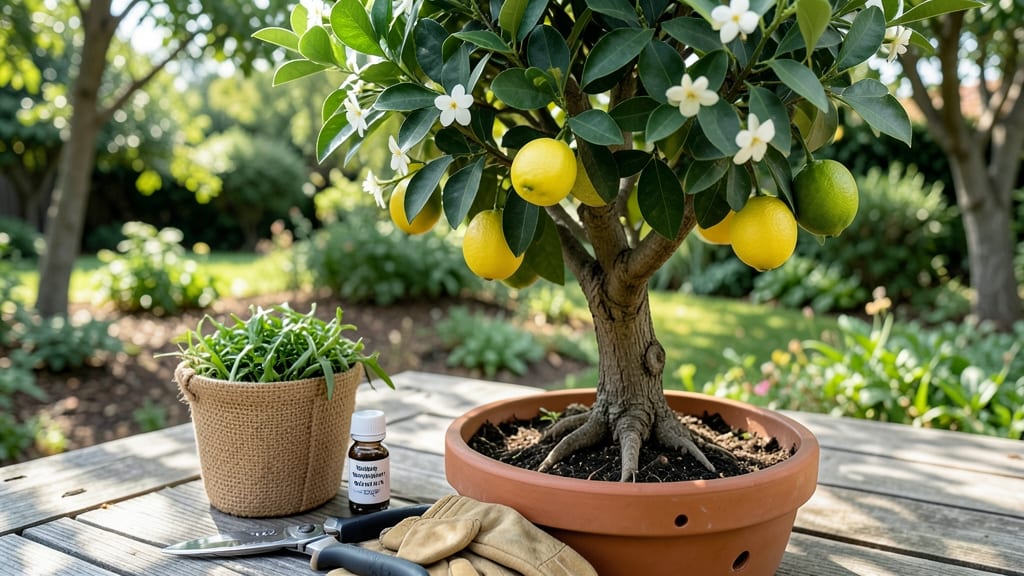
Pruning your container lemon tree isn't just about trimming—it's the secret to sweeter fruit and a bushier shape that fits your pot perfectly. 🌿 I've pruned mine every season for five years, and the difference in harvest size and plant health is night and day.
The key is timing: late winter before new growth starts, plus light pruning after harvest to keep the tree manageable.
You'll need just three tools: sharp bypass pruners for clean cuts, rubbing alcohol to sterilize them between cuts (trust me, it prevents disease), and a small hand saw for any stubborn branches thicker than a pencil.
Container trees need extra attention—roots circle and compete for space, so prune back any roots you see poking through drainage holes every other year. This keeps the tree balanced and encourages more fruit production.
Start by removing dead, crossing, or inward-growing branches first—they're the easy wins. Then shape the tree by cutting back the longest branches to an outward-facing bud, always at a 45-degree angle.
This encourages new growth that fills out the container. Aim to keep the tree's width about 2/3 of its height, so it stays sturdy and doesn't topple in pots.
After pruning, feed your tree with a balanced citrus fertilizer and give it a deep watering. The first flush of new growth after pruning is when the tree decides how much fruit it'll produce that year—so don't skip this step.
With consistent care, your container lemon tree will reward you with more fruit per square inch than any neighbor's in-ground tree.
📚 In This Guide
- What you need
- Instructions
- Tips and common mistakes
- Wrapping up and next steps
What you need
- ● Pruning shears: Bypass pruners (sharp, clean, and sterilized with rubbing alcohol or bleach) for cuts under ¼ inch in diameter. Quantity: 1 pair.
- ● Hand pruners: For smaller branches (½ inch or less). Quantity: 1 pair.
- ● Gloves: Heavy-duty gardening gloves (thick leather or nitrile-coated) to protect from thorns and sap. Size: Fit snugly.
- ● Disinfectant: 70% isopropyl alcohol or 10% bleach solution (1 part bleach to 9 parts water) to sterilize tools between cuts.
- ○ Sealing wax or pruning paint: Optional but helpful for sealing larger cuts (½ inch or wider) to prevent disease. Quantity: Small jar.
- ● Container or bucket: For collecting pruned branches (to compost or discard). Size: Large enough to hold 1–2 gallons of clippings.
- ● Loppers: For stubborn, thicker branches (if your lemon tree is mature). Quantity: 1 pair.
- ● Hose or spray bottle: To rinse tools and clean sap off hands.
- ● Sharpie or marker: For labeling branches if you’re grafting or propagating cuttings.
- ● Rooting hormone: If you plan to propagate cuttings from pruned branches.
- ● Safety glasses: Recommended if your tree has aggressive thorns or you’re working near your face.
- ● Choose a sunny day (morning or late afternoon) to minimize stress on the tree.
- ● Ensure your lemon tree is well-watered 1–2 days before pruning (but not soggy!).
- ● Have a clear plan: Sketch or mentally map out which branches to remove (dead, crossing, or overcrowded).
- ● Check local pruning guidelines for container-grown citrus—some regions recommend pruning after harvest (late winter/early spring).
Step-by-step guide to pruning your container-grown lemon tree
Here’s how I keep my potted lemon tree thriving all year—with fuller branches and sweeter fruit.
✂️ Step 1: Gather Your Tools and Schedule the Right Time
Pruning works best when you time it right. For container lemon trees, I prune twice a year: late winter (just before new growth starts) and summer (after harvest). Use sharp, clean pruning shears—dull blades tear stems, inviting disease. I also keep rubbing alcohol handy to wipe the shears between cuts to prevent spreading bacteria.
This is the moment that matters: never prune when the tree is stressed—like during extreme heat or drought. If you missed the winter window, wait until spring when buds begin swelling. You’ll know it’s time when you see new leaf buds forming along the branches.
✂️ Step 2: Remove Dead, Crossing, or Overlapping Branches
Start by inspecting the tree for dead or diseased branches—they’ll be brittle, brown, or missing leaves. Cut these back to the main trunk or a healthy outward-facing bud. Next, look for branches that cross or rub against each other. These compete for sunlight and can create wounds where pests hide. Remove the weaker of the two, cutting at a 45-degree angle just above an outward-facing bud.
I know it seems weird, but thinning out crowded branches actually helps the tree. A good rule: never leave more than 3-4 branches at any single point on the trunk. This prevents overcrowding and lets air and sunlight reach the center. Watch for water sprouts—those are the fast-growing, vertical shoots that steal energy from fruit production. Snip them off at the base.
✂️ Step 3: Shape for Bushier Growth and Better Fruit Production
Lemon trees grow best with an open, vase-like shape that lets light and air circulate. I focus on 3 main branches—one central leader and two strong side branches. Cut back any overly long branches by about one-third to encourage bushier growth. Always cut just above a leaf node (the bump where leaves attach) at a 45-degree angle to prevent water pooling.
Here’s the thing—you’re not just pruning for looks. Each cut should serve a purpose: removing suckers (shoots growing from the trunk), shortening leggy branches, or opening up the center for better airflow. You’ll see new growth within 4-6 weeks—that’s your signal everything is working. If a branch looks weak, trim it back further to stimulate stronger regrowth.
✂️ Step 4: Lightly Prune for Fruit Production After Harvest
After your lemon tree bears fruit, give it a light pruning in late summer. Remove any spent flower clusters (they’ll drain energy) and thin out excess fruit—leave about 6-8 lemons per branch to ensure they ripen fully. Cut back any overly vigorous shoots that grew during the season to redirect energy into next year’s harvest.
Don’t skip this (I learned the hard way). Overloaded branches can snap under the weight of fruit, and too many lemons mean smaller, less flavorful ones. After pruning, give the tree a balanced fertilizer to replenish nutrients. You’ll notice new flower buds forming by early spring—proof your efforts paid off.
💧 Step 5: Post-Pruning Care to Keep Your Tree Healthy
After pruning, water deeply to help the tree recover. Container-grown lemon trees dry out faster, so check the soil daily for the first week—it should stay evenly moist but not soggy. Avoid heavy watering right after pruning, as fresh cuts are vulnerable to rot. Instead, mist the leaves to maintain humidity while the tree adjusts.
Move the pot to a bright, indirect light spot for a few days to reduce stress. Once new growth appears (usually within 2-3 weeks), gradually reintroduce it to full sun. This is also a great time to repot if the roots are circling the container—choose a pot 2-4 inches larger and refresh the soil with well-draining potting mix.
Tips & tricks for pruning your container-grown lemon tree
These simple tricks will help you avoid common mistakes and get the most out of your pruning efforts.
Timing is Everything: I can't stress enough how critical the timing is for container lemon trees. The late winter and summer windows we mentioned aren't just suggestions—they're based on the tree's natural growth cycles. In winter, you're pruning just before new growth begins, while summer pruning after harvest redirects energy toward next year's fruit production. Watch for those new leaf buds forming in spring as your clear signal it's time to prune if you missed winter.
The 45-Degree Angle Secret: When making cuts, always aim for a 45-degree angle just above an outward-facing bud. This angle prevents water from pooling on the cut, which can lead to rot. It also encourages new growth to shoot outward rather than inward, creating that open vase shape we want. I've seen beginners cut straight across—this creates flat surfaces where water collects, making the tree more susceptible to disease. (Seriously, don't skip this step!)
Branch Count Rule: Remember the 3-4 branches rule at any single point on the trunk? This isn't arbitrary—it's about creating proper air circulation and sunlight penetration. Too many branches competing at one spot leads to crowded growth, which can cause fungal issues and smaller fruit. Think of it like traffic—you don't want too many cars (branches) trying to merge at once. After pruning, you should be able to see light reaching the center of the tree within 3-4 weeks.
Post-Pruning Recovery: The first week after pruning is critical for your tree's recovery. That daily soil check I mentioned isn't just about watering—it's about monitoring the tree's stress level. Container-grown trees dry out faster, so you'll need to water more frequently than usual. But here's the thing: mist the leaves too, not just the soil. This maintains humidity around the fresh cuts, helping them heal faster. I've seen trees recover in just 2-3 weeks when given this proper post-pruning care.
Pro Tips for Pruning Lemon Tree In Container
- These simple tricks will help you avoid common mistakes and get the most out of your pruning efforts.
- Timing is Everything: I can't stress enough how critical the timing is for container lemon trees. The late winter and...
- The 45-Degree Angle Secret: When making cuts, always aim for a 45-degree angle just above an outward-facing bud. This...
Frequently asked questions
Got questions about pruning your container-grown lemon tree? You’re not alone! Here are answers to the most common concerns—from timing to tools—so you can keep your citrus thriving.
When is the best time to prune a lemon tree in a container?
Prune your container lemon tree twice a year: late winter/early spring (just before new growth) and summer after fruiting. Avoid pruning in fall—it stresses the tree before dormancy. Light shaping trims can happen year-round, but major cuts wait for ideal seasons.
How do I know which branches to cut on a lemon tree?
Look for dead, diseased, or crossing branches—remove them first. Next, trim overly long or leggy growth to encourage bushiness. Cut just above a leaf node or outward-facing bud (never leave stubs). Keep the center open for airflow and sunlight.
Can I prune a lemon tree too much?
Yes! Over-pruning stresses the tree, reducing fruit production and growth. Never remove more than 25% of the foliage in one session. If your tree looks sparse after pruning, it’s a sign you went too far. Focus on shape and health, not aggressive thinning.
Will pruning make my container lemon tree produce more fruit?
Pruning can boost fruit quality and quantity—but only if done right! Removing crowded branches improves airflow, reducing disease and pests. However, heavy fruiting branches should stay intact. Balance pruning with fertilizing (use citrus-specific feed) and adequate sunlight for best results.
What should I do if my lemon tree doesn’t bloom after pruning?
Lack of blooms often means stress, poor light, or nutrient imbalance. Check these fixes:
- Move to a sunny spot (6+ hours of light daily).
- Use a balanced citrus fertilizer (high in nitrogen in spring, phosphorus/potassium for blooms).
- Avoid overwatering—containers dry out fast!
- Wait 1–2 years for new growth to establish.
Wrapping up and next steps
Pruning your container-grown lemon tree doesn’t have to be intimidating—it’s all about timing, technique, and a little patience! 🌿 With the right tools, a clear plan, and seasonal care, you’ll encourage lush foliage, bountiful blooms, and sweeter fruit year after year.
Whether you’re a first-timer or a seasoned gardener, every trim brings you closer to that perfect citrus harvest.
Ready to take the next step? Start small—grab your pruners, grab a snack, and enjoy the process! 🍋 Your lemon tree (and future lemonade) will thank you.