
Pruning
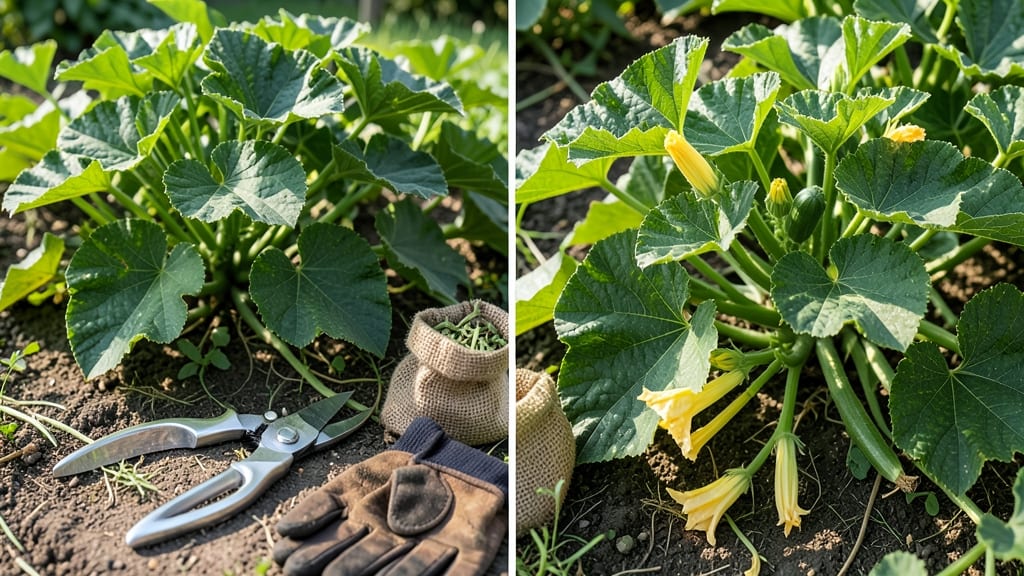
Pruning squash vines transforms a tangled mess into a productive powerhouse. ✂️ I’ve gone from struggling with overgrown zucchini plants to harvesting bushels of healthy fruit—all by making just three strategic cuts at the right time.
The key isn’t cutting more, but cutting smart: directing energy to fruit production, improving airflow, and keeping pests at bay.
You’ll need sharp pruning shears (or clean scissors in a pinch) and a sunny morning to work. Focus on removing suckers—the little shoots that sprout in the crotch of leaves—while leaving the main vine intact.
For bush varieties, a light trim keeps plants compact; for vining types like pumpkins, prune aggressively to channel energy into fewer, larger fruits. The payoff? Fewer diseases, bigger harvests, and plants that look like they belong in a catalog.
Start pruning when vines are about 12 inches tall, then repeat every 2–3 weeks until flowering. Aim for a balanced plant: keep 3–4 main stems for vining types, and prune back any leggy growth that’s shading the base.
The goal is sunlight reaching all parts of the plant—this alone cuts down on mildew and encourages stronger fruit set. Within weeks, you’ll notice thicker vines and more flowers, which means more squash on the way.
This method works for summer squash, zucchini, pumpkins, and even winter varieties. The only rule? Don’t overdo it—prune too much, and you’ll stunt growth. But get it right, and you’ll be the one with the overflowing harvest while your neighbors scramble to keep up. Let’s get those vines in shape!
📚 In This Guide
- What you need
- Instructions
- Tips and common mistakes
- Wrapping up and next steps
What you need
- ● Pruning shears or sharp bypass pruners – Look for stainless steel blades (4-6" length) to avoid crushing stems.
- ● Garden gloves – Heavy-duty, long-cuffed gloves (e.g., Mechanix or Filson) to protect against thorns and rough vines.
- ● Disinfectant (70% isopropyl alcohol or bleach solution) – 1 part bleach to 9 parts water to sterilize tools between cuts.
- ○ Compost bin or bucket – For collecting pruned vines (optional but eco-friendly!).
- ● Watering can or hose – To hydrate plants post-pruning (especially in hot climates).
- ● Hand pruners with ergonomic grips – For long pruning sessions (e.g., Felco F-2).
- ● Knee pads or a small stool – For comfort if squash vines sprawl low.
- ● Sharpie marker – To label pruned sections if training vines (e.g., for trellising).
- ● Mulch (straw or grass clippings) – To retain moisture and protect soil post-pruning.
How to prune squash vines for maximum yield and plant health
Here's the method I've used for years to keep squash plants productive and pest-resistant—no guesswork involved.
✂️ Step 1: Remove Suckers to Focus Energy on Fruit
Squash vines produce aggressive side shoots called suckers that drain energy from fruit production. Using clean, sharp pruning shears, cut these suckers off at their base where they emerge from the main stem. I start this process when the main vine reaches 12-18 inches long—that's when suckers become noticeable.
Look for small shoots growing from leaf axils (the point where leaves meet the stem). These are your targets. Only keep the strongest sucker if you're growing bush varieties—vining types like zucchini need no suckers at all. I prune on a dry morning when the vines are firm, making clean cuts that don't tear the plant tissue.
🌿 Step 2: Thin Overcrowded Vines for Better Airflow
When vines get congested, diseases like powdery mildew move in fast. Run your fingers along each main stem and remove any weak or crossing vines growing toward the center. I aim to keep only 3-4 main vines per plant for bush types, or 1-2 strong vines for vining varieties.
Watch for vines growing downward rather than outward—these are called "runners" and should be pruned back to encourage upward growth. The goal is to create an open, airy plant structure. You'll see healthier leaves with fewer yellow spots within a week of proper thinning. Never remove more than 25% of the plant's foliage at once—this stresses the vine.
☀️ Step 3: Trim Damaged or Diseased Leaves Immediately
Squash plants are heavy feeders and show problems fast. As soon as you spot leaves with holes, brown edges, or white powder (powdery mildew), snip them off completely. Use your shears to cut at the leaf stem rather than tearing—this prevents disease from spreading through the plant.
I also remove any leaves shading developing fruit. When a leaf blocks sunlight from a squash, it stays small and underdeveloped. You'll know you've got the right balance when fruit sits directly in sunlight and leaves form a loose canopy. After pruning, give the plant a light watering to help it recover from the stress.
⏰ Step 4: Maintain Regular Pruning Through the Season
This isn't a one-time job—squash vines keep growing until frost. I make a habit of checking plants every 7-10 days during peak growing season (late spring to early fall). Focus on removing any new suckers, thinning crowded areas, and cutting back any leaves that look stressed or diseased.
Real talk: I used to skip fall pruning, but now I do a final cleanup when vines stop producing. Cut back all vines to 6 inches above ground level and remove all yellow leaves. This helps the plant store energy for next season's growth. Just don't prune too late—stop 4-6 weeks before first frost to let the plant recover.
Tips & tricks for pruning squash vines like a pro
Your squash plants deserve the same care you'd give a prized tomato—here's what nobody tells you about keeping them thriving.
Timing is Everything: The 7-10 day pruning schedule in Step 4 works best when you check plants on the same day each week—morning is ideal. I've found that pruning right after rain gives cleaner cuts and less stress on the plant. The key is consistency: plants adjust to your routine and grow stronger. If you miss a week, don't panic—just resume your regular schedule, and the plant will bounce back within 7-10 days.
Tool Prep Matters: Always sterilize your pruning shears with rubbing alcohol between plants to prevent spreading diseases like powdery mildew. I keep a small bottle in my gardening tool bag for quick sanitizing. Sharp tools make cleaner cuts that heal faster—dull shears tear tissue, inviting infections. Test your tools by making a clean cut through a leaf before starting.
Visual Cues for Perfect Pruning: In Step 2, look for leaves that form a V-shape when viewed from above—these are perfect for sunlight exposure. The 3-4 main vines for bush types should be spaced evenly around the plant, creating a balanced canopy. For vining varieties, aim for 1-2 strong vines growing outward rather than inward. The goal is to see sunlight reaching the soil through gaps in the foliage—this tells you you're doing it right.
Seasonal Strategy: That final fall pruning in Step 4 is where I see the biggest difference in next year's harvest. Cutting back to 6 inches removes diseased leaves that could overwinter and reinfect your plants. I mark my calendar to stop pruning 4-6 weeks before first frost—this gives the plant enough time to recover and store energy in its roots for spring growth. Don't skip this step, even if your plants look healthy!
Pro Tips for Pruning Squash Vines
- Your squash plants deserve the same care you'd give a prized tomato—here's what nobody tells you about keeping them thriving.
- Timing is Everything: The 7-10 day pruning schedule in Step 4 works best when you check plants on the same day each week—morning is ideal.
- Tool Prep Matters: Always sterilize your pruning shears with rubbing alcohol between plants to prevent spreading diseases like powdery mildew.
Frequently asked questions
Got questions about pruning squash vines? You’re not alone! Here are answers to the most common concerns to help you prune like a pro.
When is the best time to prune squash vines?
Prune squash vines early in the morning when plants are still cool and hydrated. Avoid pruning during heat stress or after heavy rain, as this can slow recovery. Focus on the first pruning when vines reach 12–18 inches tall, then repeat every 2–3 weeks as needed.
How do I know which vines to cut?
Look for weak, leggy, or overcrowded vines—these are prime candidates. Prioritize:
- Side shoots (smaller stems branching off main vines).
- Vines with yellowing leaves (signs of disease or poor health).
- Vines growing toward the center (blocking airflow and sunlight).
What if I prune too much? Will my squash plant die?
Don’t panic! Squash are resilient, but never remove more than 1/3 of the plant at once. Over-pruning can stress the plant, reducing fruit production. If you’ve gone overboard, focus on watering deeply and fertilizing with compost to help it recover.
Can I prune squash vines if they’re already flowering or fruiting?
Yes, but be selective. Avoid cutting vines that already have blooms or small fruits—these are your harvest priorities! Instead, prune non-fruiting side shoots and focus on improving airflow around existing fruit. Prune lightly during flowering to avoid shocking the plant.
What’s the difference between pruning bush vs. vining squash?
Bush squash (like zucchini) rarely need pruning—they’re compact and self-supporting. Vining types (e.g., butternut, spaghetti) benefit most from pruning to direct energy to fruit production. For bush varieties, just remove dead or diseased leaves to prevent pests.
Wrapping up and next steps
Pruning your squash vines might feel like extra work at first, but it’s a game-changer for healthier plants and a bountiful harvest! 🌱 By focusing on those three key cuts—removing suckers, thinning vines, and pruning diseased leaves—you’ll give your squash the best chance to thrive.
Now that you’re armed with the know-how, grab those shears and get ready to transform your garden!
Ready to put it into action? Start with just one or two plants this season to see the difference firsthand. Happy pruning—and here’s to a squash-filled summer! 🎉