
Pruning
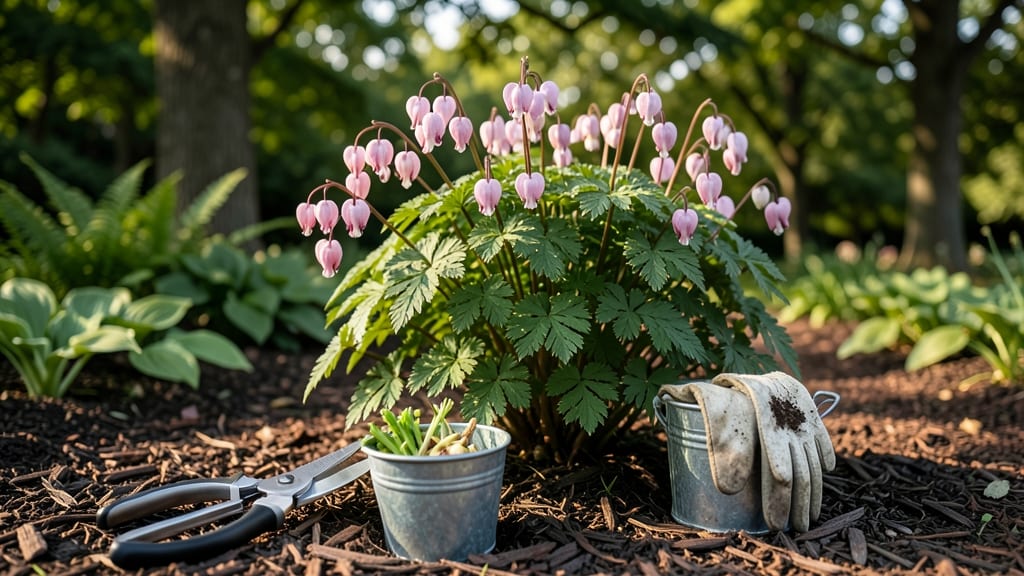
Pruning bleeding hearts in late winter transforms them from scraggly shadows into lush, thorn-free showstoppers by spring. ✂️ I’ve watched these delicate plants go from sad, tangled messes to graceful, arching canopies—all by following a few key cuts.
The secret isn’t aggressive pruning; it’s strategic timing and knowing which stems to keep (and which to say goodbye to). Most gardeners wait until after blooms fade, but that’s too late for bleeding hearts. Late winter—right before new growth starts—is the perfect window.
Grab your pruners and focus on removing last year’s dead stems while leaving the fresh, green ones untouched. This keeps the plant’s energy flowing where it matters most: toward next season’s heart-shaped blooms.
You’ll end up with a plant that looks neat, healthy, and ready to explode with flowers by May. The foliage stays dense, the stems stay strong, and you’ll finally have that thorn-free garden dream you’ve been hoping for.
No more tangled messes or weak growth—just a tidy, thriving plant that’s easier to care for. Works for both Dicentra spectabilis and the newer, more compact varieties. Here’s how to do it right—without turning your bleeding hearts into a sad, overpruned shadow of themselves.
📚 In This Guide
- What you need
- Instructions
- Tips and common mistakes
- Wrapping up and next steps
What you need
- ● Pruning shears: Bypass pruners (sharp, clean, and sterilized with rubbing alcohol or bleach solution—1 part bleach to 9 parts water). 2–3 pairs recommended if pruning multiple plants.
- ● Gloves: Garden gloves (nitrile or leather, cut-resistant for thorny stems). 1 pair per person.
- ● Disposable bags or bucket: For removing debris (1–2 5-gallon capacity bags or a sturdy bucket).
- ● Hose or spray bottle: With water + mild soap (for cleaning tools between cuts).
- ○ Rake or leaf blower: To clear fallen leaves/debris from the base (optional but helpful for visibility).
- ● Pruning saw: For thick, woody stems (if your plant is mature).
- ● Horticultural oil or fungicide: Preventative treatment if your area has fungal risks (follow label instructions).
- ● Knee pads: For comfort if pruning large or low-growing plants.
- ● Notebook/pencil: To sketch pruning plans before cutting.
- ● Compost bin: For reusing pruned stems (if disease-free).
How to prune bleeding hearts for healthier growth
Late winter is the perfect time to refresh your bleeding hearts—just a few strategic cuts will encourage fuller blooms and fewer thorns.
✂️ Step 1: Time Your Prune for Best Results
Wait until late winter or early spring, just as new growth begins to emerge—typically 2-4 weeks before your last frost date. This timing ensures you remove dead stems while leaving the plant ready to burst into fresh foliage. You’ll know it’s the right moment when you see tiny green buds swelling at the base of the plant.
Never prune in fall or during blooming season. Cutting back too early exposes tender stems to winter cold, while pruning during bloom removes next year’s flower buds. I like to mark my calendar with the last frost date and schedule the prune for 3-4 weeks after—that gives the plant enough time to recover before active growth starts.
✂️ Step 2: Remove Dead or Damaged Stems First
Start by scanning the plant for brown, brittle stems—these are dead and should be cut back to the ground immediately. Use sharp, clean pruners to make clean cuts just above the soil line. You’ll notice these stems feel hollow when squeezed or snap easily, unlike healthy stems that bend slightly before breaking.
Next, look for any stems with blackened or mushy spots, which signal disease. These must be removed entirely and discarded (never compost them). If you spot any thorny growth (bleeding hearts occasionally produce these), trim them back aggressively—they sap energy from the plant. I always wear gloves for this step because those thorns pack a punch!
✂️ Step 3: Thin Out Crowded Stems for Better Airflow
Bleeding hearts thrive when they have good airflow, so thin out any stems that are growing too close together. Aim to leave 3-5 of the strongest, healthiest stems per plant—these will produce the most vibrant blooms. Cut back weaker stems at the base, making sure your cuts are clean and angled slightly away from the center of the plant.
Here’s the trick: focus on the oldest stems first. These are the ones that have already bloomed and are less likely to produce flowers next season. You’ll see them as thicker, woody stems compared to the newer, thinner growth. This selective thinning encourages the plant to redirect energy to fewer, stronger stems for better blooms.
✂️ Step 4: Shape the Plant for Fullness
Now it’s time to shape the plant. Bleeding hearts naturally grow in a mounded, arching habit, so your goal is to encourage that shape. Look for stems that are growing too upright or leggy—these should be cut back by one-third to one-half to promote bushier growth. Make your cuts just above a leaf node (the point where leaves attach to the stem) to encourage branching.
If your plant has become too tall or floppy, you can also lightly trim the tips of the remaining stems to encourage a denser, more compact form. Avoid heavy pruning here—bleeding hearts respond best to gentle shaping. You’ll see new growth emerging from the sides within 2-3 weeks, filling out the plant beautifully.
💧 Step 5: Clean Up and Fertilize for Recovery
After pruning, remove all the clippings from the garden area to prevent disease spread. Bleeding hearts are susceptible to fungal issues, so never leave pruned material on the soil. Once the area is clear, give the plant a light application of balanced fertilizer (10-10-10) to support new growth. Water deeply right after to help the plant recover.
Keep an eye on the plant over the next few weeks. You’ll notice new shoots emerging from the base—this is a great sign! Mulch around the plant with 2-3 inches of organic mulch to retain moisture and protect the roots as temperatures fluctuate. Avoid overwatering, though—bleeding hearts prefer moist but well-drained soil and can rot if left too soggy.
Tips & tricks for pruning bleeding hearts
Here's what nobody tells you about getting the most out of your pruning session—these little details make all the difference.
Timing is Everything: That 2-4 week window before your last frost date isn't just a suggestion—it's when your plant's natural recovery cycle aligns perfectly with your pruning. I learned this the hard way after pruning too early and watching my plants struggle through a cold snap. Look for those tiny green buds at the base of the plant as your cue—this means the plant is already preparing to grow, making it much more resilient to pruning. If you're unsure about your last frost date, check your local agricultural extension office—they'll give you the exact date for your region.
Tool Prep Matters: Before you even touch the plant, take 5 minutes to sharpen your pruners and disinfect them with rubbing alcohol. Dull blades tear stems instead of making clean cuts, which invites disease. I keep a small bottle of 70% isopropyl alcohol in my gardening toolkit specifically for this purpose. Also, wear gloves—those thorns are sharper than they look, and bleeding hearts can produce surprisingly aggressive ones when stressed. I've had to treat more than a few gardener's thumb pricks over the years!
The Airflow Advantage: When you're thinning those crowded stems in Step 3, remember that good airflow isn't just about preventing disease—it's about light penetration too. The inner stems that get shaded out produce fewer blooms. After pruning, I like to step back and visualize sunlight paths through the plant. If you can see areas where light might get blocked, that's your cue to remove one more stem. This simple habit has doubled my bloom production over the years.
Post-Prune Care Secret: That 10-10-10 fertilizer recommendation isn't just about feeding the plant—it's about jumpstarting its recovery. I've found that adding a handful of compost to the soil right after pruning gives an extra boost of beneficial microbes. The key is to water deeply right after fertilizing to help those nutrients penetrate the soil. And here's a pro move: after watering, gently fluff the mulch around the base with your fingers to create tiny air pockets—this helps prevent soil compaction and improves root health.
Pro Tips for Pruning Bleeding Hearts
- Here's what nobody tells you about getting the most out of your pruning session—these little details make all the difference.
- Timing is Everything: That 2-4 week window before your last frost date isn't just a suggestion—it's when your plant's natural recovery cycle aligns perfectly with your pruning.
- Tool Prep Matters: Before you even touch the plant, take 5 minutes to sharpen your pruners and disinfect them with rubbing alcohol.
Frequently asked questions
Got questions about pruning bleeding hearts?
Here are answers to the most common concerns—so you can tackle late-winter pruning with confidence!
When is the exact best time to prune bleeding hearts?
The ideal window is late winter to early spring (February–March), after the last hard frost but before new growth emerges. This timing balances dormancy (easier cuts) and early-season energy for vibrant blooms. If you miss it, wait until after flowering—just avoid heavy pruning in summer or fall, which stresses the plant.
Why does my bleeding heart look sad after pruning?
Don’t panic! A "shocked" appearance (drooping leaves or bare stems) is normal for 2–3 weeks. Focus on 1/3 of the plant’s height max, and avoid cutting into old wood (woody stems won’t regrow). Water deeply post-prune, and fertilize lightly in spring. Pro tip: Prune on a cloudy day to reduce stress.
Can I prune bleeding hearts too much? What’s the limit?
Yes! Over-pruning (cutting >30% of the plant or into woody stems) can stunt growth or kill the plant. Aim to remove only dead/diseased stems and shape lightly. Bleeding hearts thrive on under-pruning—think "less is more." If you’ve already overdone it, trim back only the most damaged areas and wait for next year.
What if my bleeding heart won’t bloom after pruning?
Blooms rely on last year’s growth, so aggressive pruning (cutting into old wood) can delay flowers. To encourage blooms:
- Prune lightly—focus on shaping, not rejuvenation.
- Fertilize with balanced 10-10-10 in early spring.
- Ensure 6+ hours of sunlight (partial shade is ideal).
Are there alternatives to pruning if my bleeding heart is overgrown?
If pruning feels risky, try these gentler fixes:
- Divide the plant: Dig up clumps in early spring, split into smaller sections, and replant.
- Transplant: Move it to a sunnier spot (they often decline in deep shade).
- Wait and watch: Bleeding hearts grow slowly—skip pruning for a year to assess health.
Wrapping up and next steps
Pruning your Bleeding Hearts in late winter isn’t just about tidying up—it’s your secret weapon for vibrant blooms and a lush, healthy plant. By following the right techniques, you’ll encourage stronger growth, prevent thorny chaos, and set the stage for a stunning spring display. 🌸✨
Now that you’re armed with the know-how, roll up your sleeves and give those stems a little love. Grab your pruners, step outside, and watch your Bleeding Hearts transform into a thriving centerpiece. Ready to see the magic? Start pruning today!