
Pruning
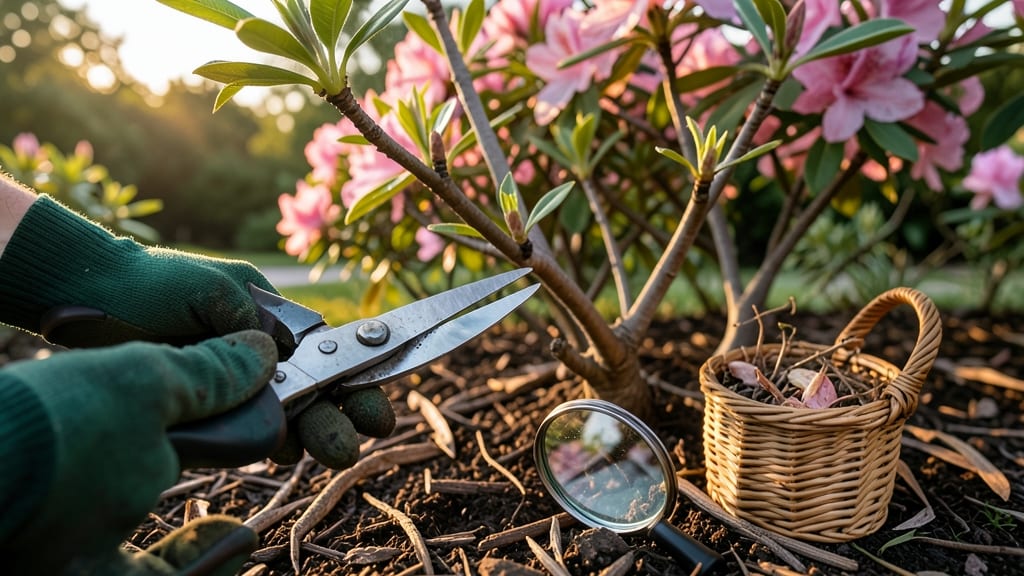
Summer pruning azaleas transforms your shrubs from scraggly to stunning—if you do it right. 🌿 After those vibrant blooms fade, most gardeners hesitate to touch their azaleas, but strategic summer cuts actually encourage thicker growth and more flowers next year.
The key is timing: wait until after blooming but before the heat peaks, usually in late June or early July in most climates. You’ll need just three tools: sharp bypass pruners for clean cuts, gloves to protect from thorns, and a bucket for trimmings.
Focus on removing dead, crossing, or weak branches first—these are easy to spot. Then, thin out crowded areas to improve airflow, which prevents fungal diseases that thrive in summer humidity. Avoid heavy pruning; aim to remove no more than 20% of the plant at once.
What you’ll end up with is a fuller, bushier azalea that flowers even more prolifically next spring. The branches will be denser, the blooms bigger, and your plant will handle summer heat better. Plus, you’ll avoid the shock of winter pruning, which can stress azaleas in colder zones.
This method works for both old and new azaleas, whether you’re dealing with a mature shrub or a young plant. Just remember: less is more—azaleas reward patience with years of lush growth. Ready to give it a try?
📚 In This Guide
- What you need
- Instructions
- Tips and common mistakes
- Wrapping up and next steps
What you need
- ● Bypass pruners – Sharp, clean bypass pruners (5-inch to 7-inch blades) for precise cuts on smaller stems. Invest in high-quality stainless steel to avoid rust or dullness.
- ● Loppers – Heavy-duty loppers (8-inch to 12-inch) for thicker branches (up to 2 inches in diameter). Look for ratcheting or bypass styles for cleaner cuts.
- ● Hand saw – A pruning saw with a curved blade for stubborn, woody stems (avoid cheap folding saws—they dull fast!).
- ● Gloves – Garden gloves with grip (nitrile-coated or leather) to protect against thorns and sap.
- ● Disinfectant – 70% rubbing alcohol or bleach solution (1 part bleach to 9 parts water) to sterilize tools between cuts and prevent disease spread.
- ○ Pruning sealant (optional) – Tree wound pruning paste (like Tanglefoot Pruning Seal) to seal large cuts and reduce sap loss.
- ● Trash bags or bucket – To collect clippings and debris. A 5-gallon bucket with a lid works great for transport.
- ● Watering can or hose – A light spray nozzle to hydrate plants before and after pruning (azaleas hate stress!).
- ● Shade cloth or tarp – A lightweight tarp or shade cloth to drape over plants if pruning during peak heat (10 AM–4 PM).
- ● Pruning shears (for touch-ups) – Small, ergonomic shears (like Felco F-2) for fine-tuning shapes.
- ● Timing – Prune on a cool, cloudy day or early morning/late afternoon to avoid heat shock. Never prune in extreme heat (above 90°F/32°C).
- ● Hydration check – Water azaleas 24 hours before pruning to reduce stress. Soil should be moist but not soggy.
- ● Weather forecast – Avoid pruning if rain is expected within 24 hours (wet cuts invite fungal issues).
- ● Safety gear – Sunglasses, sunscreen, and a hat—summer pruning is no joke!
How to prune azaleas in summer for heat-resistant growth
Summer pruning keeps azaleas thriving in heat while shaping them for next year's blooms.
🌿 Step 1: Time Your Pruning for Maximum Heat Tolerance
Prune azaleas in late summer—specifically after flowering but before September 15th—to allow new growth to harden off before winter. The goal is to remove only 1/3 of the plant’s oldest stems at a time, which prevents shock and encourages bushier regrowth. Avoid pruning during extreme heat waves or drought; wait for temperatures to stabilize below 85°F for at least 3 days.
Look for stems with woody, mature bark—these are the ones to trim. Younger, flexible stems should remain untouched. If your azalea blooms in late spring, prune immediately after flowers fade; for fall-blooming varieties, wait until mid-to-late August. This timing ensures the plant has enough energy to recover before winter dormancy.
✂️ Step 2: Use Proper Tools and Technique for Clean Cuts
Use sharp, sterilized pruning shears or bypass pruners—never dull tools, which tear stems and invite disease. Disinfect blades with 70% isopropyl alcohol before and after pruning to prevent bacterial spread. Cut just above a bud or leaf node, angled slightly downward to prevent water pooling on the wound. This encourages faster healing and reduces rot risk in summer’s humidity.
Focus on thinning out rather than topping or shearing. Remove entire stems at the base if they’re dead, crossing, or crowding the center. For shaping, trim back 1-2 inches beyond the desired branch length. Avoid cutting into old wood—azaleas bloom on new growth, so pruning too aggressively can reduce next year’s flowers.
☀️ Step 3: Post-Pruning Care for Heat Recovery
Water deeply the day before and the day after pruning to help the plant recover. Apply 1-2 inches of mulch around the base (but not touching the trunk) to retain moisture and cool roots. Azaleas thrive in acidic, well-draining soil, so if your mulch is pine bark or oak leaves, it’ll naturally lower soil pH over time. Avoid synthetic mulches, which can bake roots in summer heat.
Monitor for pests like lacewings or spider mites, which are attracted to stressed plants. If you see new growth curling or yellowing, it may need light shade for a week or two. Resist the urge to fertilize immediately—azaleas are light feeders, and summer fertilizer can promote tender, heat-sensitive growth. Instead, wait until early spring to apply a slow-release, acid-loving plant fertilizer.
⏰ Step 4: Plan for Next Year’s Growth with Strategic Pruning
Label pruned stems with twist ties or flags to track which branches you’ve trimmed. This helps you avoid over-pruning the same areas in future years. Azaleas bloom on new wood, so aim for a gradual, staggered pruning schedule: trim 1/3 of the plant every other year to maintain shape without sacrificing flowers. Over time, this creates a balanced, layered canopy that resists heat stress.
If your azalea develops leggy growth after pruning, it’s a sign of too much light or insufficient water. Move it to partial shade (morning sun, afternoon filter) and increase watering to 1-2 times per week during heatwaves. Healthy azaleas should have deep green, glossy leaves and no more than 10% bare stems. If you see brown leaf edges, it’s often a sign of underwatering or alkaline soil—test your soil pH and amend with sulfur or peat moss if needed.
Tips & tricks for perfect summer azalea pruning
These essential insights will help you trim azaleas like a pro while keeping them resilient against summer heat.
Heat Timing Strategy: The 85°F temperature threshold is critical—prune only when daytime highs consistently stay below this for at least 3 days. I've learned this the hard way: pruning during heatwaves shocks the plant, causing stress that manifests as yellowing leaves or stunted growth. Check your local weather forecast for the next 5 days before scheduling your pruning session. Morning hours are ideal since temperatures are cooler and humidity is lower, reducing stress on the plant.
Tool Technique: Sterilizing your pruning shears with 70% isopropyl alcohol isn't just about cleanliness—it's about preventing bacterial infections that can spread through open wounds. I keep a small bottle of alcohol in my gardening toolkit and wipe blades before and after each cut. For stubborn branches, use bypass pruners rather than anvil pruners—they make cleaner cuts that heal faster. Remember, the 1-2 inch rule for shaping applies to the distance beyond your desired branch length, not the cut itself.
Recovery Care: The 1-2 inches of mulch recommendation is non-negotiable for summer pruning. I've seen azaleas recover beautifully with this protection, especially during heatwaves. Use organic mulches like pine bark or oak leaves—they naturally acidify the soil over time, which azaleas love. Pro tip: Create a small berm around the base to help retain moisture during those scorching afternoons. This simple step can mean the difference between a plant that thrives and one that struggles.
Long-Term Planning: That 1/3 every other year rule is your secret weapon for maintaining healthy azaleas. I mark pruned stems with colored twist ties to track which branches I've trimmed annually. This visual system helps me avoid over-pruning the same areas, which can lead to bare spots. For fall-blooming varieties, prune in mid-to-late August to allow sufficient time for new growth before winter. The goal is to create that perfect layered canopy that resists heat stress while still producing abundant blooms.
Pro Tips for Pruning Azaleas In Summer
- These essential insights will help you trim azaleas like a pro while keeping them resilient against summer heat.
- Heat Timing Strategy: The 85°F temperature threshold is critical—prune only when daytime highs consistently stay belo...
- Tool Technique: Sterilizing your pruning shears with 70% isopropyl alcohol isn't just about cleanliness—it's about pr...
Frequently asked questions
Can I prune azaleas in summer without harming them?
Yes! Summer pruning is safe if done carefully. Avoid heavy pruning during extreme heat or drought—opt for light shaping or deadheading spent blooms. Prune on cloudy mornings or late afternoons to reduce stress. Hydrate the plant well before and after trimming to help it recover.
How soon after blooming should I prune azaleas?
Wait until after the first flush of flowers has faded (usually late spring to early summer). This ensures you don’t cut off next year’s buds, which form on old wood. For repeat-blooming varieties, prune lightly after the second bloom cycle to encourage more flowers.
What’s the difference between summer pruning and spring/fall pruning?
Summer pruning focuses on light maintenance: removing dead wood, shaping, and deadheading. Spring/fall pruning is for major reshaping or rejuvenation. Summer is ideal for heat-tolerant trimming because it stimulates new growth before fall dormancy, while spring/fall pruning can stress the plant.
What if my azalea looks stressed after summer pruning?
Stress signs (wilting, yellow leaves) often mean over-pruning or poor timing. Trim only 1/3 of the plant max in summer. If stressed, water deeply, apply a balanced fertilizer, and avoid pruning for 4–6 weeks. Mulch around the base to retain moisture and reduce heat stress.
Are there azalea varieties that don’t need summer pruning?
Most azaleas benefit from some summer maintenance, but evergreen varieties (like Rhododendron hybrids) need minimal pruning. Focus on removing dead or crossing branches—avoid heavy cuts. For deciduous azaleas, light pruning after blooming keeps them compact without stressing the plant.
Wrapping up and next steps
Pruning azaleas in summer isn’t just about shaping—it’s about boosting health, encouraging vibrant blooms, and keeping your plants heat-resistant. 🌿 With the right tools, timing, and techniques, you’ll transform your azaleas into lush, thriving stars.
Now that you’re armed with the know-how, grab those shears and get pruning! Your garden will thank you with stunning, resilient growth year after year.
💡 Pro tip: Snap a photo of your azalea’s shape before you start—it’s a great reference for future pruning sessions!