
Pruning
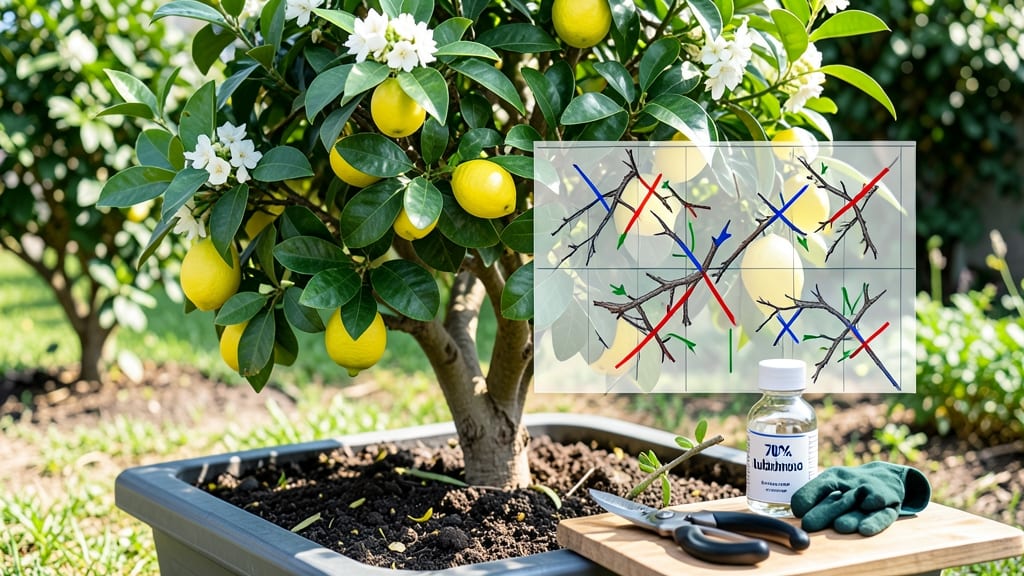
Your lemon tree pruning diagram is your secret weapon for shaping a thriving, productive tree—late winter is the perfect time to act before new growth begins. ✂️ I’ve pruned mine for years, and the difference between a scraggly bush and a productive, fragrant tree comes down to these key cuts: removing dead wood, thinning crowded branches, and opening up the center for airflow.
The diagram we’ll use shows exactly where to aim—no guesswork, just clean, purposeful snips that keep your tree thriving all year.
You’ll need just three tools: sharp pruning shears for small branches, loppers for thicker stems, and a clean saw for any stubborn limbs. Safety first—sterilize your tools with rubbing alcohol to avoid spreading disease, and wear gloves to protect against thorns.
The goal is to reduce the canopy by about 25% while keeping the tree’s natural shape, so you’re not hacking it back but refining it.
Start by cutting back any dead or crossing branches at the base, then move to thinning out the center to let light reach the core. The diagram highlights these areas in red—these are the spots where most gardeners hesitate, but they’re the ones that make the biggest difference.
After pruning, your tree will reward you with new growth within weeks and a bumper crop of lemons by summer.
This method works for both container-grown and in-ground lemon trees, though smaller pots mean slightly lighter pruning. If you’re in a colder zone, wait until after the last frost to avoid damaging tender new shoots.
The key is patience—your tree will thank you with healthier foliage, more flowers, and sweeter fruit every season.
📚 In This Guide
- What you need
- Instructions
- Tips and common mistakes
- Wrapping up and next steps
What you need
- ● Pruning shears: Bypass pruners (sharp, clean, and capable of cutting up to ½-inch thick branches). Quantity: 1 pair.
- ● Loppers: For thicker branches (up to 1.5 inches). Quantity: 1 pair.
- ● Hand saw: For stubborn or large branches (2–3 inches thick). Quantity: 1.
- ● Disinfectant (70% isopropyl alcohol or rubbing alcohol): To sterilize tools between cuts. Quantity: Small bottle.
- ● Garden gloves: Heavy-duty, cut-resistant gloves to protect your hands. Quantity: 1 pair.
- ○ Pruning sealant: (Optional but helpful) To cover large cuts and prevent disease. Quantity: Small tube.
- ● Marking twine or tape: To temporarily mark branches for removal. Quantity: Small roll.
- ● Bucket or trash bag: For collecting pruned branches and debris. Quantity: 1–2.
- ● Ladder or step stool: If your tree is taller than 6 feet. Quantity: 1.
- ● Weather check: Prune on a dry, cloudy day to reduce stress on the tree and minimize disease risk.
- ● Safety glasses: Protect your eyes from debris. Quantity: 1 pair.
- ● First-aid kit: Just in case! Quantity: 1.
- ● Lemon tree pruning diagram: Print or save this guide (or a trusted reference) for visual aid. Digital or printed.
- ○ Water and snacks: Stay hydrated and energized—pruning can take time! Optional but recommended.
Step-by-step lemon tree pruning guide
Here’s how I prune my lemon tree every season—keeping it productive, healthy, and full of fruit.
✂️ Step 1: Identify and Remove Dead or Diseased Branches
Start by inspecting your tree for any branches that are brown, brittle, or showing signs of disease like black spots or mold. These are the first to go—they drain energy and invite pests. Use sharp pruning shears to cut just outside the branch collar, the swollen area where the branch meets the trunk. This ensures clean wounds that heal faster.
I always work from the bottom up, so I don’t accidentally drop debris on healthy branches below. If a branch is thicker than your wrist, use a pruning saw instead of shears. You’ll know you’re on the right track when you’re left with only green, flexible branches that snap slightly when bent.
✂️ Step 2: Thin Out Crowded or Crossing Branches
Next, focus on branches that rub against each other or grow inward. These compete for sunlight and can damage each other over time. Aim to create an open center by removing branches that grow toward the middle of the tree. Cut these back to a healthy outward-facing bud or side branch.
I like to step back every few cuts to visualize the tree’s shape. The goal is a vase-like form with a strong central leader (main trunk) and branches spaced evenly. If you’re unsure which branch to keep, choose the one with the most vigor—thicker, darker green, and growing at a better angle.
☀️ Step 3: Prune for Light and Airflow
Now, thin out any branches that block sunlight from reaching the inner canopy. Lemon trees need good airflow to prevent fungal diseases like powdery mildew. Remove about 20-30% of the foliage in one session, focusing on the densest areas. This encourages new growth and fruit production.
Watch for branches growing straight up or down—they’ll eventually weigh the tree down. Cut these back to a side branch that grows at a 45-degree angle or less. You’ll see the difference in just a few weeks as new shoots emerge with better access to light.
⏰ Step 4: Shape the Tree for Fruit Production
To maximize fruit yield, prune to encourage growth on the outer third of the tree. Cut back long, leggy branches to a leaf node (the bump where leaves attach) just above an outward-facing bud. This redirects energy to produce more flowers and fruit.
I avoid heavy pruning in late summer or fall, as new growth won’t harden off before winter. Instead, I do most of my shaping in late winter or early spring, just before new growth begins. You’ll know you’ve done it right when the tree looks balanced and open, with sunlight reaching all the way to the center.
🌱 Step 5: Clean Up and Sterilize Tools
After pruning, rake up all debris and dispose of it in the trash—not the compost—since diseased branches can spread pathogens. Wipe down your pruning tools with a 10% bleach solution (1 part bleach to 9 parts water) to prevent cross-contamination between cuts.
I also like to apply a thin layer of pruning sealant to larger cuts (over ½ inch thick) to reduce the risk of infection. For smaller cuts, let them heal naturally—they’ll callus over in a few weeks. Store your tools in a dry place to keep them sharp and ready for next season.
Tips & tricks for perfect lemon tree pruning
Real talk: Pruning your lemon tree properly makes all the difference in fruit production and tree health.
Tool Selection Tip: Always use sharp, clean tools—dull shears tear branches instead of making clean cuts. I keep a small file in my toolbox to sharpen blades between pruning sessions. For branches thicker than your wrist, switch to a pruning saw to avoid damaging the bark. The cleaner the cut, the faster the wound heals and the less stress on your tree.
Pruning Timing Strategy: Late winter or early spring is ideal because the tree is dormant but about to burst with new growth. Avoid pruning in late summer or fall—new growth won't have time to harden off before winter. If you must prune outside this window, focus on removing only dead or diseased branches to minimize stress on the tree.
Visual Pruning Guide: After each cut, step back and visualize your tree's shape. You're aiming for an open center that allows sunlight to reach the inner canopy. Imagine a vase shape with the widest part at the top—this encourages fruit production on the outer branches where sunlight is strongest. If you're unsure which branch to cut, remember: thicker, darker green branches with outward growth are your winners.
Seasonal Maintenance: Light pruning throughout the year keeps your tree healthy. In summer, remove any branches that block sunlight or grow straight up/down. In winter, focus on shaping for next year's fruit production. I make a habit of doing a quick inspection every season—it only takes 10 minutes and prevents major issues down the line.
Pro Tips for Lemon Tree Pruning Diagram
- Real talk: Pruning your lemon tree properly makes all the difference in fruit production and tree health.
- Tool Selection Tip: Always use sharp, clean tools—dull shears tear branches instead of making clean cuts.
- Pruning Timing Strategy: Late winter or early spring is ideal because the tree is dormant but about to burst with new growth.
Frequently asked questions
Got questions about pruning your lemon tree? You’re not alone! Here are answers to the most common concerns—so you can confidently shape your tree like a pro.
When is the best time to prune a lemon tree?
The ideal time is late winter or early spring (just before new growth starts). Avoid heavy pruning in summer or fall, as it can stress the tree. Light trimming to remove dead branches can happen year-round, but major cuts wait for dormancy. Pro tip: If you miss the window, prune in early fall—but stop by October to avoid late-season growth that won’t harden off.
What if I prune at the wrong time?
Pruning too late (after buds swell) can stunt flowering or fruit production. If you’ve already pruned outside the ideal window, don’t panic! Just focus on light maintenance (removing only dead/diseased wood) and resume structured pruning next winter. Over-pruning in summer may also invite pests—so keep cuts minimal until cooler months.
Can I prune a lemon tree without a diagram?
Start with these basics: Remove dead, crossing, or crowded branches first. Aim to open the canopy for sunlight (especially to the center). Use a 30° angle for cuts just above a leaf node (where new growth emerges). For shape, trim back 1/3 of the current year’s growth to encourage bushiness. No diagram? Snap a photo of your tree before/after for reference!
What should I do if my lemon tree looks stressed after pruning?
Stress signs (yellow leaves, wilting, or no new growth) often mean you cut too much. If this happens, reduce watering slightly and fertilize lightly with a citrus-specific blend. Prune less aggressively next time—stick to 10–20% of the tree’s foliage per session. Mulch around the base to retain moisture, and avoid pruning during heatwaves. Patience helps!
Will pruning my lemon tree increase fruit production?
Yes—but it’s a long-term game! Pruning improves airflow and sunlight, which boosts flowering and fruiting next season. Heavy pruning now may reduce this year’s harvest, but a well-shaped tree will yield more high-quality lemons over time. Focus on removing suckers (shoots from the trunk) and thinning dense branches to prioritize fruit-bearing limbs.
Wrapping up and next steps
Pruning your lemon tree isn’t just about shaping—it’s about revitalizing its health and boosting fruit production! 🌿 With the right cuts, you’ll encourage stronger growth, better airflow, and a bountiful harvest.
Whether you’re a beginner or a seasoned gardener, confidence comes with practice, so grab those pruners and get to work.
Ready to see your lemon tree thrive? Next, put your new skills into action! Start with a small branch or two, follow your lemon tree pruning diagram, and watch your citrus companion flourish. Happy pruning—your future lemons will thank you! 🍋✨