
Pruning
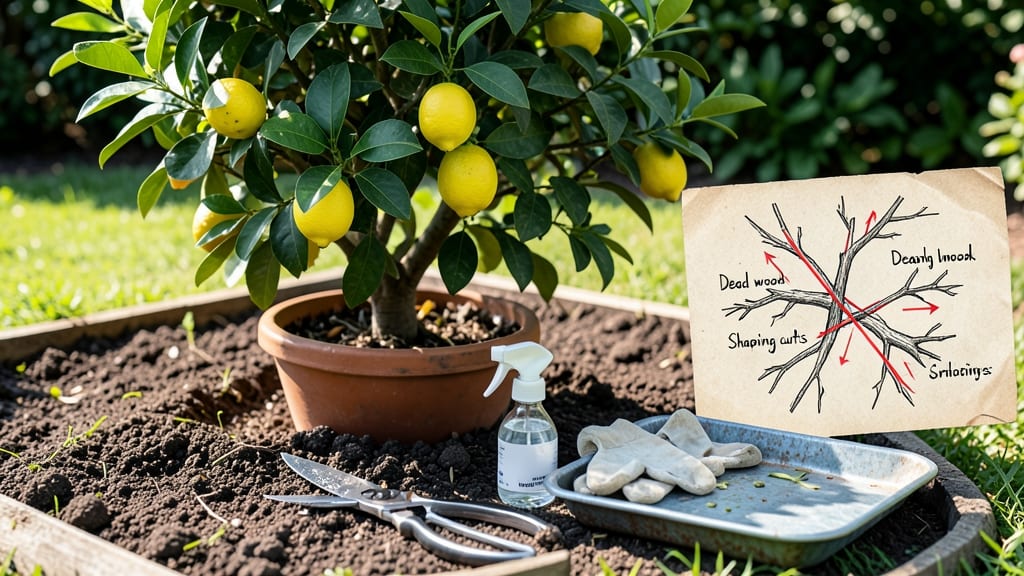
A lemon tree pruning guide transformed my tangled mess into a vibrant, fruit-bearing beauty—all in one afternoon. ✂️ The secret isn’t just cutting branches, but shaping the tree to balance sunlight, airflow, and energy for blooms. Most gardeners wait until spring, but timing matters more than you’d think, especially if you want that first harvest of juicy lemons.
You’ll need just three tools: sharp pruning shears for small branches, loppers for thicker stems, and a clean disinfectant to prevent disease spread. Start by removing dead, crossing, or inward-growing branches first—these are the easy wins that instantly improve the tree’s structure.
The real magic happens when you thin out crowded areas to let sunlight reach the center, where most fruit sets.
After pruning, your tree will look surprisingly bare, but within 4-6 weeks, you’ll see fresh green shoots pushing from the cuts—proof it’s redirecting energy toward growth. Water deeply afterward and avoid heavy fertilizing for a month to let the wounds heal.
The payoff? A stronger frame that supports more fruit next season, plus fewer pests hiding in dense foliage.
This method works for both container-grown lemons and in-ground trees, though dwarf varieties need less aggressive cuts. Even if you’ve avoided pruning before, start small: just 10-15% of the canopy at a time.
The key is confidence—once you see how the tree responds, you’ll never look at those tangled branches the same way again.
📚 In This Guide
- What you need
- Instructions
- Tips and common mistakes
- Wrapping up and next steps
What you need
- ● Pruning shears: Bypass pruners (for small branches, 4–6 inches long) or anvil pruners (for thicker branches, 6+ inches). Sharpness is key!
- ● Loppers: 1 pair (18–24 inches) for medium-sized branches (½–1½ inches thick). Look for ratchet-style for extra leverage.
- ● Pruning saw: 1 handheld saw (for branches >1½ inches thick). A curved-tooth saw prevents tearing.
- ● Disinfectant: 70% isopropyl alcohol or a pruning sealant (like Tanglefoot) to sterilize tools and cuts.
- ● Gloves: 1 pair of cut-resistant gardening gloves (thick leather or reinforced fabric).
- ● Safety glasses: 1 pair to protect against debris (especially when sawing).
- ● Ladder or step stool: Adjustable height (6–10 feet) for reaching higher branches. Never stand on wobbly surfaces!
- ● Trash bags or bucket: For collecting pruned branches (1–2 large bags or a 5-gallon bucket).
- ○ Marking twine or tape: (Optional but helpful) To flag branches for removal.
- ● Rubbing alcohol wipes: For quick tool sterilization between cuts.
- ● Hand pruners: For precision trimming of tiny shoots (if you prefer a smaller tool).
- ● Pruning paint: (e.g., Tree Seal) to seal large cuts and prevent disease.
- ● Work apron: With pockets to keep small tools handy.
- ● Extension pole: For high branches (if you lack a ladder).
Step-by-Step lemon tree pruning guide for year-round health
Here’s how I keep my lemon trees thriving with seasonal cuts—no guesswork, just proven techniques.
☀️ Step 1: Prune for Airflow in Late Winter (Before New Growth)
Timing is everything—wait until 2-3 weeks after your last frost when dormant buds swell but before spring shoots appear. I use sterilized pruning shears to remove dead, crossing, or inward-growing branches first. These are the first targets because they rob energy from fruit production. Cut back to the outer branch collar (the swollen area where the branch meets the trunk) to encourage outward growth.
Next, thin the canopy by removing 20-30% of the smallest branches—focus on those growing toward the center. This prevents fungal diseases by improving airflow. You’ll see healthier, more open branches within weeks as sunlight reaches inner leaves. If your tree has suckers (shoots growing from the base or trunk), snip them off immediately—they drain energy from fruit-bearing branches.
✂️ Step 2: Shape and Thin in Early Spring (After Flowering)
Once blooms fade (usually 4-6 weeks after flowering), it’s time to shape the tree. I look for water sprouts (fast-growing vertical shoots) and overly dense clusters—these are the first to go. Prune just above a leaf bud or outward-facing branch to maintain the tree’s natural shape. Avoid cutting into old wood (gray or woody stems), as lemon trees struggle to regrow from there.
For fruit-bearing branches, I leave 3-4 main stems per section, thinning to 6-8 inches apart. This ensures each remaining branch gets enough sunlight and nutrients. You’ll notice fewer but larger lemons later in the season—this is the reward for strategic thinning. If a branch is too long, cut it back to a side branch rather than the main stem to preserve structure.
🌿 Step 3: Light Maintenance in Summer (After Harvest)
Summer isn’t the time for heavy pruning, but light maintenance keeps the tree in check. Remove any dead or diseased branches immediately to prevent spread. I also trim overly vigorous new growth that might shade lower branches. Use clean, sharp shears to avoid tearing bark—rusty or dull tools can introduce infections.
Watch for shoots growing from the base (suckers) and sprouts in the canopy’s dense areas. These compete with fruit production, so snip them off at the base. Avoid heavy pruning now—new growth in summer is more susceptible to cold damage if winter comes early. Your goal is balance, not aggressive cutting.
🪴 Step 4: Prepare for Winter (Late Fall)
In late fall, after leaves yellow and drop, do a final check for weak or damaged branches. Remove anything that looks thin, brittle, or diseased—these won’t survive winter well. I also reduce watering to prepare the tree for dormancy, but keep the soil slightly moist (not soggy). This helps the tree harden off before cold weather.
If you live in a cold climate, consider wrapping the trunk with burlap or tree guard to protect it from frost cracks. Prune lightly now only if branches are damaged by storms—otherwise, wait until late winter. The key is prevention: a well-pruned tree in winter is less stressed when spring arrives.
Tips & tricks for perfect lemon tree pruning
Here's what nobody tells you about keeping your lemon tree thriving through every season.
Timing Secret: The 2-3 week window after your last frost is critical for Step 1 pruning. Check for swollen dormant buds—these indicate the tree is ready to respond to cuts. I use a small magnifying glass to inspect buds if I'm unsure. Waiting too long risks encouraging spring growth before the tree is fully prepared, while pruning too early can stress the tree when it's still dormant.
Branch Selection Strategy: In Step 2, when shaping your tree, focus on removing branches that grow toward the center of the canopy. These branches create dense clusters that block sunlight and airflow. I look for branches that are growing at less than a 45-degree angle from the trunk—these are prime candidates for removal. Leaving 3-4 main stems per section creates an open framework that allows sunlight to reach all parts of the tree, which is key for fruit production.
Tool Maintenance: Your pruning shears are your most important tool, and keeping them sharp and clean is non-negotiable. Before each pruning session, I wipe the blades with rubbing alcohol to sterilize them, preventing the spread of disease. Dull shears tear bark rather than making clean cuts, which can introduce infections. I also keep a small file in my tool kit to sharpen blades between uses—it takes just a minute and makes all the difference in cut quality.
Seasonal Adjustments: The summer maintenance in Step 3 is often overlooked, but it's crucial for preventing problems later. When trimming overly vigorous new growth, I make sure to leave some smaller branches—these will help fill out the canopy later. The key is balance: remove enough to maintain airflow but leave enough foliage to continue photosynthesis. I also avoid pruning when the tree is under stress from heat or drought, as this can make it more vulnerable to disease.
Pro Tips for Lemon Tree Pruning Guide
- Here's what nobody tells you about keeping your lemon tree thriving through every season.
- Timing Secret: The 2-3 week window after your last frost is critical for Step 1 pruning. Check for swollen dormant bu...
- Branch Selection Strategy: In Step 2, when shaping your tree, focus on removing branches that grow toward the center ...
Frequently asked questions
Got questions about pruning your lemon tree? You’re not alone! Here are some of the most common concerns—and their straightforward solutions.
When is the best time to prune a lemon tree?
The ideal time is late winter or early spring, just before new growth begins. This helps avoid stressing the tree during dormancy or exposing it to pests. For mild climates, light pruning can also happen in summer to shape the tree—but avoid heavy cuts then.
How much should I cut back my lemon tree?
Remove no more than 25% of the tree’s foliage in one session to avoid shocking it. Focus on:
- Dead, diseased, or crossing branches
- Suckers (shoots growing from the base or trunk)
- Overcrowded growth blocking sunlight
What if I prune at the wrong time?
Pruning during peak summer heat or late fall can stress the tree, making it vulnerable to disease or pests. If you miss the window, light pruning (removing only dead wood) is safer than aggressive cuts. Over time, the tree will recover, but timing matters for fruit production!
Do I need special tools for lemon tree pruning?
Basic tools like sharp pruning shears (for small branches) and loppers (for thicker limbs) work well. For larger jobs, a pruning saw helps. Sterilize tools with rubbing alcohol between cuts to prevent bacterial spread. No fancy gear? Even clean, sharp scissors can work for small trims!
Will pruning reduce my lemon harvest?
Not if done right! Pruning improves airflow and sunlight exposure, which actually boosts fruit quality and quantity. However, over-pruning (especially in fruiting seasons) can reduce yields temporarily. Balance is key—prioritize healthy structure over aggressive cuts.
Wrapping up and next steps
Pruning your lemon tree isn’t just about shaping—it’s about unlocking its full potential! By following seasonal best practices, you’ll encourage lush growth, abundant fruit, and a healthier canopy. Remember, consistency is key, so grab those pruners and give your tree the care it deserves.
Ready to take the next step? Start small—pick one season to focus on, like winter’s dormant pruning, and build from there. Your lemon tree will thank you with vibrant blooms and juicy rewards! 🌿✨