
Pruning
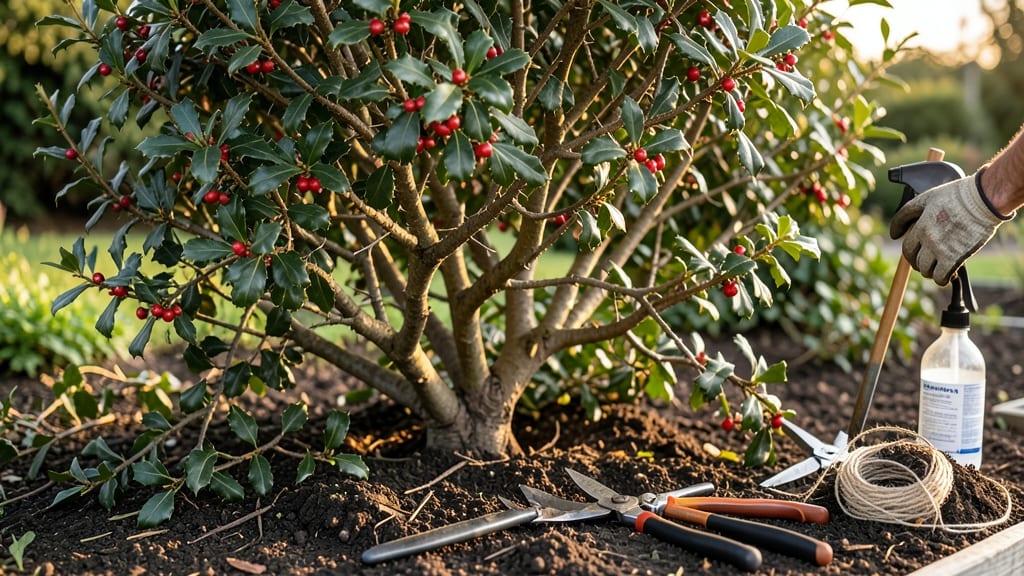
Pruning overgrown holly bushes in late winter reveals their hidden potential—thicker canes, brighter blooms, and that fragrant spring air you’ll notice immediately. 🌿 I’ve seen holly bushes go from tangled messes to showstopping hedges with just the right cuts, and it’s not as intimidating as it looks.
The key is timing: late winter, before new growth starts, when the plant’s dormant but still holds its shape.
You’ll need sharp bypass pruners, a small hand saw for thicker branches, and a clean workspace to avoid spreading disease. Holly’s tough wood resists clean cuts, so take your time—no rushing. The goal is to open the center for airflow while keeping the outer shape intact.
Think of it like giving your bush a spa day: trim the dead, shape the living, and let nature take over.
After pruning, you’ll see new growth within weeks—tender red shoots that’ll harden into sturdy branches. The blooms arrive earlier, too, and those berries stay brighter longer. Just avoid cutting into old wood (no green pith means it won’t regrow), and never remove more than one-third of the bush at once.
Patience here pays off in healthier, bushier growth by summer.
This method works for both smooth and spiny hollies, whether you’re shaping a formal hedge or a loose, natural look. The same principles apply to overgrown bushes in containers or along fences. Now grab those tools—your holly’s revival starts here.
📚 In This Guide
- What you need
- Instructions
- Tips and common mistakes
- Wrapping up and next steps
What you need
- ● Pruning shears: Bypass pruners with sharp, clean blades (4–6-inch blades for medium branches). Pro tip: 💡 Disinfect blades with rubbing alcohol to prevent disease spread!
- ● Loppers: For thicker branches (up to 2 inches in diameter). Look for bypass-style loppers with comfortable grips.
- ○ Pruning saw: A curved-tooth saw for branches thicker than 2 inches. Optional but helpful: A folding saw for hard-to-reach spots.
- ● Gloves: Heavy-duty, cut-resistant gloves (e.g., leather or synthetic mesh) to protect against thorns and rough bark.
- ● Ladder: A sturdy, extendable ladder (if your holly is taller than 6 feet). Safety first: 🌡️ Use stabilizers and never stand on the top rung!
- ● Disposable pruning bags or bucket: To collect and dispose of clippings easily. A 5-gallon bucket works well for smaller jobs.
- ● Rake or broom: For cleaning up fallen leaves and debris after pruning.
- ● Hand pruners: Smaller shears for precise trimming of small branches or shaping.
- ● Pruning sealant: (e.g., tree wound dressing) to coat large cuts, though most experts agree holly bushes heal fine without it.
- ● Workwear: Long sleeves and pants to protect against thorns and scratches.
- ● Spray bottle with water: To dampen dusty branches before cutting for cleaner cuts.
- ● Check the weather: Prune on a dry, calm day to avoid spreading disease or damaging the plant.
- ● Gather a sharpie or marker to label branches if you’re grafting or propagating cuttings.
- ● Have a first-aid kit handy for minor cuts or scrapes.
Step-by-Step guide to pruning overgrown holly bushes
Late winter's the perfect time to revive your holly—here's how to cut back for stronger growth and better blooms.
✂️ Step 1: Assess the Bush and Identify Problem Areas
Start by examining your holly from all sides. Look for dead, diseased, or crossing branches—these are your first targets. Holly grows in dense clusters, so you'll often find inner branches that never get sunlight, turning yellow or brown. Run your hand along each cane to check for soft, mushy spots (a sign of rot) or hollow centers (a sign of pest damage).
I like to use a sharp pair of pruning shears to gently probe suspicious areas—if the branch gives way easily, it's time to remove it. Mark these branches with a small piece of twine or flagging tape so you don't miss them later. Holly can handle aggressive pruning, but precision matters for the plant's long-term health.
✂️ Step 2: Remove Dead and Crossing Branches First
Begin by cutting out any dead or dying wood—these branches won't regrow and just compete for nutrients. Make your cuts just outside the branch collar, the swollen area where the branch meets the trunk. This ensures the plant can seal the wound properly and prevents disease from creeping in.
Next, tackle crossing or rubbing branches. These create wounds that invite pests and disease while blocking airflow. When two branches cross, remove the smaller one or the one growing upward. Use your shears to cut at a 45-degree angle just above a bud or side branch—this encourages new growth in the right direction. Holly responds well to this kind of structural pruning, so don't hold back.
✂️ Step 3: Thin Out the Center for Better Airflow
Holly bushes thrive when they have good air circulation, which is why thinning the center is critical. Focus on removing up to one-third of the oldest, thickest canes from the middle. These are often the ones that look gnarled or have lost their leaves. Cut them back to the ground or to a strong outward-facing bud if you want to encourage bushier growth.
Here's the thing—holly can look sparse after this step, but trust me, it's setting itself up for a stronger spring. You'll see new, vibrant shoots emerging from the base within weeks. Avoid the temptation to leave weak, spindly branches—they'll never recover and will just take energy from the healthier parts of the plant.
✂️ Step 4: Shape the Outer Canes for Balance and Form
Now it's time to refine the bush's shape. Step back and visualize how you want it to look—holly responds well to a rounded, natural form. Start by cutting back overly long or leggy branches to a strong lateral branch or bud. Aim to reduce the height by no more than one-third in a single pruning session to avoid shocking the plant.
For each cut, use your shears to make a clean slice just above a bud that faces outward. This encourages the holly to grow in a fuller, more balanced shape. If you're unsure which bud to target, run your finger along the cane—you'll feel the slight bump where the bud is located. Avoid cutting too close to the trunk, as this can leave unsightly stubs that never heal properly.
⏰ Step 5: Clean Up and Monitor for Recovery
Once you've finished pruning, gather all the clippings and remove them from the area—this prevents disease and pests from lingering. Holly prunings can be composted, but I like to burn or trash them to be safe. Give the base of the bush a light application of mulch (if you have it) to protect new growth as it emerges.
Water the holly deeply after pruning to help it recover. You'll notice new shoots appearing within 4-6 weeks, signaling that the pruning was successful. Keep an eye out for pests like spider mites or fungal spots on the fresh cuts—if you see anything suspicious, treat it immediately with a horticultural oil or fungicide. With proper care, your holly will reward you with healthier canes and even more fragrant blooms next season.
Tips & tricks for pruning overgrown holly bushes
Lessons from years of pruning holly that'll help you avoid common mistakes and get better results.
Tool Prep: Always sharpen your pruning shears before starting—dull blades tear instead of cutting cleanly, which can damage the plant. I run mine over a sharpening stone for a few minutes before each session. Also, disinfect your tools with rubbing alcohol between cuts to prevent spreading disease from any infected branches you remove.
Visual Cues for Healthy Cuts: When making cuts in Step 2 and Step 4, look for the branch collar—the swollen area where the branch meets the trunk. Your cut should be just outside this collar, leaving a small bump. This helps the plant heal properly. If you cut too close to the trunk, you'll leave an unsightly stub that never seals correctly.
Recovery Boost: After pruning, I like to add a 1-inch layer of mulch around the base of the holly (mentioned in Step 5) to retain moisture and protect new growth. This is especially important in late winter when temperatures can still fluctuate. The mulch also helps suppress weeds that might compete with your holly's recovery.
Seasonal Timing: Late winter (as mentioned in the intro) is ideal because holly is dormant, so it won't be stressed by the pruning. If you must prune in summer, do it early in the morning to reduce water loss through the fresh cuts. Never prune in fall—new growth won't have time to harden off before winter.
Pro Tips for Prune Overgrown Holly Bushes
- Lessons from years of pruning holly that'll help you avoid common mistakes and get better results.
- Tool Prep: Always sharpen your pruning shears before starting—dull blades tear instead of cutting cleanly, which can damage the plant.
- Visual Cues for Healthy Cuts: When making cuts in Step 2 and Step 4, look for the branch collar—the swollen area where the branch meets the trunk.
Frequently asked questions
Got questions about pruning your overgrown holly bushes?
You’re not alone! Here are answers to the most common concerns—from timing to tools and everything in between.
When is the best time to prune holly bushes?
Late winter (just before new growth starts) or early spring is ideal. Avoid pruning in fall—it can stimulate tender growth that’s vulnerable to frost. If you missed the window, light pruning in summer is better than nothing, but avoid heavy cuts.
Can I prune holly bushes in summer?
Yes, but keep it minimal! Heavy summer pruning stresses holly bushes, especially in hot climates. If you must prune, focus on shaping or removing dead branches. Water thoroughly after to help recovery. Pro tip: Wait until late summer for minor adjustments.
Will pruning my holly bush reduce berries next year?
Not if done correctly! Pruning old wood (last year’s growth) actually boosts berry production by improving airflow and sunlight. Avoid cutting back into the center—this can reduce flowering. For female bushes (the ones with berries), prioritize outer branches.
How do I know if I’ve pruned too much?
Watch for these red flags:
- Yellowing leaves or sparse foliage
- No new growth by spring
- Bare stems with no buds
Do I need special tools for pruning holly?
Not necessarily! Sharp bypass pruners work for small branches, while a pruning saw handles thicker stems. Disinfect tools with rubbing alcohol between cuts to prevent disease. For large bushes, loppers or a hand saw can save your hands (and your back!).
What if my holly bush doesn’t bloom after pruning?
Holly blooms on old wood, so heavy pruning of last year’s growth can delay flowers. Focus on removing dead or crossing branches instead. If it’s a male bush (needed for pollination), ensure a female bush is nearby. Patience is key—some holly varieties take 2–3 years to rebound.
Wrapping up and next steps
Pruning your overgrown holly bushes in late winter isn’t just about tidying up—it’s a game-changer for their health, growth, and those stunning berries you love! 🌿 With the right tools, timing, and technique, you’ll encourage stronger canes, vibrant blooms, and a lush, manageable shrub.
Remember, patience and precision are key, so take your time and enjoy the process.
Ready to transform your holly? Grab your pruners, mark those cuts, and get to work! Once you’ve revived your bushes, why not explore other late-winter landscaping tips to keep your yard thriving all season long? Happy pruning! ✂️💚