
How To
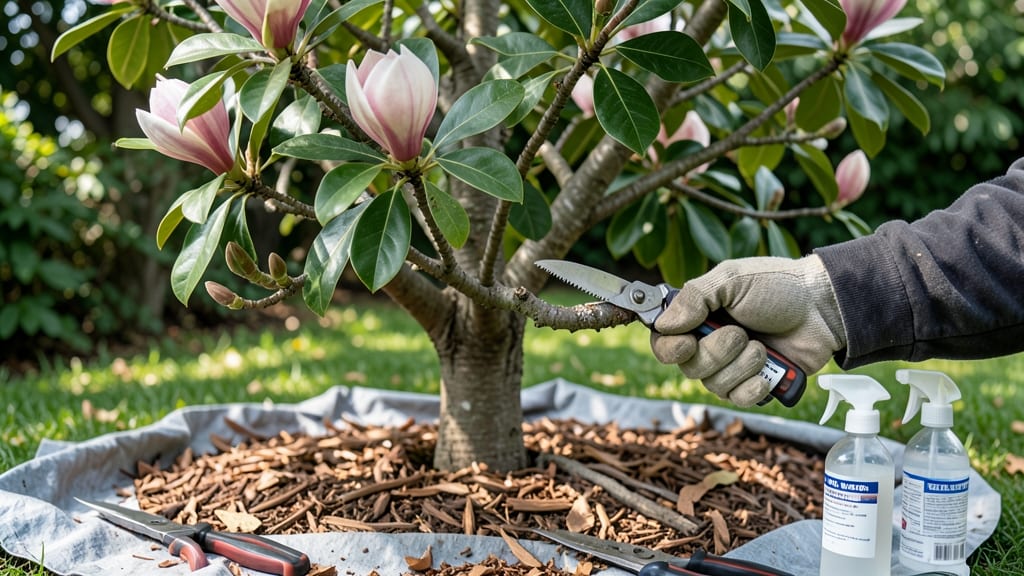
Pruning a magnolia tree in late winter reveals its hidden potential—thicker blooms and stronger growth when you do it right. 🌸 The key is timing: wait until after the worst cold snaps, but before buds swell, to avoid stressing the tree.
I learned this the hard way after over-pruning too early and watching my blooms shrink the next spring.
Start with clean cuts just above outward-facing buds, using sharp bypass pruners. Never remove more than 25% of the canopy—magnolias bloom on old wood, so aggressive pruning back to bare branches kills next year’s flowers. Thin crowded branches first, then shape lightly, always keeping the natural vase shape intact.
📚 In This Guide
- What you need
- Instructions
- Tips and common mistakes
- Wrapping up and next steps
What you need
- ● Pruning shears: Bypass pruners (for small branches, ¼”–¾” thick) or anvil pruners (for thicker branches up to 1” diameter). Look for sharp, stainless-steel blades to avoid crushing.
- ● Loppers: Long-handled bypass loppers (for branches 1”–2” thick). Opt for ratcheting models for extra leverage.
- ● Pruning saw: Curved-tooth pruning saw (for branches >2” thick). Choose a lightweight, ergonomic design to reduce hand fatigue.
- ● Gloves: Heavy-duty gardening gloves (cut-resistant, like those with nitrile-coated palms) to protect from thorns and sap.
- ● Disinfectant: 70% isopropyl alcohol or a gardening disinfectant spray (to sterilize tools between cuts and prevent disease spread).
- ○ Sealing wax or pruning paste: Optional but helpful for sealing large cuts (>½”) to reduce sap loss and infection risk.
- ● Weather check: Prune on a dry, calm day (avoid rain or wind). Ideal temps: 40–60°F (dormant season, late winter/early spring).
- ● Safety glasses: Protect your eyes from debris (especially when using a saw).
- ● Sturdy ladder or step stool: If your tree is tall, use a stable, 3-point contact ladder (never a step ladder alone).
- ● Cleanup supplies: Garden bag or bucket for clippings + broom to sweep up debris.
- ● First-aid kit: Bandages and antiseptic wipes (just in case of minor cuts or scrapes).
Step-by-step instructions for pruning magnolia trees in dormant season
Here’s the method I’ve used for years to keep my magnolias blooming beautifully—no guesswork, just clear steps.
✂️ Step 1: Choose the Right Time and Tools
Prune your magnolia tree during late winter or early spring, just before buds begin to swell. This timing ensures you’re cutting while the tree is dormant but about to wake up—ideal for minimal stress. Avoid pruning after blooms appear, as new growth won’t have time to harden off before winter.
Gather your tools: clean, sharp pruning shears for small branches and a pruning saw for thicker limbs over ½ inch in diameter. Disinfect your tools with rubbing alcohol before you start—this prevents spreading disease between cuts. I always wear gloves too; magnolia sap can irritate skin.
✂️ Step 2: Remove Dead, Diseased, or Crossing Branches
Start by scanning the tree for dead branches—they’ll be dry, brittle, and snap easily when bent. Cut these out first, making clean cuts just outside the branch collar (the swollen area where the branch meets the trunk). Next, look for diseased branches (yellowing leaves, black spots, or oozing sap) and remove them entirely.
Now focus on crossing or rubbing branches. These compete for sunlight and nutrients, weakening the tree over time. Use your shears to make a 45-degree cut just above the branch collar, angling slightly away from the trunk. This ensures water drains properly and the wound heals faster. If a branch is too large, use your pruning saw and follow the same angle.
✂️ Step 3: Thin the Canopy for Better Airflow
Step back and assess the tree’s shape. Magnolias naturally grow with a rounded canopy, but over time, branches can become too dense. Your goal is to open up the center by removing 10-20% of the smallest branches—these are the ones growing inward or upward. This improves airflow, reducing humidity-related diseases like powdery mildew.
When thinning, never remove more than a third of a branch in one cut. Instead, make smaller cuts over time to avoid shocking the tree. Focus on branches that are thinner than your thumb—these are easier to remove and won’t disrupt the tree’s structure. If you’re unsure, err on the side of caution and leave it; magnolias are forgiving but slow to recover from heavy pruning.
☀️ Step 4: Shape the Tree for Future Growth
Now it’s time to refine the tree’s shape. Magnolias bloom on old wood, so avoid cutting back last year’s growth unless it’s absolutely necessary. Instead, focus on light shaping—trimming branches that spoil the tree’s natural form or grow too close to sidewalks, driveways, or power lines.
Make your cuts just above a bud or side branch, angling downward to prevent water from pooling. If you’re pruning a branch that’s thicker than 1 inch, use the three-cut method: First, make an undercut about 12 inches out from the trunk, then a top cut just above it, and finally remove the branch by twisting it outward. This protects the bark from tearing.
🌿 Step 5: Clean Up and Monitor Recovery
After pruning, collect and dispose of all debris—don’t leave cuttings on the ground, as they can harbor pests or diseases. Rake up fallen leaves and branches, and consider composting healthy ones. Once the tree is clean, give it a deep watering to help it recover from the stress of pruning.
Keep an eye on the tree in the weeks following pruning. Healthy new growth should appear within 4-6 weeks, and buds should swell by early spring. If you notice yellowing leaves, wilting, or excessive sap, the tree may be struggling—reduce watering slightly and avoid any further pruning until it recovers. With proper care, your magnolia will reward you with longer, more abundant blooms for years to come.
Tips & tricks for perfect magnolia pruning
These simple but game-changing tips will help you prune your magnolia like a pro—without stressing the tree or yourself.
Timing is Everything: The late winter to early spring window (just before buds swell) is your golden hour. I learned this the hard way—after pruning too early one year, my tree struggled to bloom. Check your local frost dates, and aim for when daytime temperatures consistently reach the 50s°F. This gives the tree enough energy to recover before summer heat arrives.
Tool Prep Makes All the Difference: Never skip disinfecting your pruning tools! I use rubbing alcohol between cuts to prevent spreading disease from one branch to another. Also, sharpen your tools before you start—dull blades tear bark instead of making clean cuts, which slows healing. If you don't have a dedicated pruning saw, a sturdy handsaw works in a pinch for thicker branches.
Visual Cues for Better Cuts: When making your 45-degree cuts (Step 2), imagine the branch collar as your guide. The cut should be just outside this swollen area, angled slightly away from the trunk. For branches thicker than 1 inch, the three-cut method prevents bark tearing—this is especially important for magnolias, which heal slowly. Practice on smaller branches first if you're new to this technique.
Recovery Checklist: After pruning, watch for these signs of healthy recovery: new growth within 4-6 weeks, and buds swelling by early spring. If you see yellowing leaves or excessive sap, reduce watering immediately—this signals stress. I always mark the pruning date on my calendar to track progress. A lightly pruned magnolia will thank you with longer, more abundant blooms next season.
Pro Tips for Prune Magnolia Tree
- These simple but game-changing tips will help you prune your magnolia like a pro—without stressing the tree or yourself.
- Timing is Everything: The late winter to early spring window (just before buds swell) is your golden hour.
- Tool Prep Makes All the Difference: Never skip disinfecting your pruning tools!
Frequently asked questions
Got questions about pruning your magnolia tree? You're not alone! Here are some of the most common concerns—plus clear, actionable answers to keep your tree thriving.
When is the absolute best time to prune my magnolia?
The ideal window is late winter to early spring (just before buds swell), when the tree is dormant but not actively growing. For southern climates, aim for February–March; in colder zones, wait until March–April. Avoid pruning after blooms appear—you’ll cut off next year’s flowers!
Can I prune my magnolia in summer if I missed the dormant season?
Yes, but with caution! Summer pruning (June–August) can stress the tree and reduce blooms. If you must, limit cuts to 10–15% of the canopy, remove only dead/diseased branches, and water deeply afterward. Avoid heavy pruning—it may stunt flower production.
What if I prune too much? Will my magnolia die?
Magnolias are tough, but over-pruning (30%+ of branches) can weaken the tree, reduce blooms, or even cause dieback. Stick to light shaping (10–20%) and focus on removing only dead, crossing, or crowded branches. If you’ve already overdone it, don’t panic—give the tree time to recover with proper watering and fertilization.
Should I prune after my magnolia blooms?
Only if the branches are damaged or diseased—never prune after blooms fade to preserve next year’s flowers! Blooms form on old wood, so cutting back now means fewer (or no) blooms the following spring. Wait until late winter for your next pruning session.
How do I tell if my magnolia needs pruning?
Watch for these red flags:
- Dead/dying branches (brown, brittle, or no leaves).
- Crossing or rubbing branches (they’ll damage each other over time).
- Overcrowded canopy (reduces airflow and blooms).
- Storm damage (broken or split limbs).
Pro Tip:
Use a sharp bypass pruner for clean cuts—dull tools crush branches, inviting disease. And always sterilize tools with rubbing alcohol between cuts to prevent spreading infections.
Wrapping up and next steps
Pruning your magnolia tree during dormancy is a simple yet powerful way to boost blooms, improve shape, and keep it healthy for years to come! 🌸 By following the right steps—like timing, tools, and technique—you’ll encourage vibrant flowers and a stronger structure. Remember: patience and precision pay off!
Now that you’re armed with the know-how, grab those shears and get pruning—your magnolia will thank you with stunning spring blooms! For extra care, consider mulching or fertilizing afterward to support its growth. Happy gardening! ✂️🌿