Pruning
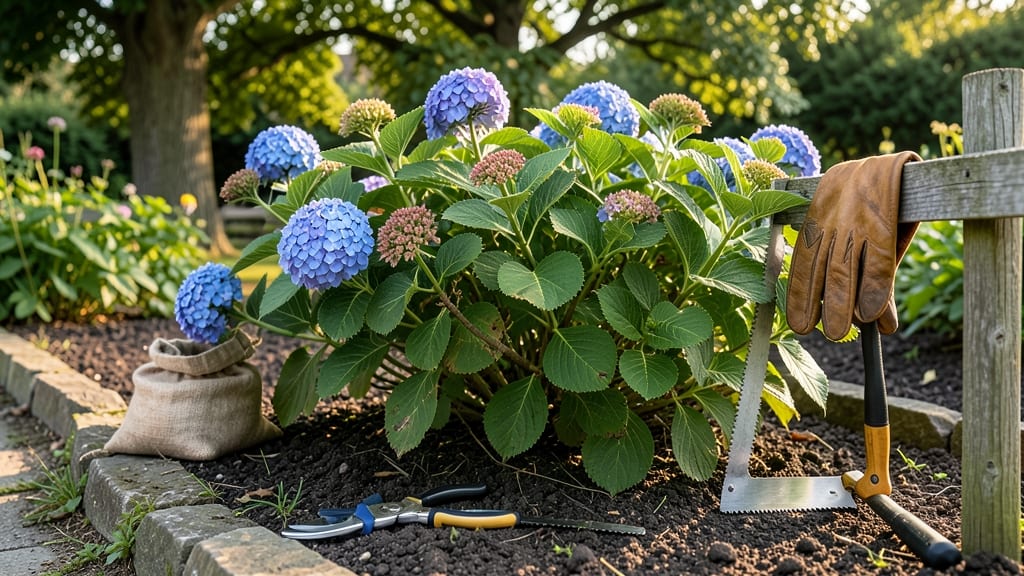
You need to prune hydrangeas strategically for optimal blooms, as old wood types (like bigleaf) rely on previous year’s stems for flowers, while new wood types (like panicle) bloom on current season growth. Proper timing and technique prevent weak stems and maximize flower production.
Pruning isn't just about cutting back—it's about encouraging your hydrangeas to thrive. 🌿 For old wood varieties (such as bigleaf), late summer pruning after blooms fade is critical, as these plants set next year's buds on current season's growth.
Meanwhile, new wood types (like panicle) can handle a harder prune in late winter or early spring without harming future blooms. The key is matching your approach to the plant's natural growth cycle, which directly impacts how lush and abundant your flowers will be.
Beyond timing, the tools you use make a difference. Dull or dirty shears can crush stems and invite disease, while proper cutting angles promote faster healing. I always sanitize my tools with rubbing alcohol before and after pruning to prevent bacterial spread.
Over-trimming is another common mistake—cutting back too aggressively can shock the plant, leading to fewer blooms or even dieback. The goal is to shape without stripping away too much foliage or stem structure.
💡 In This Article
- How to Identify Hydrangea Varieties for Proper Pruning
- Step-by-Step Hydrangea Pruning Guide by Season
How to identify hydrangea varieties for proper pruning
The science behind hydrangea blooms lies in their stem structure. Old wood types, like the classic bigleaf hydrangea (Hydrangea macrophylla), produce flowers on stems that developed the previous growing season. These stems are typically brown and woody, with buds forming in late summer or early fall.
If you prune these stems in late winter or spring, you'll remove next year's blooms before they even form. 🌸 This is why bigleaf varieties need minimal pruning—only removing dead or crossing branches—and should be pruned right after flowering.
New wood types, such as panicle hydrangeas (Hydrangea paniculata), bloom on current season growth. Their stems are green and more flexible, with flower buds forming at the tips of new shoots in spring.
These varieties can handle a more aggressive prune in late winter or early spring because they won’t sacrifice next year’s blooms. Oakleaf hydrangeas (Hydrangea quercifolia) also fall into this category, producing flowers on new growth while offering stunning fall foliage as a bonus.
Stem color and growth patterns are your best clues. Old wood types have thick, brown stems that feel woody to the touch, while new wood types have thinner, green stems that bend easily.
Pay attention to how your plant grows—if it blooms in late summer or early fall, it’s likely an old wood type. If it flowers in mid to late summer on new growth, it’s a new wood type.
This distinction is critical because pruning at the wrong time can leave your hydrangea looking bare or even kill potential blooms.
Another visual cue is the flower head itself. Old wood types, like bigleaf, often have larger, showier blooms that appear later in the season. New wood types, such as panicle, tend to have smaller, cone-shaped flowers that develop throughout the summer.
Understanding these differences helps you tailor your pruning approach to maximize blooms and keep your hydrangea thriving. 🌿
For example, if you have a bigleaf hydrangea that blooms in June, pruning it in March could mean no flowers that year. On the other hand, a panicle hydrangea pruned in March will still produce abundant blooms later in the season.
This is why identifying your variety is the first step to successful pruning—it ensures you’re working with, not against, the plant’s natural growth cycle.