
Pruning
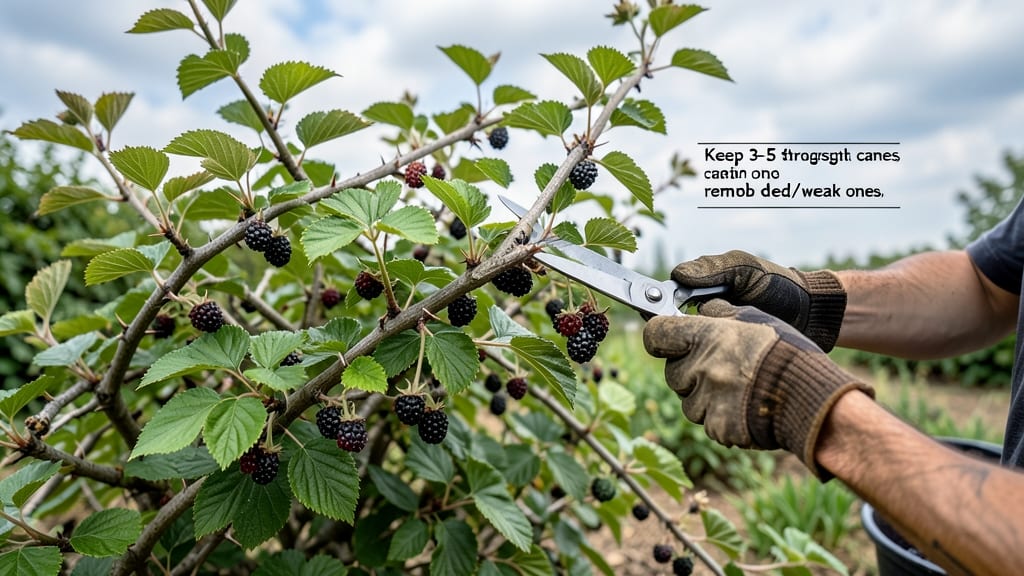
Pruning blackberry bushes at the right time is the key to bigger fruit and healthier canes—yet many gardeners still miss the late-winter window that makes all the difference.
Picture this: You’ve spent months nurturing your 🫐 bushes, only to prune too early and trigger new growth that gets fried by frost, or too late and risk disease spreading through the canes.
The 3-week window between dormancy and bud swell is your sweet spot, and getting it wrong can cost you next summer’s harvest.
In USDA Zone 6a, that means acting by early March—before buds swell but after the worst winter cold has passed. This is when you remove last year’s fruit-bearing canes (floricanes) and shape the new primocanes for next year’s crop.
Skip this step, and you’re basically letting your bushes grow blindly, with weaker structure and fewer berries.
Below, I’ll walk you through the exact timing by region, the tools you’ll need, and the 3 critical mistakes that even experienced gardeners make. By the end, you’ll know not just when to prune, but how to do it for maximum yield.
Late winter pruning: the science behind why it works for blackberry canes
Blackberry bushes thrive when pruned during their dormancy period in late winter—typically between January and February. This timing isn't random; it's rooted in plant biology. When temperatures drop and growth slows, pruning stimulates new primocanes (next year's fruit-bearing canes) while removing weak or diseased growth.
The key is to act before buds swell, which signals the plant to wake up and start growing.
During dormancy, blackberries conserve energy, making them less stressed by pruning. Cutting now also reduces disease risk by removing old canes that might harbor pathogens. Without late winter pruning, your bushes could become overcrowded, leading to smaller berries and weaker canes.
Think of it as giving your plants a fresh start before the growing season begins.
Here’s the science: Blackberries produce two types of canes—primocanes (current year’s growth) and floricanes (last year’s fruit-bearing canes). Pruning in late winter removes last year’s floricanes, allowing primocanes to grow uninhibited.
This process maximizes sunlight, air circulation, and nutrient flow, all critical for bigger, sweeter berries later in the summer.
Your USDA climate zone plays a role in the exact timing. In colder zones (5-6), prune as soon as the ground is workable but before buds break. In milder zones (7-9), you might delay until early February to avoid encouraging premature growth.
The goal is to prune after the worst cold snaps but before active growth resumes.
| Factor | Late Winter Pruning Benefit | Why It Matters |
|---|---|---|
| Dormancy Period | Reduces stress on plant | Plant conserves energy for new growth |
| Disease Prevention | Removes old, diseased canes | Prevents pathogen spread to new growth |
| Primocane Stimulation | Encourages new fruit-bearing canes | Maximizes sunlight and nutrient access |
| Air Circulation | Thins out overcrowded canes | Reduces humidity-related diseases |
| Climate Zone Adjustment | Timing varies by zone 5-9 | Avoids premature bud break |
One common misconception is that pruning blackberries is the same as pruning other fruit bushes. Unlike apples or peaches, blackberries don’t fruit on old wood—they produce new canes each year.
That’s why late winter pruning is so critical. By removing last year’s canes, you’re making space for this year’s primocanes, which will bear fruit in the coming summer.
For everbearing varieties, the process is slightly different. These bushes produce fruit on both primocanes and floricanes. In late winter, you’ll still remove old canes, but you’ll leave some primocanes to fruit in the current season.
The key is to balance pruning to ensure both summer and fall harvests. Always research your specific variety, as some everbearers may need a lighter touch.
Late winter pruning also gives you a chance to inspect your bushes for signs of stress or pests. Look for cankers, rust spots, or signs of borers. Removing infected canes immediately prevents the spread of disease.
Healthy canes should be firm, brown, and free of lesions. If you find mushy or discolored canes, cut them back to healthy wood and dispose of them away from your garden.
After pruning, your blackberries will need time to recover before new growth begins. Avoid fertilizing immediately post-prune—wait until you see new shoots emerging (usually in early spring). This gives the plant energy to focus on root and cane development rather than leaf production.
A light application of compost or balanced fertilizer at this stage supports strong primocane growth.
Finally, don’t forget to clean up pruned canes from your garden bed. Leaving old canes on the ground can harbor pests or diseases. Consider composting them only if they’re disease-free.
For infected canes, bag and discard them in the trash to prevent reinfestation. This small step can make a big difference in your bushes’ health next season.
With late winter pruning, you’re not just tidying up—you’re setting the stage for a healthier, more productive blackberry patch. The science is clear: timing matters, and late winter is the perfect window to give your canes the fresh start they need. 🌱
Step-by-step late winter pruning guide: tools, techniques, and common mistakes
Late winter is the perfect time to prune your blackberry bushes because the plants are dormant, making it easier to see dead or diseased canes. This is when you should remove last year’s floricane (fruit-producing canes) to encourage new primocane growth for next year’s harvest.
Without proper pruning, your bushes can become overcrowded, leading to smaller berries and weaker plants.
Start by gathering the right pruning tools. A sharp pair of bypass pruners works best for smaller canes, while loppers handle thicker stems. Disinfect your tools with rubbing alcohol to prevent spreading diseases between cuts. I also recommend wearing gloves—blackberry thorns are no joke!
Before you begin, scan your bushes for dead or diseased canes. These will be gray, shriveled, or covered in mold. Cut these out first, making your cuts about 1/4 inch above a bud or at the base of the plant.
This prevents pests and diseases from lingering in the garden.
⚠️ callout warning
⚠️ 3 Critical Pruning Mistakes to Avoid
1. Over-pruning: Never remove more than 1/3 of the canes in one year. Blackberries need a balance of old and new growth to thrive. Cutting too aggressively stresses the plant and reduces fruit production.
2. Wrong timing: Prune too early (mid-winter) or too late (spring bud break). Late winter (after hard frosts but before bud swell) is ideal. In warmer zones (7-9), wait until February-March to avoid encouraging early growth.
3. Ignoring primocanes: Everbearing varieties need special care—leave 6-8 of the strongest primocanes to fruit this year while pruning the rest. Summer-bearing types should have all primocanes removed now to focus energy on next year’s floricanes.
For summer-bearing varieties, focus on removing last year’s floricane canes—they’re the ones that produced fruit last season. Cut them down to the ground. For everbearing varieties, leave 6-8 of the healthiest primocanes (this year’s growth) to fruit, while pruning the rest to encourage stronger canes for next year.
After pruning, clean up the debris and dispose of it in the trash—not the compost pile—to prevent disease spread. Rake away fallen leaves and small branches, then consider applying a 2-3 inch layer of mulch around the base of your bushes.
This helps retain moisture and suppresses weeds, giving your blackberries a strong start when spring arrives.
Finally, keep an eye on your pruned bushes in early spring. If you notice new shoots emerging from the base, these are primocanes ready to grow. This is a sign your pruning was successful!
Water deeply after pruning to help the plant recover, and monitor for pests like spotted wing drosophila as berries begin to form.