
Pruning
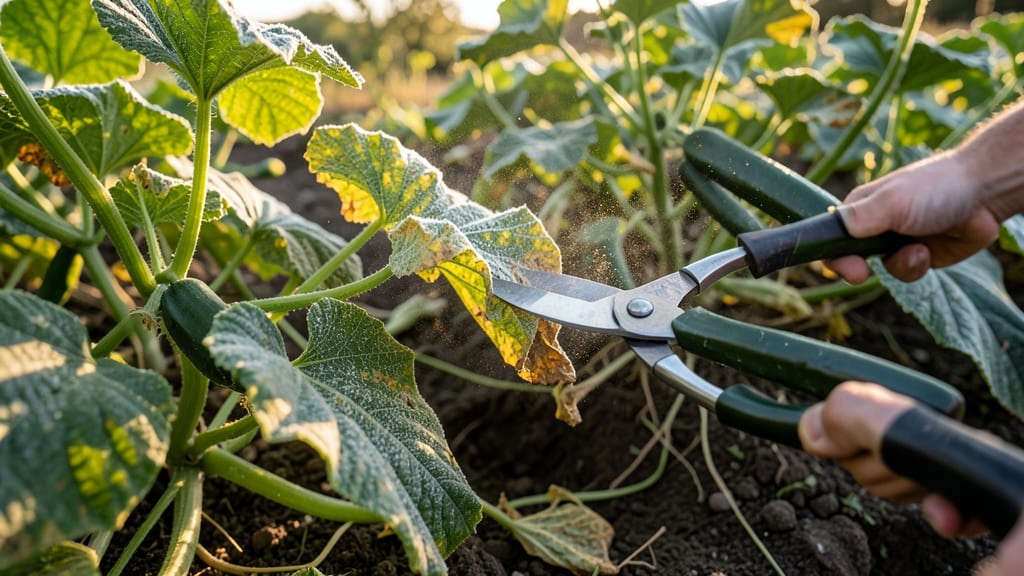
Struggling to get the most from your cucumber plants? Proper pruning transforms underperforming vines into high-yielding powerhouses. These 10 expert techniques will help you maximize fruit production while keeping plants healthy and disease-free.
Vertical Trellis Pruning Method for Bush Cucumbers
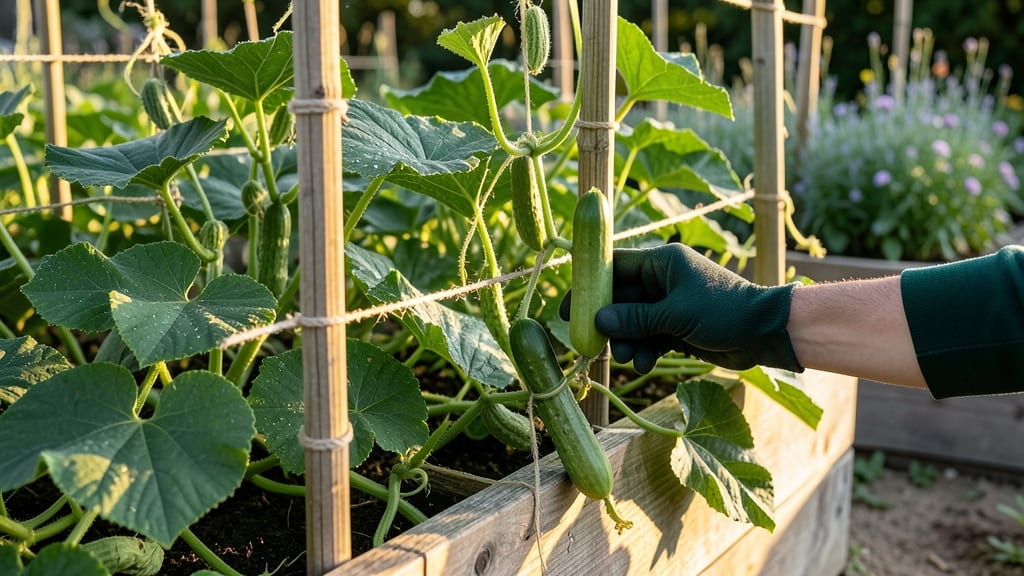
If you're growing bush cucumbers but frustrated by small, curved fruits and wasted space, a vertical trellis pruning method is your game-changer. This technique redirects the plant's energy upward, producing straighter, larger cucumbers while reclaiming valuable garden real estate.
Start by installing a sturdy 3-4 foot tall trellis at planting time. As the plant grows, gently train the main stem upward, securing it with soft ties every 12 inches. Once the plant reaches the top of the trellis, prune all lateral shoots below the first fruit cluster to force energy into upward growth. For bush varieties like 'Bush Champion' or 'Straight Eight,' this method can increase fruit size by 30-50% while eliminating sprawling vines that shade lower leaves.
This approach is perfect for small-space gardeners or those with limited square footage, as it transforms sprawling plants into vertical production machines. Just be sure to harvest frequently to encourage continuous fruiting! 🌱
Succession Pruning for Continuous Harvesting
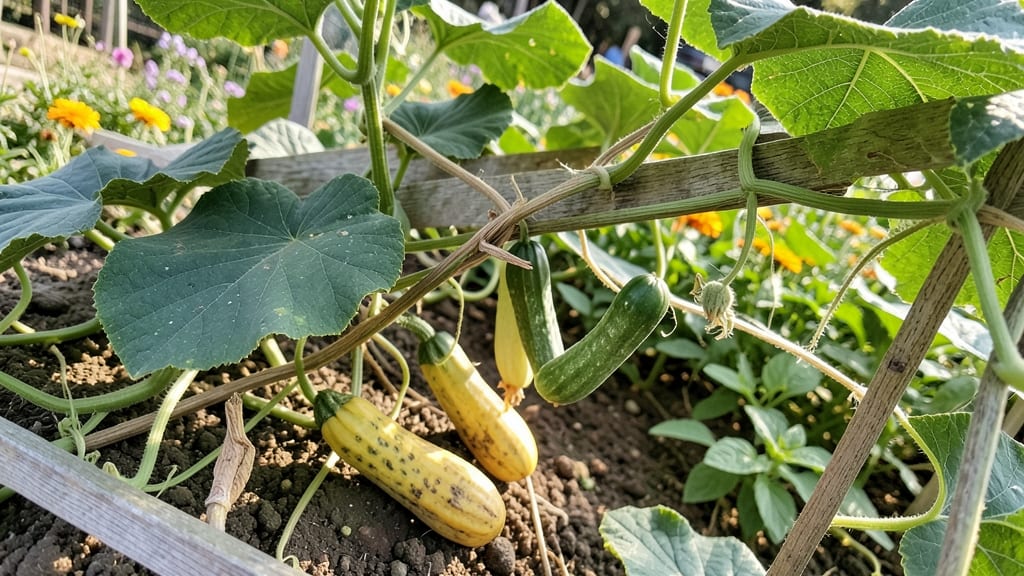
Tired of cucumber plants producing a big harvest all at once, leaving you overwhelmed and with wasted fruit? Succession pruning is the secret to turning your vines into a year-round production line—no more glut, no more spoilage, just steady, delicious cucumbers for weeks longer than usual.
Here’s how it works: Every 7-10 days, remove the oldest, largest cucumbers (especially those turning yellow or soft) while leaving smaller, developing fruits behind. This signals the plant to redirect its energy into new flower clusters, which will mature into fresh cucumbers in just 2-3 weeks. For long-season varieties like 'Straight Eight' or 'Marketmore', this method can extend your harvest by 3-4 weeks—perfect for gardeners who love fresh cucumbers straight from the vine.
This technique is especially valuable for home gardeners with limited space or those who want to avoid food waste. By keeping your plants in a constant cycle of fruiting, you’ll enjoy firm, crisp cucumbers all season long without the stress of overproduction. 🌱
Defoliation Technique for Air Circulation
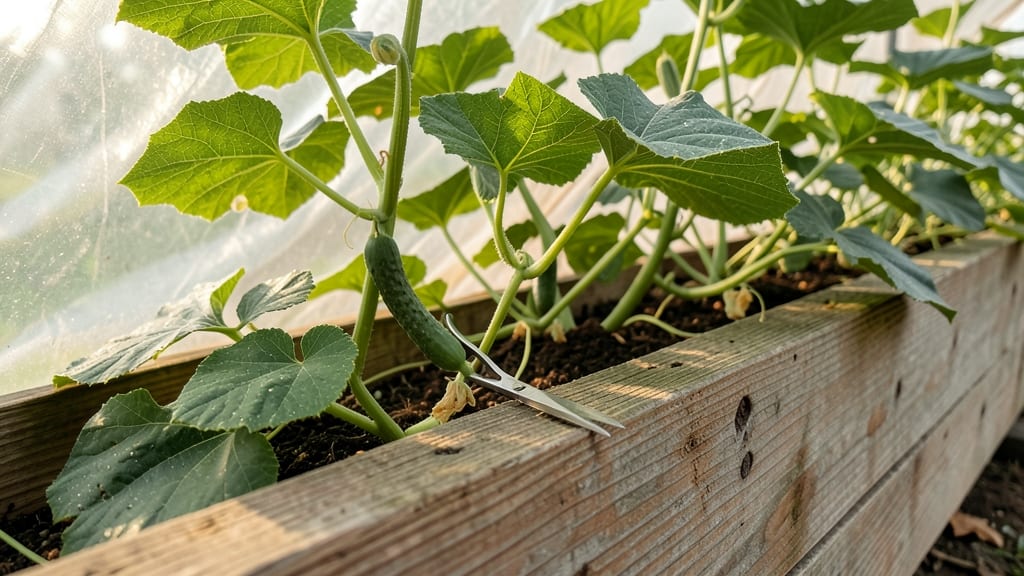
If your cucumbers are wilting in humid climates, you might be missing this key trick: strategic defoliation. By removing just the right leaves, you create airflow that prevents powdery mildew while boosting fruit production—without harming the plant.
Focus on removing lower leaves that block sunlight and airflow, especially near the base of the plant. Use clean, sharp pruners to snip leaves just above a leaf node, avoiding stems. Aim to expose at least 50% of the plant’s surface to sunlight and air movement—this reduces moisture buildup and redirects energy to fruit development.
This technique is a game-changer for gardeners in hot, sticky regions, where fungal diseases thrive. Even beginners can master it with a little practice, leading to healthier vines and bigger cucumbers. 🌿
Main Stem Pruning for Vining Varieties
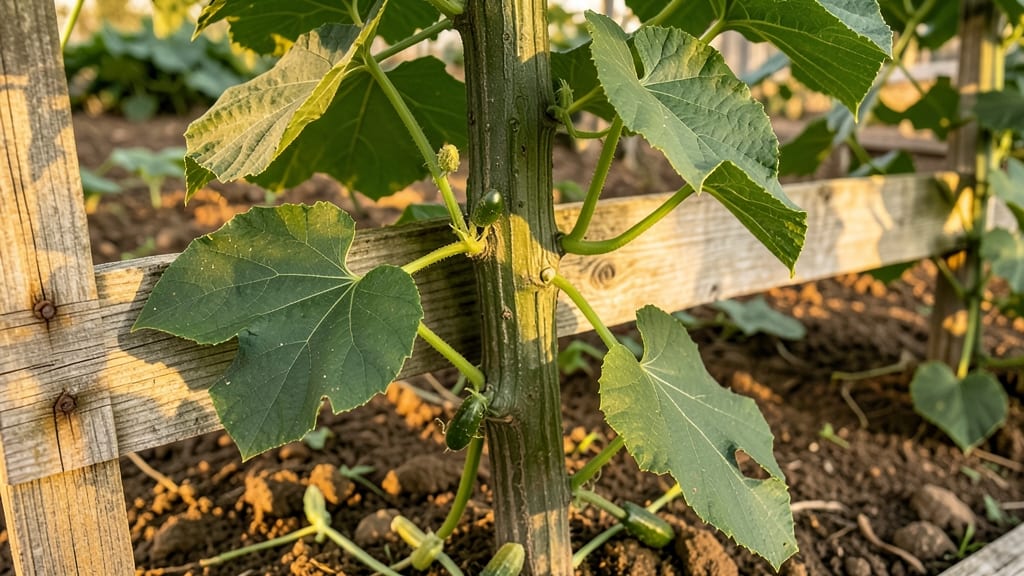
If your indeterminate cucumber varieties (like 'Straight Eight' or 'Marketmore') are sprawling instead of producing, main stem pruning is your secret weapon. This technique focuses on the plant’s vertical growth by removing lateral shoots below the first fruit cluster, which forces energy into the upper parts of the vine where more fruit will develop.
Start by identifying the main stem—the central vine—and locate the first fruit cluster that appears. Using clean, sharp pruning shears, cut off any lateral shoots (side branches) that emerge below this cluster. This redirection of resources leads to larger, healthier fruits and prevents overcrowding. Repeat this process every 2-3 weeks as new lateral shoots appear, ensuring you never prune more than ⅓ of the plant at once to avoid stress.
This method is especially beneficial for gardeners with limited space or those growing heirloom varieties that tend to sprawl. By focusing on vertical growth, you’ll see a noticeable increase in fruit size and yield, making it a must-try for anyone growing vining cucumbers. 🌱
Fruit Thinning Pruning Strategy
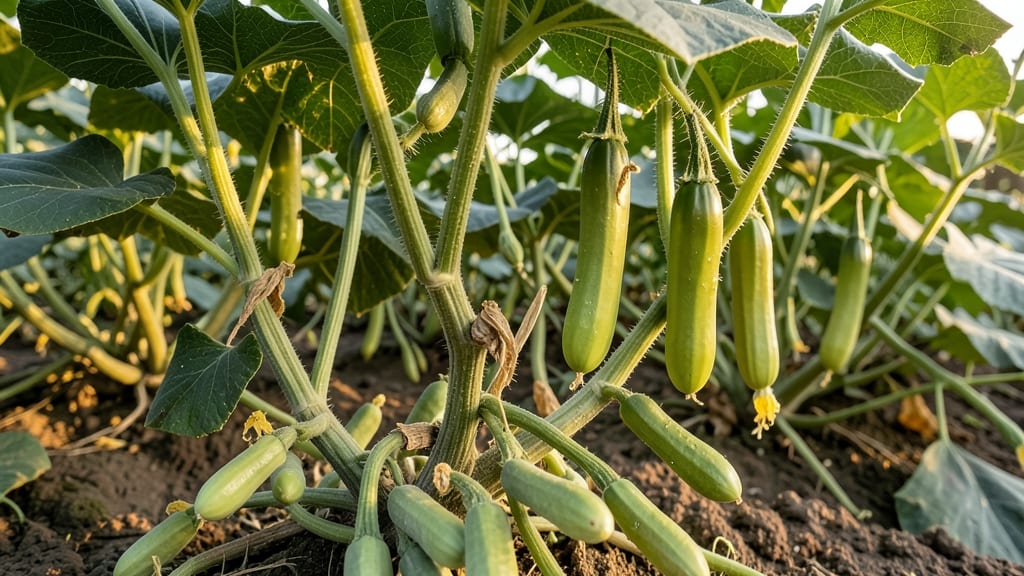
Ever wonder why your cucumber plants produce tiny, bitter fruits instead of the large, crisp harvest you dream of? The secret lies in fruit thinning—a simple yet powerful pruning strategy that transforms overcrowded vines into high-yielding powerhouses.
Start by identifying overcrowded fruit clusters (typically 3-5 cucumbers per node). Gently twist off the smallest or weakest cucumbers, leaving only the healthiest 1-2 fruits per stem. This redirects the plant’s energy toward fewer, larger cucumbers with better flavor and texture. Focus on young, developing fruits—never remove mature ones already on the vine. Repeat this process every 7-10 days during peak fruiting season (late spring to early summer) to maintain optimal spacing.
This technique is a game-changer for home gardeners and small-scale farmers alike, especially when growing slicing varieties like 'Straight Eight' or 'Marketmore'. By thinning, you’ll enjoy 20-30% larger cucumbers with fewer blemishes—worth the extra 10 minutes of care! 🌱
Root Pruning for Transplanted Plants
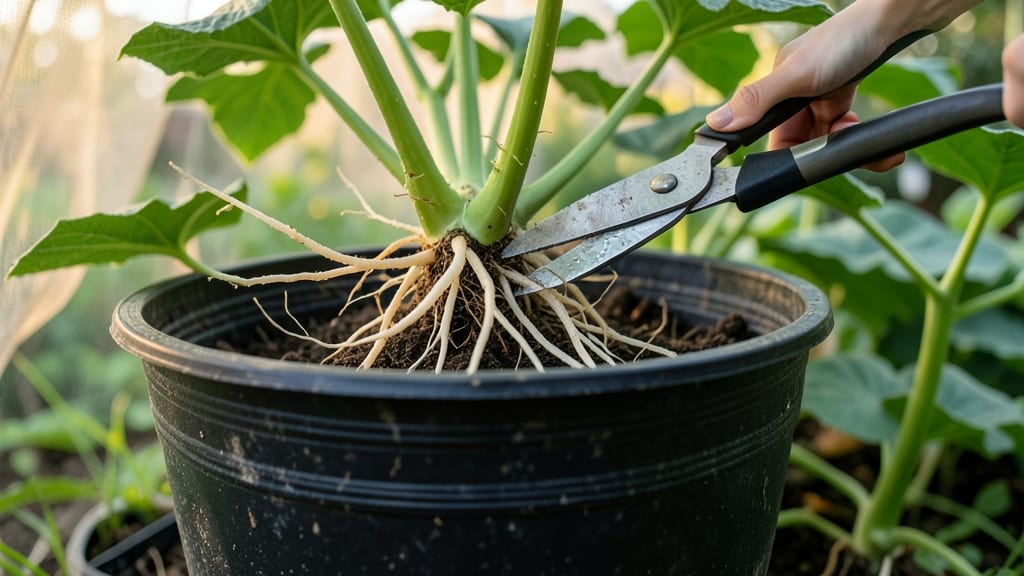
Container-grown cucumbers often struggle with root-bound stress, but a simple root pruning technique can transform your struggling plants into heavy fruit producers. By carefully trimming the outer roots during transplanting, you stimulate a burst of new root growth that supports larger harvests—especially for vining varieties.
Use clean, sharp shears to trim 10-15% of the outer roots before replanting in fresh, well-draining soil. Focus on long, circling roots that wrap tightly around the root ball, as these restrict growth. For container cucumbers, repeat this process every 4-6 weeks during the growing season to maintain vigor. This method works best for determinate varieties that produce fruit in clusters, as their compact growth benefits from controlled root expansion.
Urban gardeners and balcony growers will see the biggest benefits, as root pruning helps compensate for limited soil volume. Your cucumbers will reward you with longer vines, more flowers, and heavier fruit loads—without requiring extra space. 🌱
Flower Cluster Pruning Technique
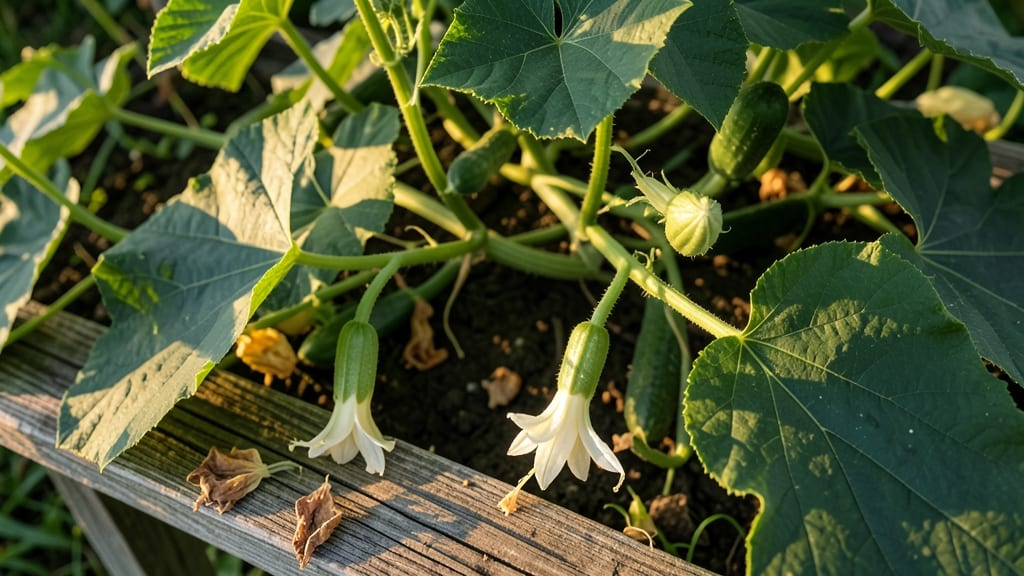
Did you know your cucumber plant is wasting energy on flowers that won’t produce fruit? Male flowers (the ones without tiny cucumbers at their base) are energy drains—they don’t contribute to your harvest. By removing just these, you can redirect that energy to female flowers, the ones that turn into cucumbers.
Start by identifying the difference: male flowers have long stems and no swell at the base, while female flowers have a tiny cucumber forming. Use clean pruning shears to snip off male blooms in the morning when they’re fresh. Focus on the first 3-4 weeks of flowering when the plant is establishing its energy reserves. This technique can increase your yield by up to 20-30% in optimal conditions.
This method is especially valuable for gardeners with limited space or those growing high-value slicing varieties. It’s a simple but powerful way to ensure your plants focus their energy where it counts—on the fruits you’ll enjoy. 🌱
Summer Pruning for Heat Stress Prevention
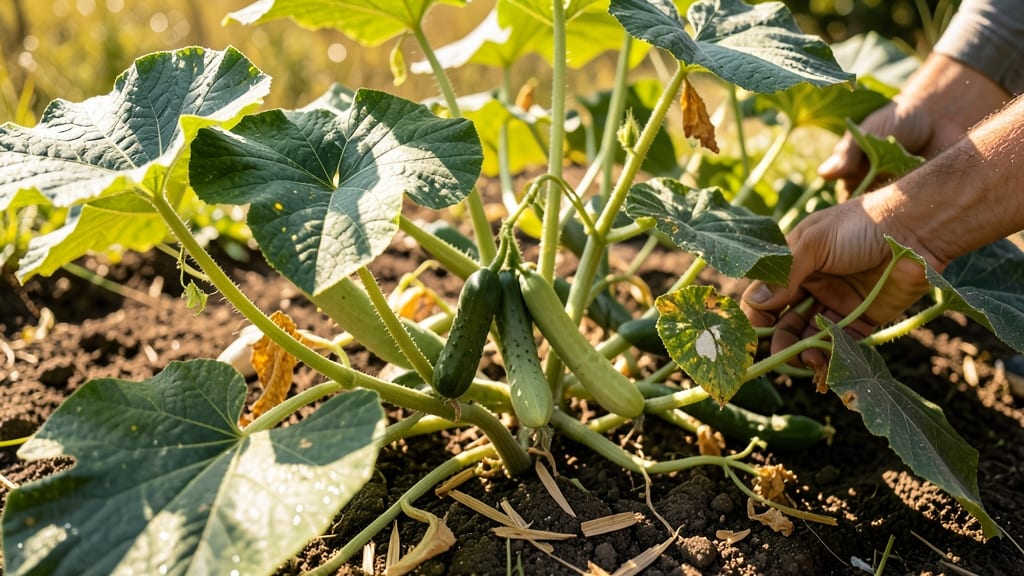
When summer temperatures soar, your cucumber plants can quickly go from productive to stressed without the right pruning approach. Selective summer pruning isn't just about maintaining shape—it's about protecting your plants from heat damage and preventing fruit sunscald, a common issue in hot climates that ruins harvests.
Focus on removing only the most sun-exposed leaves while preserving shade for developing fruits. Prune in the early morning or late afternoon to avoid shocking plants with midday heat. For vining types, trim back any leggy growth that's creating excessive shade on lower leaves—this improves airflow and keeps temperatures cooler at the plant's base. Always use clean, sharp shears to make cuts just above leaf nodes.
This method is especially valuable for gardeners in Zone 8 and above, where summer heat can quickly overwhelm cucumber plants. By maintaining a balanced canopy, you'll protect your yield while keeping plants vigorous through the hottest months. 🌻
Winter Preparation Pruning
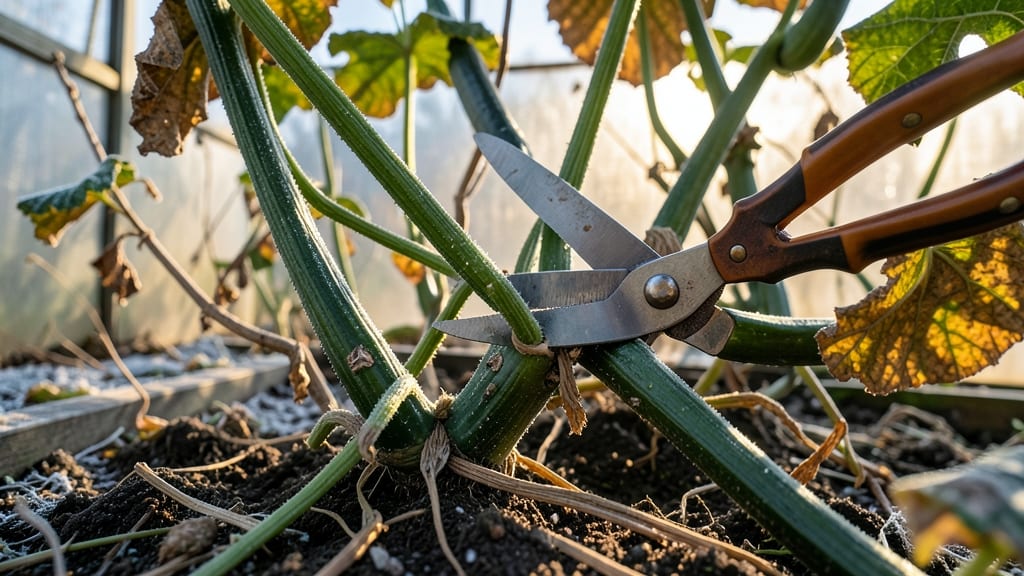
If you live in USDA zones 9-11 where cucumbers can overwinter as perennials, winter preparation pruning is your secret weapon for next year's harvest. This isn't your typical light trim—it's about aggressive cuts that protect plants from cold stress while jumpstarting spring growth.
Start by removing all diseased or yellowing leaves to prevent fungal overwintering. Then, cut back vining varieties by ⅔ of their height and bush types by half, always using clean, sharp pruners to make 45-degree cuts just above leaf nodes. Apply a 2-inch layer of mulch afterward to insulate roots. This drastic reduction may seem harsh, but it forces the plant to redirect energy into root development and new shoots for a stronger spring comeback.
Gardeners in warm climates with perennial cucumbers swear by this method—it's the difference between a weak, sprawling plant and one that bursts with vigor by late spring. The key is timing: prune in late fall after your first frost, but before temperatures drop below 40°F. Your future self will thank you when those vines explode with fruit in May. 💪
Disease-Resistant Pruning Method

Fungal diseases like powdery mildew can turn your thriving cucumber patch into a sad, yellowing mess—but you can stop them before they start with this preventative pruning method. The key is acting fast when you spot the first signs of infection, rather than waiting for the problem to spread.
Start by removing only the infected leaves (never the whole plant) using sterilized pruners to avoid cross-contamination. Dispose of diseased foliage in the trash—not your compost—then spray the remaining plant with a baking soda solution (1 tsp baking soda + 1 quart water + a drop of dish soap) to create a protective barrier. Repeat this process every 3-5 days during humid weather to keep fungal spores at bay.
This method works especially well for gardeners in high-humidity zones or those who've battled diseases before. By staying ahead of infections, you'll preserve your plant's energy for fruit production instead of fighting disease. 💚