
Pruning
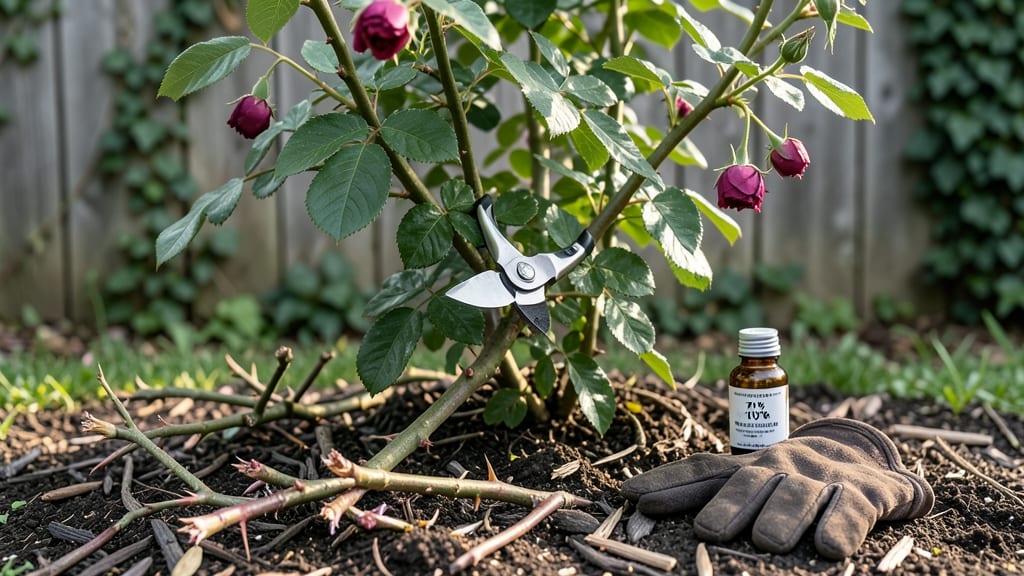
To prune roses in Michigan, time it between late winter and early spring—typically February to March—right before new growth appears. Never prune during frost to prevent damage to emerging buds.
Michigan's climate demands precision when it comes to rose care. 🌸 The late-winter timing lets you remove winter-damaged canes while avoiding early frosts that could stress the plant. I've found that waiting until the ground thaws but before buds swell gives roses the best chance to recover.
This window also helps prevent fungal diseases that thrive in damp, cold conditions.
What sets Michigan apart is the need to adjust for hardiness zones 4-6. In colder northern areas, you might delay until late March, while southern regions can start as early as February.
Always check your local frost dates—pruning too early can expose roses to unexpected cold snaps, while waiting too long risks overcrowding and reduced blooms.
💡 In This Article
- Michigan Rose Pruning Timeline by Hardiness Zones
- Step-by-Step Rose Pruning Guide for Michigan Gardens
Michigan rose pruning timeline by hardiness zones
Michigan spans USDA hardiness zones 4 through 6, which means rose pruning timing needs to account for significant temperature variations. In zone 4 (northern Michigan), where winter temperatures can drop below -20°F, pruning should wait until late March to avoid exposing tender new growth to late frosts.
Zone 5 (central Michigan) offers a slightly wider window—typically late February to early March—while zone 6 (southern Michigan) can start as early as mid-February when daytime temperatures consistently reach 40°F.
The key factor is the relationship between pruning and bud break. Roses begin their growth cycle when the soil temperature reaches 45°F and stays there for several days. Pruning too early—before this threshold—can stimulate premature growth that gets damaged by late frosts.
I've seen this happen in my own garden when I rushed pruning in early February only to have new shoots killed by a -5°F snap in late March. 🌱 The ideal moment is when you can see swollen buds but before they've cracked open.
Local weather patterns add another layer of complexity. Michigan's unpredictable spring weather means you should always check the 10-day forecast before pruning. If frost is predicted within the next 72 hours, delay your work.
The Michigan State University Extension recommends using a plant hardiness map to pinpoint your exact zone and then adding 2-3 weeks after the last average frost date in your area.
For example, in Detroit (zone 6a), the last frost typically occurs around April 15, but pruning should happen 6-8 weeks before that date.
Another critical consideration is rose type—hybrid teas, floribundas, and climbers all respond differently to pruning timing. Hybrid teas, which are popular in Michigan gardens, benefit from aggressive pruning in early spring to encourage strong vertical growth.
In contrast, shrub roses like Knock Out roses need less dramatic cuts and can tolerate slightly later pruning. The rule of thumb is to prune one-third of the plant's height for hybrid teas, but only 10-20% for shrub varieties to avoid over-stressing the plant.
For gardeners in Michigan's transition zones (like the thumb region), where microclimates create localized temperature differences, it's wise to monitor your specific garden conditions. A south-facing slope may warm up faster than a north-facing area, creating a 5-7 day difference in safe pruning times.
Using a soil thermometer to track when the soil reaches 45°F at a 4-inch depth provides a more accurate indicator than air temperature alone.