
Pruning
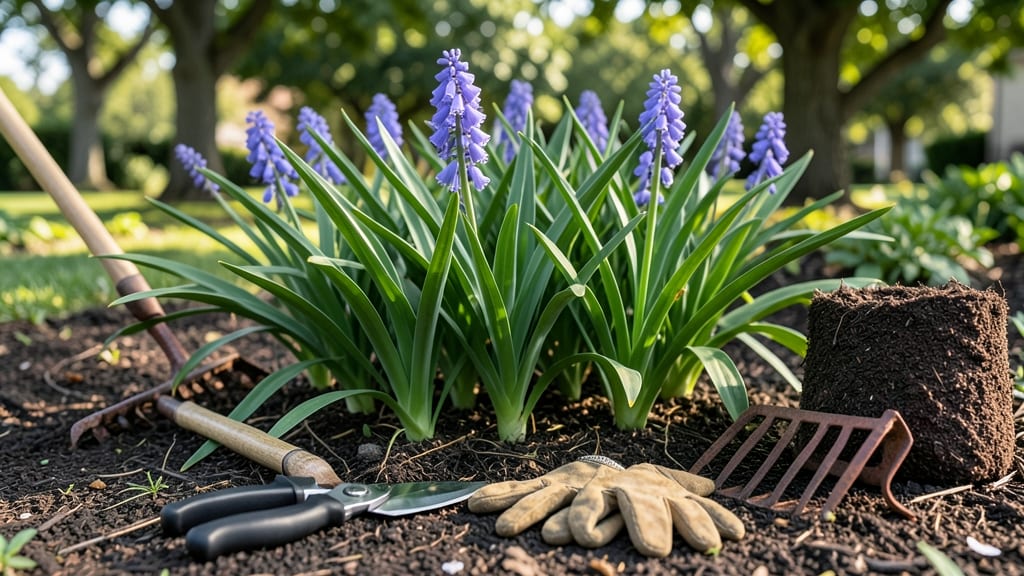
To prune liriope for best results, time it for late winter or early spring before fresh shoots appear, or wait until after flowering in late summer. This timing prevents stress during dormancy or heat waves while promoting vigorous regrowth and dense foliage.
Timing your cuts matters because liriope's growth cycle depends on seasonal cues. 🌱 In early spring, you're encouraging new shoots by removing last year's dead fronds before they compete for nutrients, while late summer pruning preserves energy for next year's blooms.
The key is avoiding extreme conditions—pruning during dormancy (fall/winter) or peak summer heat can shock the plant's root system, leading to brown patches or stunted growth.
For healthy landscapes, I always recommend using clean, sharp shears to make precise cuts just above the soil line. This not only keeps your liriope looking neat but also prevents disease by avoiding jagged edges.
After pruning, give your plants a deep watering and consider adding a layer of mulch to retain moisture and protect roots during recovery.
💡 In This Article
- Best Pruning Seasons for Liriope Growth and Bloom
- Step-by-Step Liriope Pruning Guide for Healthy Landscaping
Best pruning seasons for liriope growth and bloom
Liriope's growth cycle is directly tied to seasonal temperature shifts, making timing critical for healthy development. In late winter or early spring, the plant's roots begin preparing for new shoot growth as soil temperatures rise above 50°F (10°C).
Pruning at this stage removes last year's dead or brown fronds, clearing space for fresh foliage while minimizing stress on the root system.
This is when liriope's energy shifts from dormancy to active growth—cutting too early risks exposing tender new shoots to cold snaps, while waiting too long allows old growth to compete for nutrients.
The biological mechanism here involves auxin hormones, which regulate cell elongation in plants. When you prune in early spring, you're essentially signaling the plant to redirect its auxin production toward new growth rather than maintaining old fronds.
This process creates denser foliage because the plant focuses its energy on producing fresh leaves rather than sustaining weakened stems. 🌱 The ideal window is typically 2-4 weeks before your last expected frost date, giving the plant time to recover before summer heat arrives.
Summer pruning serves a different purpose—it preserves the plant's energy for flowering and seed production. After liriope blooms in late summer (August-September in most regions), the old flower stalks can be trimmed back to maintain a tidy appearance while allowing the plant to store nutrients for next year's growth.
This timing works because liriope's flowering period coincides with peak photosynthesis activity, meaning the plant has ample energy reserves to recover from pruning without stress. The key is to avoid cutting back more than one-third of the plant's height to prevent shocking the root system.
What most gardeners overlook is how temperature extremes affect recovery times. Pruning during peak summer heat (July-August) when soil temperatures exceed 85°F (29°C) can cause the plant to divert energy toward heat protection rather than regrowth.
Similarly, pruning in fall or winter during dormancy forces the plant to allocate resources to repairing damaged tissue when it should be conserving energy. The root zone of liriope can take 4-6 weeks to recover from pruning stress, so timing matters more than many realize.
Consider this comparison: A liriope pruned in March in Zone 7 will show new growth within 3-4 weeks with minimal stress, while one pruned in July may take 6-8 weeks to recover and could develop brown patches if conditions are dry.
The plant's natural growth rhythm makes these timing differences significant—understanding this helps create landscapes that look intentionally maintained rather than stressed.
For those in warmer climates (Zones 8-10), the late summer timing shifts slightly to September-October to avoid the hottest months. The principle remains the same: prune when the plant is actively growing but not under environmental stress.
This approach ensures your liriope maintains its signature dense, grass-like appearance while supporting long-term vitality. 💫