
Pruning
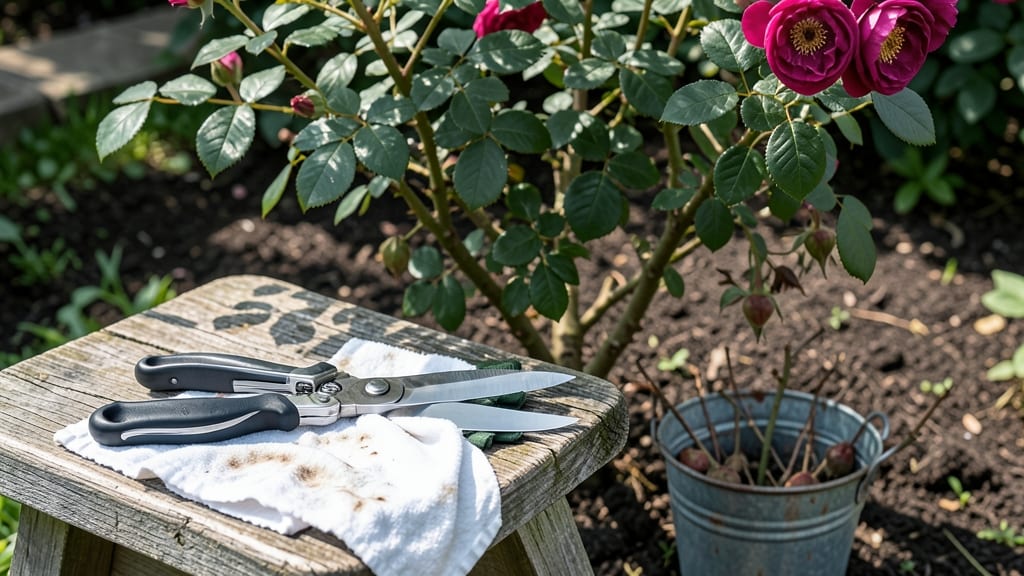
Pruning roses after flowering isn’t just about tidying up—it’s how you set your bushes up for next year’s biggest blooms yet. 🌹 I’ve seen roses go from scraggly to showstopping in just one season after learning the right cuts.
The key is timing, technique, and knowing which canes to keep (and which to sacrifice). Start with the right tools: sharp bypass pruners, rubbing alcohol for sterilizing cuts, and a sturdy ladder if your roses are tall.
Hybrid teas need aggressive pruning to encourage strong new growth, while climbers should be lightly trimmed to maintain their shape. The goal is to remove dead, weak, or crossing branches—about a third of last year’s growth—while leaving healthy buds facing outward.
After pruning, your roses will send out fresh shoots within weeks, and those will become next year’s flower stems. The secret? Cut just above an outward-facing bud, at a 45-degree angle. Avoid leaving stubs or cutting into old wood—this is where most mistakes happen.
A quick spray with fungicide prevents infections, and a layer of mulch keeps roots happy. This method works for all rose types, from bush roses to ramblers. The payoff? Roses that bloom earlier, harder, and with fewer gaps in their season. Ready to transform your garden?
📚 In This Guide
- What you need
- Instructions
- Tips and common mistakes
- Wrapping up and next steps
What you need
- ● Bypass pruners: Sharp, high-quality pruners (e.g., Felco or Corona) to make clean cuts. Size: 6-8 inches for most roses.
- ● Loppers: For thicker canes (½–1½ inches). Quantity: 1 pair.
- ● Pruning saw: For stubborn, woody stems. Type: Curved blade for precision.
- ● Disinfectant (70% isopropyl alcohol or bleach solution): 1 small spray bottle to sterilize tools between cuts.
- ● Gloves: Heavy-duty gardening gloves (cut-resistant if handling thorns). Material: Nitrile-coated for grip.
- ● Hand pruners (secateurs): For delicate trimming (e.g., Fiskars).
- ● Rubbing alcohol wipes: Quick tool sterilization on the go.
- ● Pruning sealant: (e.g., Tree Wound Pruning Seal) for large cuts—controversial but some swear by it!
- ● Knee pads: For comfort during long sessions.
- ● Check the weather: Prune on a dry, overcast day or early morning to avoid stressing the plant.
- ● Gather a bucket or bag for clippings (compost or dispose of diseased material separately).
- ● Have a sharp pencil or marker to label canes if grafting is involved.
Instructions for pruning roses after flowering
Here's my foolproof method to refresh your roses and set them up for a spectacular next season.
✂️ Step 1: Wait for the Right Time
Never prune immediately after flowers fade—wait until new foliage has grown past the blooms (about 6-8 weeks post-flowering). This signals the plant has stored energy for next year's growth. I always prune in late fall or early winter when temperatures drop below 40°F—the plant's natural dormancy makes it less vulnerable to disease.
Look for canes that have at least 3-5 leaf sets beyond the last bloom cluster. These new leaves mean the plant has already allocated energy to next year's buds. If you prune too early, you risk cutting off potential blooms for next season.
✂️ Step 2: Remove Dead, Diseased, or Weak Canes
Start by cutting out any blackened, shriveled, or hollow canes at the base with clean, sharp pruners. These are easy to spot—they'll be dry, brittle, or covered in black spots. Healthy canes feel firm when squeezed and have a consistent green color. I always sterilize my pruners between cuts with rubbing alcohol to prevent spreading any hidden pathogens.
Next, identify thin, spindly canes that never produced flowers. These are energy vampires—they take nutrients without giving anything back. Cut these to the ground immediately. You'll know you're doing it right when you're left with 5-7 of the thickest, healthiest canes per bush.
✂️ Step 3: Thin Out Overcrowded Canes
Step back and examine your rose bush. You want to see good air circulation between canes—aim for 3-5 inches of space between them. Cut any crossing canes, leaving the strongest, most outward-facing stem. When canes rub together, they create wounds that invite disease. I always make my cuts at a 45-degree angle, about 1/4 inch above an outward-facing bud.
For hybrid teas and floribundas, remove one-third of the oldest canes completely—these are the ones that produced flowers this year. They've given their all and won't contribute much next season. You'll know you've done this right when your bush looks open and airy rather than dense and tangled.
✂️ Step 4: Shape the Bush and Encourage New Growth
Now it's time to shape. For shrub roses, I like to create a rounded, vase-like shape—this encourages blooms to develop along the entire length of the canes. For climbing roses, focus on removing inward-growing canes to maintain an outward-facing structure. Always cut just above a healthy outward-facing bud.
Make your final cuts at 18-24 inches from the ground for most varieties, but never below the first set of strong buds. This ensures you're not cutting into old wood that won't produce new growth. After pruning, your bush should look balanced and open, with plenty of room for new shoots to emerge in spring.
🌱 Step 5: Clean Up and Protect for Winter
Remove all pruned material from the garden immediately—never leave cuttings on the ground where they can harbor diseases. I always burn or bag the debris rather than composting it. Next, apply a 2-3 inch layer of mulch around the base (but not touching the stems) to protect roots from freezing temperatures. This is also a great time to add balanced rose fertilizer to the soil.
For extra protection in cold climates, wrap the entire bush with burlap or rose cones after the first hard frost. Leave the top open to allow some airflow. You'll know your winter protection is working when you see fresh green shoots emerging in early spring—that's your sign the plant survived the cold and is ready for another glorious season.
Tips & tricks for pruning roses after flowering
Real talk: The difference between a thriving rose bush and one that struggles comes down to these key pruning details. I learned this the hard way after watching a perfectly healthy rose bush decline after improper pruning.
Timing is Everything: The 6-8 week waiting period after flowering isn't arbitrary—it's when your rose has already allocated energy to next season's buds. I always check for those 3-5 leaf sets beyond the last bloom as my green light. If you prune too early, you're essentially telling your rose, "Hey, forget about next year's flowers!" The cold weather below 40°F is equally important—it signals the plant's natural dormancy, making it less susceptible to disease from fresh cuts.
Tool Prep Matters: Sterilizing your pruners between cuts with rubbing alcohol isn't just good practice—it's essential. I've seen entire rose bushes develop black spot disease from contaminated tools. Make sure your pruners are sharp too; dull blades crush stems instead of making clean cuts, which invites infection. I keep a small bottle of rubbing alcohol and my pruners together in a little gardening caddy for quick sterilization between cuts.
Visual Cues for Perfect Cuts: When making those 45-degree angle cuts about 1/4 inch above an outward-facing bud, here's what to look for: The bud should be plump and green, not shriveled or brown. The cut should expose a small white pith in the center of the stem—this is your sign you're cutting into healthy growth tissue. I always make a habit of counting my remaining canes after pruning; you should end up with 5-7 of the thickest, healthiest stems per bush.
Winter Protection Strategy: That 2-3 inch layer of mulch isn't just for looks—it acts like a cozy blanket for your rose's roots. I always add a thick layer of straw or shredded leaves (not fresh grass clippings, which can mat down) around the base, keeping it about 6 inches away from the stem. For extra protection in freezing climates, I wrap the entire bush with burlap after the first hard frost, leaving the top open for airflow. This simple step makes all the difference in spring when you see those first green shoots.
Pro Tips for Pruning Roses After Flowering
- Real talk: The difference between a thriving rose bush and one that struggles comes down to these key pruning details.
- Timing is Everything: The 6-8 week waiting period after flowering isn't arbitrary—it's when your rose has already allocated energy to next season's buds.
- Tool Prep Matters: Sterilizing your pruners between cuts with rubbing alcohol isn't just good practice—it's essential.
Frequently asked questions
Got questions about pruning roses after they’ve bloomed? You’re not alone—this step can feel tricky! Below, we’ve answered the most common queries to help you feel confident before grabbing those shears.
When is the exact best time to prune roses after flowering?
Prune right after your roses finish blooming—but don’t rush! Wait until the flowers fade and the petals drop (deadheading). For repeat-blooming roses, this means trimming in stages (every 4–6 weeks) to encourage new growth. Hybrid teas and floribundas often need pruning in late spring or early summer.
How much should I cut back—can I prune too aggressively?
For most roses, aim to cut back one-third to one-half of the previous year’s growth. Look for the outer bud (facing outward) when trimming—this promotes bushier growth. Avoid over-pruning (cutting into old wood), as it stresses the plant. If you’re unsure, err on the side of caution and leave a few extra inches.
What if I missed the window? Can I still prune roses later in the season?
Yes, but timing matters! If you skip post-bloom pruning, you can still trim lightly in early fall (before frost) to remove dead or diseased wood. Avoid heavy pruning in late summer/fall—it reduces winter hardiness. For next year, reset your schedule and prune right after spring blooms appear.
Do I need to sterilize my pruners between cuts? What’s the easiest way?
Sterilizing prevents black spot and other fungal diseases. Wipe blades with rubbing alcohol (70% or higher) or a 10% bleach solution (1 part bleach to 9 parts water) between cuts. For a quick fix, use isopropyl alcohol on a cloth. Pro tip: Keep a small bottle of alcohol in your pruning toolkit!
What if my roses don’t bloom as much after pruning? Did I do it wrong?
Not necessarily! Some roses (like climbers or shrub types) bloom on old wood and may need minimal pruning. Others, like hybrid teas, rely on new growth for blooms. If flowers are sparse, check your pruning angle (always cut at a 45° angle) and ensure you’re leaving 3–5 healthy buds per stem. Over-fertilizing nitrogen can also reduce blooms—balance with phosphorus-rich fertilizer.
Bonus Tip:
Save your rose cuttings! After pruning, dip healthy stems in rooting hormone and plant them in pots with moist soil. Many roses root easily—you’ll have free plants for next year!
Wrapping up and next steps
Pruning roses after flowering isn’t just about tidying up—it’s your secret to vibrant blooms and healthier plants next season! By removing spent flowers, thinning crowded canes, and shaping your roses correctly, you’re setting the stage for a showstopping display in 2025. 🌹✨
Ready to roll up your sleeves? Grab those pruners, follow the steps you’ve learned, and transform your garden into a lush, thriving paradise. Next, check out our guide on seasonal rose care to keep those canes strong year-round!