Pruning
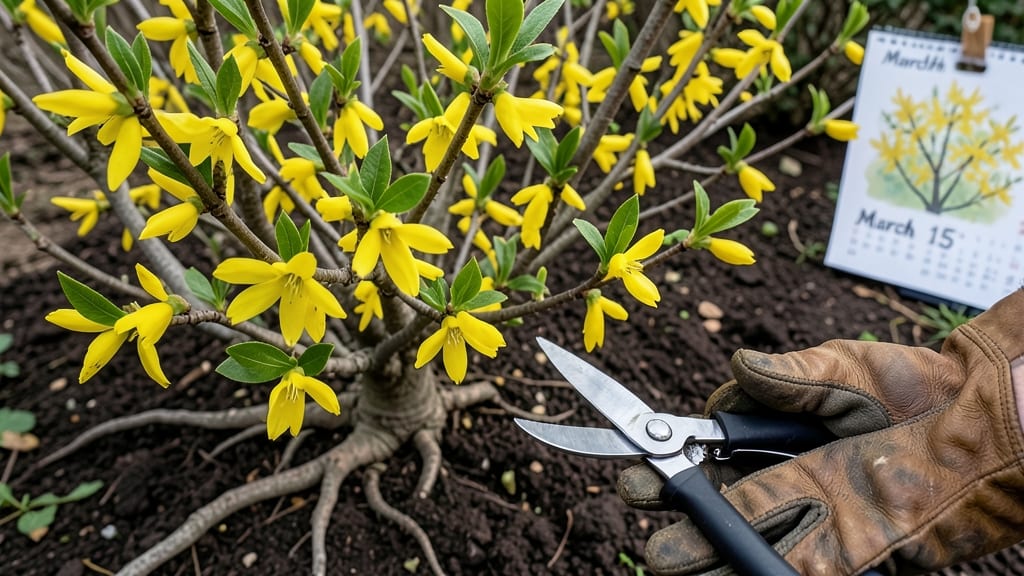
To prune forsythia shrubs for best results, wait until right after their bright yellow spring blooms fade—usually between late April and early June. This timing preserves next year's flower buds while promoting healthy growth.
Forsythias bloom on old wood, meaning their flower buds form on stems from the previous growing season.
Pruning too early cuts off these buds before they can develop, while waiting too long risks overgrown branches that block sunlight from inner growth. 🌸 I always prune within 2-3 weeks after blooms fade to strike the balance between maintaining shape and preserving future flowers.
The key is working with nature's cycle rather than against it.
If you miss the late spring window, don't panic—just avoid pruning in fall or winter when the plant is dormant. These shrubs are remarkably resilient, and even a slight misstep won't kill them.
The worst that happens is reduced flowering the next year, which is easily fixed by sticking to the proper timing in subsequent seasons.
💡 In This Article
- Why Late Spring Pruning Maximizes Forsythia Blooms
- Step-by-Step Forsythia Pruning Guide by Season
Why late spring pruning maximizes forsythia blooms
Forsythias are unique because they bloom on old wood, meaning their flower buds form on stems that grew during the previous year. When you prune too early—before the blooms fade—you risk cutting off these buds before they can develop for next season.
This is why timing is everything: the shrub needs to complete its flowering cycle and set new buds before you make any cuts. 🌸
The biological process works like this: after forsythia flowers fade in late spring, the plant begins allocating energy toward new growth and forming next year's flower buds along the current season's stems.
Pruning immediately after blooms fade (typically 2-3 weeks post-flowering) removes only the current year's growth while preserving the old wood where next year's buds will develop. This timing also prevents overgrowth that could block sunlight from reaching inner branches.
What happens if you prune at the wrong time? If you cut back in late winter or early spring (before blooms appear), you're removing potential bloom sites that formed the previous fall. The plant will still grow, but you'll likely see fewer flowers next year.
Conversely, waiting until summer or fall means you're pruning new growth that won't contribute to next year's blooms, while also encouraging leggy, unbalanced growth patterns.
Here's the science behind it: Forsythias follow a monopodial growth pattern, where flower buds form at the base of old stems rather than at the tips. This means the plant's energy is focused on developing these basal buds rather than extending new shoots.
By pruning after flowering, you're essentially telling the plant, "You've done your blooming—now focus on growing strong stems for next year's flowers."
Consider this comparison: Pruning a forsythia in late winter is like cutting the branches of an apple tree before the flowers bloom—you'd lose next year's fruit. But pruning after the apples have fallen (and new buds have formed) ensures a productive harvest.
The same principle applies to forsythias, where "harvest" means vibrant spring blooms. 🌿
For best results, aim to prune within 4-6 weeks after the last blooms fade. This gives the plant just enough time to set new buds while still maintaining a manageable shape.
The exact timing varies slightly by climate zone—warmer southern regions may bloom earlier (March-April) while northern areas might bloom in May.