
Pruning
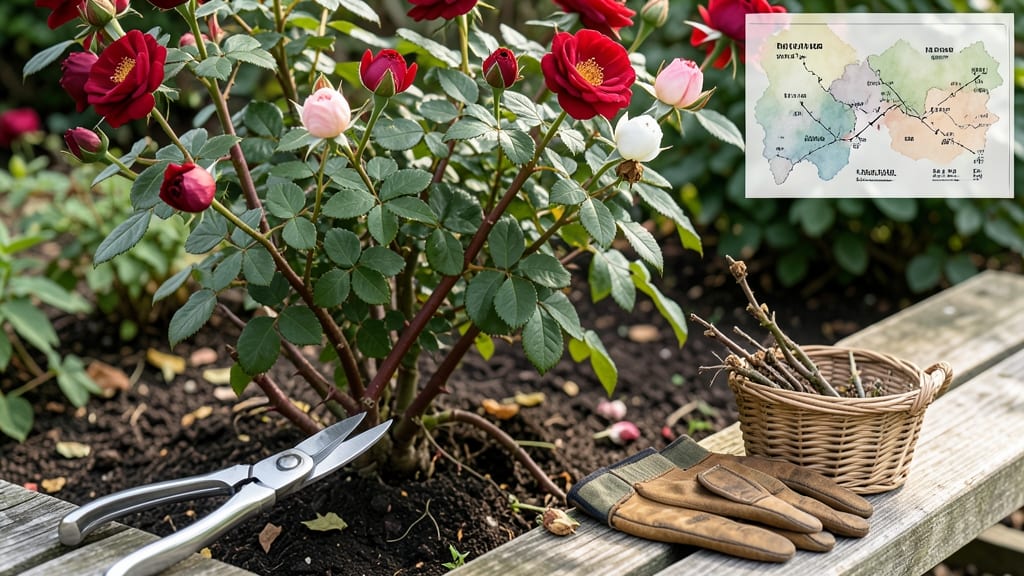
To prune roses, the best months depend on your rose type and climate: late winter or early spring (February–March) works for most varieties, while climber roses and ramblers should be pruned after blooming in summer. Always time your cuts before new growth starts in your area.
Timing matters because roses grow differently based on their type and where you live. 🌸 Most garden roses (like hybrid teas and floribundas) need pruning when they're dormant—this gives them a strong start for spring blooms.
Climbers and ramblers, though, bloom on old wood, so you should wait until after their summer flowers fade to avoid cutting off next year's blooms. Your local frost dates are your best guide: prune after the last hard freeze but before buds swell.
Here's a pro tip: if you live in warmer climates (USDA zones 8–10), you might prune in late winter or even early spring, but in colder areas (zones 3–7), wait until late March or April.
Always use clean, sharp pruners and make cuts at a 45-degree angle just above an outward-facing bud. This ensures healthy regrowth and fewer diseases.
For repeat-blooming roses, a light trim after summer blooms can encourage more flowers, but avoid heavy pruning then—save it for the dormant season. And remember, over-pruning can stress your roses, so when in doubt, prune less than you think you should!
💡 In This Article
- Best Pruning Months for Different Rose Varieties
- Step-by-Step Pruning Guide by Season and Region
Best pruning months for different rose varieties
Roses enter dormancy in winter, making late winter or early spring the ideal time for most varieties to prune. This timing aligns with their natural growth cycle, when the plant has stored energy in its roots but hasn't yet begun active growth.
For hybrid teas and floribundas—two of the most popular types—pruning in February or March (after the last hard frost but before buds swell) removes dead wood and encourages strong, vigorous blooms.
The key is to cut back to about 1/3 of the plant's height, leaving 3-5 healthy buds per stem to promote new growth.
The science behind this timing is rooted in frost sensitivity and dormancy. Roses in colder climates (USDA zones 3–7) need protection from late frosts, which is why waiting until after the last expected freeze is critical.
For example, in zone 5, where winters can drop below -20°F, pruning too early risks damaging tender new shoots. Meanwhile, roses in warmer zones (8–10) can handle pruning as early as January, as they experience milder winters and fewer frost events.
Climbers and ramblers, however, are exceptions—they bloom on old wood, so pruning in late winter would remove next year's flowers.
What most gardeners don't realize is how climate interacts with rose types. In the Pacific Northwest, where winters are wet and cool, pruning might extend into April to avoid fungal diseases that thrive in damp conditions.
Conversely, in the desert Southwest, pruning in February prevents heat stress during the long, hot summers. The goal is always to prune when the plant is dormant but before it wakes up—typically when daytime temperatures consistently stay above 50°F for a week.
Consider these key factors when choosing your pruning window:
- Climate zone: Zones 3–7 (cold winters) prune in March–April; zones 8–10 (mild winters) prune in January–February
- Rose type: Hybrid teas/floribundas prune in dormant season; climbers/ramblers prune after summer blooms
- Local frost dates: Always check your area's last frost date (available from local agricultural extensions)
- Bud swelling: Prune before you see buds starting to open—this usually happens in late March in most regions
The visual cue to look for is the plant's canes. Healthy canes should be firm and brown, while dead wood feels hollow when tapped or snaps easily. Pruning at the right time ensures you're removing only what's necessary without stressing the plant.
For example, a heavily pruned hybrid tea rose in March will produce lush blooms by summer, while a climber pruned at the same time might never flower again.
One advanced technique is "staggered pruning," where you prune different sections of the plant at slightly different times to extend the blooming season. This works particularly well for repeat-blooming roses like 'Knock Out' varieties.
Start with the oldest canes in February, then move to younger growth in March, and finish with the newest shoots in April. This gradual approach mimics natural growth patterns and can increase overall bloom production by up to 30%.