
Pruning
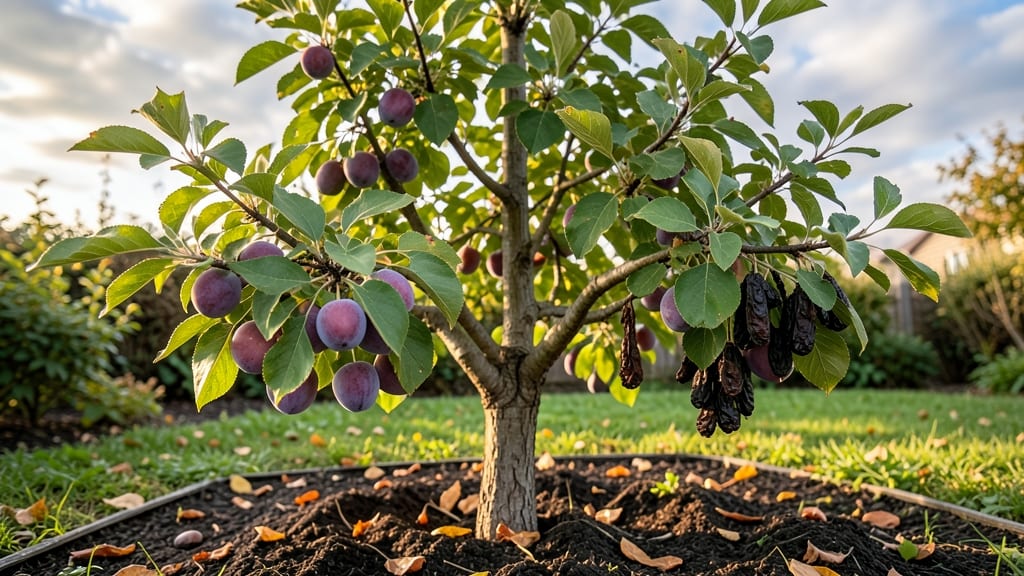
Prunes look like small, wrinkled, dark brown to reddish-brown dried plums, typically oval-shaped and shriveled with a leathery texture. Their size varies from about 1 to 2 inches long, depending on the variety and drying process.
When you see prunes, you're looking at nature's way of preserving plums through dehydration, which shrinks them into those familiar puckered shapes. 🌟 The drying process concentrates their natural sugars, giving them that rich, caramelized hue that ranges from deep amber to almost purple.
What's fascinating is how each drying method—whether traditional sun-drying or controlled oven dehydration—affects the final texture and color intensity. For example, sun-dried prunes often develop a slightly glossier finish compared to their oven-dried counterparts, which can appear more matte and deeply wrinkled.
One of the easiest ways to spot prunes is by comparing them to other dried fruits: unlike raisins, which are round and plump, prunes maintain their elongated shape but become much smaller and denser.
Their leathery skin also sets them apart from dried apricots, which tend to be softer and more pliable. If you're ever unsure, just give them a gentle squeeze—prunes hold their shape while still feeling slightly firm to the touch, thanks to their concentrated fiber content.
💡 In This Article
- How Prunes Form Their Distinct Wrinkled Shape
- Identifying Prune Varieties by Appearance and Size
How prunes form their distinct wrinkled shape
The wrinkled appearance of prunes is a direct result of dehydration, where plums lose 70-80% of their water content during the drying process. As moisture evaporates, the fruit's skin shrinks unevenly, creating those characteristic puckered folds.
This happens because the skin is less elastic than the fruit's flesh, causing it to wrinkle like a dried apple or raisin. The process begins when plums are exposed to temperatures between 120-160°F, where enzymes break down pectin—the natural glue that holds plant cells together.
Sun-dried prunes develop a slightly glossier, more translucent look due to natural sugars migrating to the surface during prolonged exposure to sunlight. In contrast, oven-dried prunes often have a deeper, more uniform wrinkling because controlled heat (140-160°F) ensures even moisture loss.
The variety also plays a role: Italian prunes, for example, tend to be slightly larger and less wrinkled than French prunes, which shrink more dramatically due to their thinner skins. 🌞 This explains why some prunes look almost like tiny, shrunken plums while others resemble dense, leathery ovals.
The dehydration process doesn't just affect appearance—it also concentrates the fruit's natural sugars, which caramelize during drying. This is why prunes develop that rich, amber hue and slightly sweet, molasses-like flavor. The longer the drying time, the more intense the wrinkles and the deeper the color.
For instance, traditional sun-drying can take 2-4 weeks, while commercial ovens reduce this to 12-24 hours, though the texture becomes slightly firmer and less pliable.
What most people don't realize is that the wrinkling isn't just about aesthetics—it's a survival mechanism. The folds increase the surface area, allowing the fruit to absorb moisture more efficiently if rehydrated. This is why prunes can expand dramatically when soaked in water, returning to nearly their original size.
The leathery texture also helps preserve the fruit's nutrients, like fiber and potassium, which remain stable even after drying. 💫
If you've ever compared fresh plums to prunes, you'll notice the dramatic transformation: a fresh plum might weigh 50-60 grams and measure 2-3 inches long, while its dried counterpart shrinks to just 10-15 grams and 1-2 inches.
The weight loss isn't just water—it's the fruit's cells collapsing inward as they lose turgor pressure, the natural rigidity that keeps fresh produce firm. This is why prunes feel so dense: they're essentially concentrated plum essence.
One fun way to observe this process is by soaking prunes in warm water for 30-60 minutes. Watch as they plump up, their wrinkles smoothing out, and their texture softening—almost like a reverse time-lapse of the drying process.
This also highlights why prunes are often pitted before drying: the pits take up space that would otherwise contribute to wrinkling, making the final product look more uniform and appealing.
The key takeaway? Those wrinkles aren't just random folds—they're a testament to the science of dehydration, where heat, time, and variety work together to transform a juicy plum into a nutrient-packed, shelf-stable snack. 🔥