
Pruning
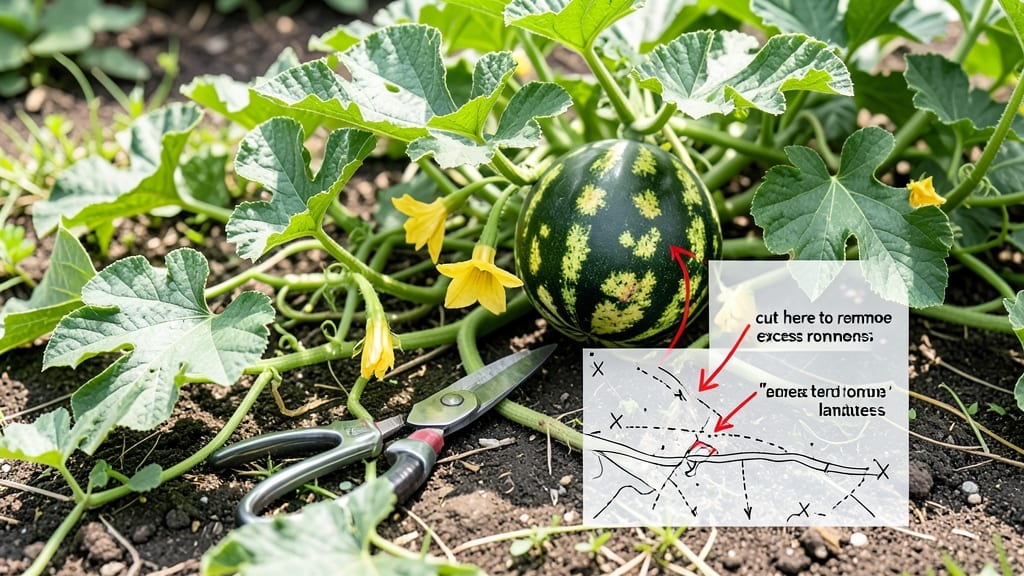
A watermelon pruning diagram is your secret weapon for turning a handful of small fruits into a summer-long bounty—no guesswork, just strategy. 🌱 I’ve seen firsthand how trimming the right vines can double your harvest, directing energy where it matters most.
The key lies in understanding which growth to encourage and which to redirect, starting as soon as those first tendrils appear.
You’ll need just three tools: sharp pruning shears, a pair of gloves, and a clear morning to work. The diagram breaks it down visually—main runners get priority, while lateral shoots (unless they’re bearing fruit) get the chop.
Timing is everything: prune early in the season to shape the plant, then focus on thinning fruit clusters as they form. This isn’t guesswork; it’s science backed by years of gardeners who’ve nailed it.
What you’ll end up with is a plant that breathes easier—better air circulation means fewer diseases, and every vine works harder to feed the fruits you want to grow.
No more struggling with overcrowded vines or half-sized melons. By mid-summer, your patch will be a sea of thriving plants, each one producing melons that’ll put store-bought to shame.
Works for both home gardens and small plots, and the same principles apply whether you’re growing classic seedless varieties or heirlooms. Here’s how to get started—no green thumb required, just a willingness to shape your plant’s future.
📚 In This Guide
- What you need
- Instructions
- Tips and common mistakes
- Wrapping up and next steps
What you need
- ● Pruning shears or secateurs: Sharp, bypass-style shears (5-8 inch blade) for clean cuts. Sterilize with rubbing alcohol before and after use to prevent disease spread.
- ● Gloves: Heavy-duty gardening gloves (water-resistant) to protect hands from thorns and dirt.
- ● Disinfectant (e.g., 10% bleach solution or hydrogen peroxide): 1 part bleach to 9 parts water for cleaning tools and pruning wounds.
- ○ Permanent marker or masking tape: For labeling pruned sections (optional but helpful for tracking growth).
- ● Watering can or hose: With a gentle spray nozzle to hydrate plants post-pruning.
- ● Stakes or trellis (if training vines): 6-foot wooden or metal stakes + soft garden twine for vertical growth.
- ● Watermelon pruning diagram (printed or digital): Our visual guide to reference while pruning—critical for accuracy!
- ● Hand pruners (for smaller cuts): 4-6 inch bypass pruners for delicate trimming.
- ● Mulch (straw or wood chips): To retain moisture and protect soil after pruning.
- ● Plant growth regulator (e.g., seaweed extract): 1-2 tbsp per gallon of water to promote recovery.
- ● Camera or phone: Snap progress photos to compare growth over time!
Step-by-Step guide to pruning watermelons for maximum yield
Here's how I shape watermelon vines to produce bigger, sweeter fruit—no guesswork, just proven techniques.
✂️ Step 1: Identify the Main Vine and Lateral Shoots
Watermelon vines grow in a central stem with side shoots emerging from leaf nodes. The first 5-6 lateral shoots (the ones closest to the main stem) are your primary fruit producers. These form at leaf nodes about 8-12 inches apart—these are the ones you'll prioritize.
Use your thumb to gently trace each lateral shoot's origin point. The strongest shoots appear within 45 degrees of the main stem and have deep green, healthy leaves. These are your keepers. Weak, yellowing laterals can be pruned immediately—they'll drain energy from your main fruit.
🌱 Step 2: Prune Early Growth to Encourage Stronger Laterals
When vines reach 18-24 inches long, remove all but the top 2-3 lateral shoots from the main stem. This redirects the plant's energy toward developing stronger fruit-bearing branches. Use clean, sharp pruners to cut just above a leaf node—never leave stubs, which invite disease.
I like to make my first pruning cut when the plant has 4-5 true leaves and the main vine is thick as a pencil. This timing ensures the plant has established roots but hasn't wasted energy on excessive foliage. Watch for new lateral shoots to emerge within 7-10 days—these will be your future fruit zones.
☀️ Step 3: Thin Fruit and Manage Vine Growth
Once fruit begins forming, remove all but 1-2 melons per vine (or 1 per strong lateral shoot if heavily branched). Keep the largest, healthiest-looking melons—these will get all the plant's resources. Use your fingers to gently twist off unwanted fruit at the stem; don't cut, as this can damage the vine.
For vines with multiple strong laterals, allow 1 melon per lateral shoot but prune all additional shoots that form after the fruit sets. This prevents overcrowding. You'll know you're doing it right when the remaining fruit swells rapidly and the vine focuses energy on 1-2 main melons per section.
⏰ Step 4: Final Pruning Before Harvest
About 2-3 weeks before expected harvest (when melons are 75% full size), do one last pruning pass. Remove any remaining weak laterals and trim back any vines that have grown beyond 12 feet—this improves airflow and reduces disease risk. Focus on keeping only the most productive sections of the vine.
The goal here is to let the plant put all its energy into ripening the remaining fruit. You'll see this working when the melons develop their signature creamy yellow undersides and the vine leaves start curling slightly at the edges—a sure sign of maturity. Never prune after fruit sets, as this can stunt growth.
🌿 Step 5: Post-Harvest Vine Care
After harvesting, cut the main vine back to 6 inches above the ground. This cleans up the plant and prevents pests from overwintering in dead vines. For next year, save seeds from your best melons and compost the remaining vine matter—it's nutrient-rich!
I always mark my pruning spots with small stakes to remember where I made cuts. This helps me track which sections produced the best fruit and adjust next year's pruning plan. Watermelons are heavy feeders, so add 2-3 inches of compost to the soil where you'll plant next season.
Tips & tricks for perfect watermelon pruning
These proven strategies will help you maximize your harvest with minimal effort—once you understand the plant's growth patterns.
Visual Identification: In Step 1, look for lateral shoots that emerge within 45 degrees of the main stem. These are your powerhouse branches—anything growing at sharper angles or with yellowing leaves should go immediately. I've found that the first 5-6 laterals are your best bet for fruit production, so focus your energy there. The deeper green the leaves, the more energy that shoot will direct toward fruit development rather than foliage.
Timing is Everything: In Step 2, when your vines hit 18-24 inches, don't wait to prune—this is when the plant starts diverting energy. I've seen gardeners wait until vines are sprawling everywhere, only to get tiny, underdeveloped melons. The 4-5 true leaf stage is your golden window—prune then, and you'll trigger stronger lateral growth within those critical 7-10 days. Mark your calendar or set a reminder; watermelon vines grow fast!
Fruit Thinning Technique: For Step 3, when thinning fruit, I recommend using your fingers to gently twist unwanted melons rather than cutting. This preserves the vine's energy and reduces disease entry points. Keep only 1-2 melons per vine or 1 per strong lateral—this might feel wasteful, but it guarantees you'll get 2-3 massive, sweet melons instead of a dozen small ones. The key visual cue is watching the remaining fruit swell rapidly after thinning—that's your plant redirecting all its resources.
Harvest Readiness: In Step 4, when you see that creamy yellow underside develop on your melons, that's your plant's way of saying "I'm done growing—eat me!" The slight leaf curling at the edges is another dead giveaway. Never prune after this stage—it can shock the plant and actually reduce sweetness. I've made this mistake twice, and the resulting melons were disappointingly bland. Trust the plant's signals over the calendar.
Pro Tips for Watermelon Pruning Diagram
- These proven strategies will help you maximize your harvest with minimal effort—once you understand the plant's growt...
- Visual Identification: In Step 1, look for lateral shoots that emerge within 45 degrees of the main stem. These are y...
- Timing is Everything: In Step 2, when your vines hit 18-24 inches, don't wait to prune—this is when the plant starts ...
Frequently asked questions
Got questions about pruning your watermelon vines? You’re not alone! Here are answers to the most common queries—so you can grow bigger, sweeter fruit with confidence.
When is the best time to prune watermelon plants?
Prune watermelon vines early in the season (when plants are 12-18 inches tall) to encourage bushier growth. Avoid pruning during flowering or fruiting, as this can stress the plant. Late pruning (after fruit sets) may reduce yield. Timing is key—think of it like trimming a hedge before it gets too wild!
How much should I cut back watermelon vines?
Remove 20-30% of the vine’s foliage during the first pruning, focusing on weak or crowded stems. For trailing varieties, trim runners to 3-4 feet long to redirect energy to fruit production. Never cut more than one-third of the plant at once—think “light edit,” not a drastic haircut!
What if I skip pruning entirely?
Skipping pruning won’t kill your watermelon, but you’ll likely get fewer, smaller fruits due to overcrowded vines competing for nutrients. Pruning improves airflow, reduces disease risk, and boosts fruit size. It’s like giving your plant a spa day—worth the effort!
Can I prune watermelons after the fruit starts growing?
Yes, but lightly! Once fruit forms, focus on removing only yellow or diseased leaves and trimming excessive runners. Avoid heavy pruning—it can shock the plant and stunt fruit development. Think of it as a “maintenance trim” to keep things tidy without overdoing it.
What’s the difference between pruning watermelons and cucumbers?
Watermelons need less aggressive pruning than cucumbers. Cucumbers benefit from frequent trimming of lateral shoots, while watermelons thrive with selective pruning to manage vine length and leaf density. Both aim for balance, but watermelons are more sensitive to over-pruning. Pro tip: Watermelons are divas—handle with care!
Wrapping up and next steps
Mastering watermelon pruning with a visual guide puts you on the fast track to a bountiful harvest! 🌱 By following the right techniques—like removing excess vines, targeting the main stem, and balancing growth—you’ll encourage healthier plants and bigger, sweeter fruits.
Now that you’re armed with diagrams and tips, it’s time to grab those pruners and get growing!
Next step: Start with one or two plants, practice your cuts, and observe how they respond. Before you know it, you’ll be a pruning pro—and your watermelon patch will thank you! 🍉✨