
Pruning
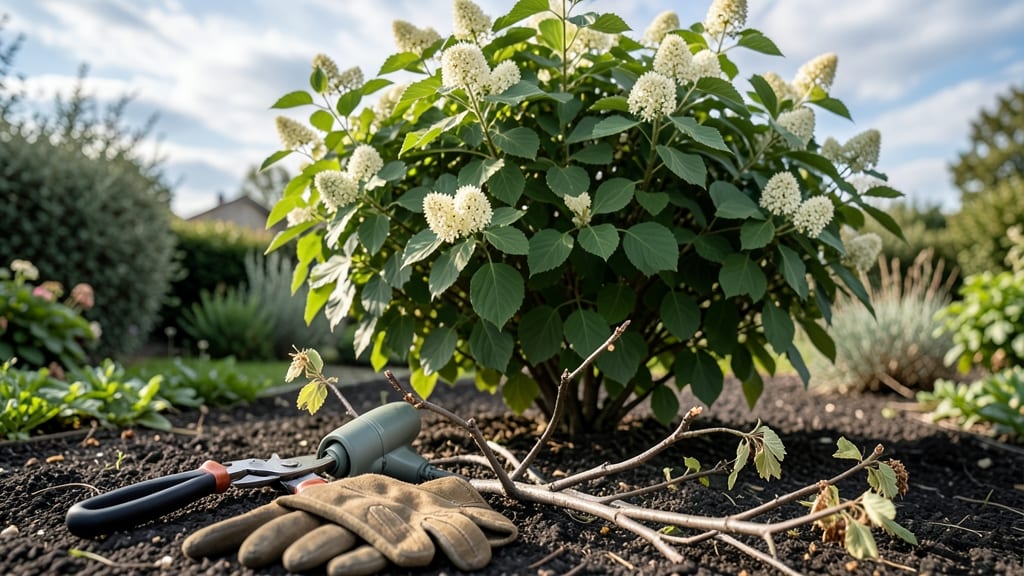
Pruning snowball shrubs transforms them from scraggly to showstopping in just 10 minutes. ✂️ I learned the hard way—skipping pruning for three years left my hydrangeas looking like overgrown bushes instead of the lush, rounded beauties they should be.
The secret isn’t complicated: timing, technique, and a little patience turn these shrubs into garden stars.
You’ll need sharp pruners, gloves, and a clear morning to work—cloudy days help avoid shock. The best time is late winter to early spring, just as new buds swell but before leaves emerge.
This encourages fresh growth and keeps those iconic white blooms coming every summer. Avoid pruning in fall, or you risk cutting off next year’s flowers.
Start by removing any dead or crossing branches first—they steal energy from the rest of the plant. Then, cut back last year’s growth by about one-third, shaping into a rounded mound.
The goal is to expose the inner branches to sunlight, which makes the whole shrub bushier and healthier. After pruning, give it a deep watering to help it recover.
Most mistakes come from pruning too late or too aggressively. If you wait until summer, you’ll sacrifice next year’s blooms. And if you cut back too much, the shrub might struggle to rebound.
But with the right timing and technique, your snowball shrubs will reward you with vibrant, full blooms for years to come.
📚 In This Guide
- What you need
- Instructions
- Tips and common mistakes
- Wrapping up and next steps
What you need
- ● Pruning shears (bypass or anvil type) – Sharp, clean blades (5–7" length for precision). Quantity: 1–2 pairs (one for thick branches, one for fine trimming).
- ● Loppers – For branches ½" to 2" in diameter. Quantity: 1 (long-handled for reach).
- ● Pruning saw – For thick, woody stems (2" or larger). Quantity: 1 (with a fine-toothed blade).
- ● Rubbing alcohol (70% or higher) – For sterilizing tools between cuts. Quantity: Small bottle.
- ● Garden gloves – Cut-resistant, breathable material (e.g., leather or heavy-duty fabric). Quantity: 1 pair.
- ● Disposable pruning bags or bucket – For collecting debris. Quantity: 1–2.
- ● Hose or bucket of water – To clean tools and rinse cuts.
- ● Hand pruners with a crimping tool – For sealing larger cuts (reduces sap bleeding).
- ● Ladder or step stool – If your shrub is tall (6' or taller).
- ● Pruning sealant – For sealing cuts on older wood (controversial—use sparingly!).
- ● Notebook & pen – To sketch your shrub’s structure before pruning.
- ● Safety glasses – If working with thick branches that may snap back.
Year-round snowball shrub pruning: Step-by-Step for full, flourishing growth
Pruning snowball bushes right is the secret to those iconic blooms year after year.
✂️ Step 1: Prune Immediately After Flowering
Right after your snowball shrub (Viburnum) finishes blooming, grab your pruners and cut back the old wood—those stems that just flowered. Look for the spent blooms and follow the stem back to where it meets a healthy lateral branch or the main trunk. Cut at a 45-degree angle just above an outward-facing bud to encourage new growth that will produce next year's flowers.
Here's the thing—I always remove one-third of the oldest canes at this time. These are the thickest stems that no longer produce well. You'll know them by their size and the fact they've been around for years. This opens up the center for air circulation and sunlight, which prevents disease and encourages bushier growth.
✂️ Step 2: Light Structural Pruning in Late Summer
About 6-8 weeks after flowering, do a light pruning to shape your shrub. This is when you remove any dead, damaged, or crossing branches—the ones rubbing against each other or growing inward. Cut these back to the main stem or a side branch, always at that 45-degree angle. You're not trying to drastically reshape the shrub here, just tidy it up and encourage a more open structure.
Watch for suckers—those little shoots growing at the base. These are energy vampires, stealing nutrients from your main plant. Snip them off at the base with clean pruners. This keeps your shrub's energy focused on the established canes rather than these unwanted growths.
✂️ Step 3: Winter Pruning for Air Flow and Shape
In late winter or early spring, before new growth starts, do your final pruning of the year. This is when you shape the shrub and remove any remaining dead wood. Look for branches that are thinner than a pencil—these are the oldest canes that have outlived their productivity. Cut them back to the ground or to a strong lateral branch.
I like to step back and look at the overall shape. If one side looks too sparse, I might thin out a few branches there to balance the shrub. Remember, you're aiming for an open center with branches spaced evenly. This isn't the time for drastic cuts—just maintain what you've built.
✂️ Step 4: Sanitize Tools and Monitor Year-Round
After every pruning session, clean your pruners with rubbing alcohol or a bleach solution. This prevents spreading disease between cuts. I keep a small spray bottle of 10% bleach solution handy for quick sanitizing between shrubs if I'm doing multiple plants. Healthy tools mean a healthy shrub.
Throughout the year, keep an eye out for diseased branches—look for discoloration, spots, or unusual growth patterns. Remove these immediately, cutting back to healthy wood. Also, watch for pests like scale insects. If you see sticky residue on leaves, that's a sign of aphids or scale, and you'll need to treat with horticultural oil.
⏰ Step 5: Adjust Your Approach Based on Growth
Snowball shrubs grow at different rates depending on your climate. In warmer zones, you might need to prune more frequently to control size. In colder areas, growth slows down, so you can be a bit more patient. Pay attention to how your specific shrub responds—if it's getting too large for its space, you'll need to prune more aggressively in future years.
Real talk: I've seen people over-prune snowball shrubs, cutting back too much in one season. This can shock the plant and reduce flowering. If you've done that, don't panic—just go lighter in subsequent years. The key is gradual shaping over time rather than drastic cuts all at once.
Tips & tricks for perfect snowball shrub pruning
These simple strategies will help you keep your snowball shrub thriving with beautiful blooms every season.
Timing Secret: The 6-8 week window after flowering in Step 2 is your best opportunity to shape the shrub without stressing it. I mark my calendar right after the last bloom falls—this timing ensures the plant has time to recover before winter. If you miss this window, don't worry! Just focus on removing dead wood during winter pruning (Step 3) instead.
Cutting Technique: That 45-degree angle mentioned in Steps 1, 2, and 3 isn't just decorative—it's crucial for water runoff and preventing disease. Imagine the cut forming a tiny roof that sheds rainwater away from the branch collar. For thicker branches, I use my pruners to make the initial cut, then make a second cut just outside the branch collar to avoid tearing the bark.
Pruning Strategy: When removing one-third of the oldest canes in Step 1, focus on the thickest stems that no longer produce well. These are usually the ones with fewer leaves and smaller blooms. I like to step back and take a photo before and after—it's amazing how much more sunlight reaches the center after just a few cuts!
Tool Maintenance: That 10% bleach solution in Step 4 is a game-changer for keeping your tools ready. I keep a small spray bottle in my gardening toolbox and spritz between every cut when dealing with multiple shrubs. For a quicker option, rubbing alcohol works just as well and has no residue. Always dry your pruners thoroughly after cleaning to prevent rust.
Pro Tips for Snowball Shrub Pruning
- These simple strategies will help you keep your snowball shrub thriving with beautiful blooms every season.
- Timing Secret: The 6-8 week window after flowering in Step 2 is your best opportunity to shape the shrub without stressing it.
- Cutting Technique: That 45-degree angle mentioned in Steps 1, 2, and 3 isn't just decorative—it's crucial for water runoff and preventing disease.
Frequently asked questions
Got questions about pruning your snowball shrub? You’re not alone!
Here are some of the most common concerns—plus clear, actionable answers to keep your shrub thriving year-round.
When is the best time to prune a snowball shrub?
The ideal window is late winter or early spring (before buds swell), but you can also prune lightly after flowering to shape the shrub. Avoid heavy pruning in fall—it reduces winter hardiness. For rejuvenation pruning (cutting back ⅓ of old stems), do it in early spring to minimize stress.
How much should I cut back my snowball shrub?
For routine maintenance, trim back ⅓ of the oldest stems to the ground to encourage new growth. If your shrub is overgrown, rejuvenation pruning (cutting ⅓ of the oldest stems annually over 3 years) works best. Never remove more than ⅓ of the shrub in a single year—it can shock the plant!
What if my snowball shrub isn’t blooming after pruning?
Lack of blooms often means over-pruning or cutting back too late (after buds form). Prune in late winter/early spring, and avoid trimming flower buds. If your shrub is young (<3 years), it may still be establishing roots—be patient! For established shrubs, fertilize lightly in spring to boost flowering.
Can I prune a snowball shrub in summer or fall?
Light summer pruning (after flowering) is fine for shaping, but avoid heavy cuts—it can stress the shrub and reduce winter hardiness. Fall pruning is risky; it stimulates tender new growth that may not survive frost. If you must prune in fall, do it early and keep cuts minimal.
What’s the difference between pruning and shearing a snowball shrub?
Pruning (selective cutting) encourages natural shape and blooms, while shearing (uniform trimming) can make the shrub woody and sparse over time. Snowball shrubs thrive with open-centered pruning—remove dead/weak stems and thin out crowded branches. Skip the hedge trimmer unless you’re okay with a denser (but less floral) look.
Pro Tip:
Label stems with flagging tape if rejuvenating—this helps track which branches to cut each year. And always sterilize shears with rubbing alcohol between cuts to prevent disease spread!
Wrapping up and next steps
Pruning your snowball shrub doesn’t have to be a daunting task—just a little timing, technique, and TLC can transform it into a lush, blooming beauty year after year! 🌸 Whether you’re trimming for shape, health, or those iconic spring flowers, remember: patience and precision pay off.
Now that you’re armed with the right tools and tips, grab those shears and give your shrub the care it deserves.
Ready to take the next step? Mark your calendar for your first pruning session—spring is just around the corner! And if you’re feeling inspired, why not share your progress with fellow gardening enthusiasts? Happy pruning! ✂️🌿