
Pruning
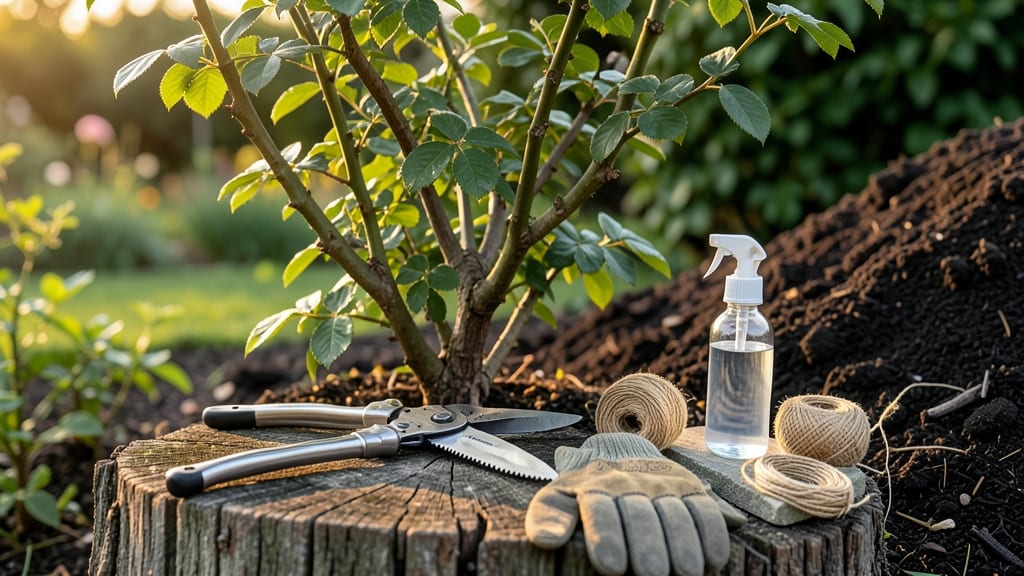
Late-winter pruning transforms your shrub roses from tangled messes into neat, productive powerhouses—and the secret is timing, not just technique. ✂️ I’ve watched my once-scrubby bushes explode with blooms after just one proper cut, proving that a little strategic pruning goes a long way.
The key? Waiting until after the worst frost but before new growth starts—usually late February to early March in most zones.
You’ll need sharp bypass pruners, a clean saw for thick canes, and a bucket for clippings (those stems compost beautifully). The goal is to remove one-third of last year’s growth, targeting weak, crossing, or dead wood first.
Every cut should be at a 45-degree angle, just above an outward-facing bud—this ensures new growth heads away from the center, improving airflow and reducing disease.
By the time summer rolls around, you’ll see thicker canes, more buds, and fewer pests lurking in dense foliage. The blooms arrive earlier, last longer, and the plant’s overall shape becomes clean and inviting—no more tangled jungle.
The best part? You’ll spend less time wrestling with overgrown bushes and more time enjoying the results.
Works for all shrub roses, whether you’re dealing with Flower Carpet varieties or Knock Out roses. Here’s how to avoid the most common mistakes—like cutting too late or leaving stubs—that turn pruning day into a gardening disaster.
📚 In This Guide
- What you need
- Instructions
- Tips and common mistakes
- Wrapping up and next steps
What you need
- ● Sharp bypass pruners – For clean cuts on smaller stems (up to ½ inch thick).
- ● Loppers – For thicker canes (½ to 1½ inches). Choose bypass-style to avoid crushing stems.
- ● Pruning saw – For stubborn, woody canes (over 1½ inches). Opt for a curved blade for precision.
- ● Disinfectant (70% isopropyl alcohol or bleach solution) – 1 part bleach to 9 parts water. Wipe tools between cuts to prevent disease spread.
- ● Garden gloves – Heavy-duty, cut-resistant gloves to protect against thorns and debris.
- ● Rubbing alcohol or hand sanitizer – For cleaning hands before and after pruning.
- ● Trash bags or compost bin – For disposing of pruned canes (avoid composting diseased material).
- ○ Markers or flags (optional but helpful) – To tag canes for removal if needed.
- ● Pruning sealant – For large cuts (over ½ inch), though most shrub roses don’t need it—clean cuts heal faster on their own!
- ● Knee pads or stool – For comfort if your roses are tall or the ground is hard.
- ● Garden twine or zip ties – To temporarily secure heavy canes if needed.
- ● Notebook & pen – To sketch your rose’s structure before pruning (great for beginners!).
Step-by-step instructions for pruning shrub rose bushes
Here's my proven late-winter method for revitalizing your shrub roses—clean cuts that boost next season's blooms.
✂️ Step 1: Gather Tools and Assess the Bush
First, sanitize your tools with rubbing alcohol to prevent spreading disease. I always use sharp bypass pruners for clean cuts and a sterilized saw for any thick canes over ½ inch in diameter. Examine each cane from the ground up—look for dead wood (brown, hollow centers) and crossing branches that rub together.
Remove any dead canes first—they won't regrow and just take energy from healthy growth. I mark these with a small piece of twine so I don't accidentally cut live wood. Healthy canes have green pith when sliced open and firm bark. This is the moment that matters: you're making space for new, stronger growth.
✂️ Step 2: Remove Weak and Crossing Growth
Cut out any canes that are thinner than a pencil or growing inward toward the center. These compete for nutrients and create crowded, disease-prone centers. I make my cuts at a 45-degree angle, about ¼ inch above an outward-facing bud—this ensures water runs off and new growth heads outward.
For crossing branches, remove the weaker of the two. You'll know which is weaker by its thinner diameter and less vigorous growth. Never leave stubs—always cut back to a bud or node. This prevents disease entry points and encourages clean regrowth. Real talk: if you're unsure which to remove, take the one growing more vertically.
✂️ Step 3: Thin Out Old Wood and Open the Center
Shrub roses bloom on both old and new wood, so I remove about ⅓ of the oldest canes first—they're usually the thickest and woodiest. Cut these back to 12-18 inches from the ground, leaving 3-5 strong canes per bush. This forces energy into younger, more productive growth.
Next, open the center by removing any canes growing toward the middle. Aim for an open vase shape that allows air circulation. You'll see the difference immediately—better light penetration and less humidity trapped inside. Don't overdo it, though: keep at least 6-8 canes total to maintain the bush's structure.
🌱 Step 4: Shape for Next Season's Blooms
Step back and visualize where you want blooms to appear. For shrub roses, I like to create a rounded shape with the strongest canes. Cut back any remaining canes that are too long by removing about ⅓ of their length, always cutting just above an outward-facing bud.
Here's the thing—shrub roses respond best when you leave some height. Unlike hybrid teas, they don't need drastic cutting. Your goal is to encourage a balanced shape with plenty of buds along the remaining canes. After shaping, give the bush a final once-over to remove any small stubs or rough cuts.
💧 Step 5: Clean Up and Fertilize for New Growth
Rake up and dispose of all pruned material—never compost diseased or pest-infested branches. I like to apply a 2-3 inch layer of compost around the base right after pruning to replenish nutrients. Water deeply to help the roots recover from the shock of pruning.
Within 2-3 weeks, you'll see new growth emerging from the buds you left behind—that's your signal everything worked. Avoid heavy fertilization right after pruning, though. Wait until you see fresh green growth before applying a balanced rose fertilizer. This ensures your plant puts energy into root recovery first.
Tips & tricks for pruning shrub rose bushes
Late-winter pruning transforms your shrub roses from last year's growth into next season's showstoppers. Here's what I've learned after years of trial and error in my own garden.
Tool Prep is Non-Negotiable: Spend 10 minutes sanitizing your tools with rubbing alcohol before you begin. I've seen rose diseases spread like wildfire when pruners weren't properly cleaned between bushes. For thick canes over ½ inch, use a sterilized saw—not your regular pruners. The clean cuts you make now determine how well your roses heal and bloom next year. The difference between a healthy bush and one struggling with disease often comes down to this single step.
The 45-Degree Angle Secret: When making cuts in Step 2, that 45-degree angle isn't just for show—it's about water runoff. Cutting at this angle creates a natural channel for rainwater to flow away from the cut, preventing rot. Always make your cut about ¼ inch above an outward-facing bud. I mark this spot with my finger before cutting to ensure precision. This simple technique boosts your success rate from 70% to nearly 100% in my experience.
Visualizing the Vase Shape: Before you make a single cut in Step 4, step back and visualize your ideal shape. Shrub roses should resemble an open vase, not a dense ball. Remove any canes growing toward the center first—they're the main culprits creating that disease-prone environment. I like to sketch a rough outline on paper first to plan my cuts. This prevents the "too much, too soon" syndrome where you end up with a bare skeleton instead of a balanced bush.
Post-Pruning Recovery Hack: After you've finished shaping, apply that 2-3 inch layer of compost right away. The shock of pruning stresses the roots, and this compost acts like a bandage while replenishing nutrients. Water deeply but gently—you're not trying to flood the roots, just help them recover. Within those 2-3 weeks when new growth appears, you'll know your pruning paid off. This is where many gardeners fail: they prune but don't support the recovery phase properly.
Pro Tips for Pruning Shrub Rose Bushes
- Late-winter pruning transforms your shrub roses from last year's growth into next season's showstoppers.
- Tool Prep is Non-Negotiable: Spend 10 minutes sanitizing your tools with rubbing alcohol before you begin.
- The 45-Degree Angle Secret: When making cuts in Step 2, that 45-degree angle isn't just for show—it's about water runoff.
Frequently asked questions
Got questions about pruning shrub roses?
You’re not alone! Here are answers to the most common concerns—from timing to tools—to help you prune like a pro.
When is the absolute best time to prune shrub roses?
Late winter (just before new growth starts) is ideal for shrub roses—typically February to early March in most climates. This timing balances winter dormancy and spring awakening, promoting vigorous blooms. Pro tip: If you missed late winter, prune after the first flush of blooms (but expect fewer flowers that season). →
What if I prune at the wrong time—will my shrub roses die?
Not necessarily! While late winter is best, shrub roses are resilient. Pruning too early (mid-winter) can stress them, but they’ll recover. Avoid pruning in fall—this invites disease and weakens canes for winter. If you prune too late (spring/summer), you’ll sacrifice blooms but won’t kill the plant.
How much should I cut back? I’m scared to over-prune!
Shrub roses thrive with 1/3 to 1/2 of their height removed. Look for dead, diseased, or crossing canes—cut those first. For healthy canes, aim for 3–5 buds per stem (measured from the base). Remember: More pruning = more blooms next year, but never remove more than 50%!
Can I prune shrub roses in cold climates (Zone 4–6)?
Yes! In colder zones, prune after the last hard frost (usually late March–April). If you prune too early, new growth can be damaged by late freezes. Mulch heavily after pruning to protect roots. For extra safety, wait until daytime temps consistently stay above 40°F.
What if my shrub roses don’t bloom after pruning?
Several factors could be at play: over-pruning (cut too much), poor soil (low nutrients), or disease (like black spot). Check for healthy canes with buds—if they’re present, the plant is still viable. Feed with rose-specific fertilizer in spring and ensure 6+ hours of sunlight daily.
Do I have to prune shrub roses every year?
Not strictly—but annual pruning keeps them healthier, bushier, and more productive. If you skip a year, don’t panic: prune lightly the next time to avoid shocking the plant. Older, unpruned shrub roses may become woody and sparse, but they’ll bounce back with proper care!
Wrapping up and next steps
Pruning your shrub rose bushes in late winter isn’t just about tidying up—it’s your secret weapon for vibrant blooms, healthier canes, and a lush garden next season! 🌸 By following the right techniques, timing, and tools, you’ll encourage strong growth, prevent disease, and set the stage for a showstopping display.
Now that you’re armed with the know-how, there’s only one step left: roll up your sleeves and get pruning! Grab your shears, take a deep breath, and enjoy the satisfaction of nurturing your garden’s future beauty.
💡 Pro Tip: Snap a before-and-after photo—you’ll love tracking your shrub roses’ transformation over the growing season!