
Pruning
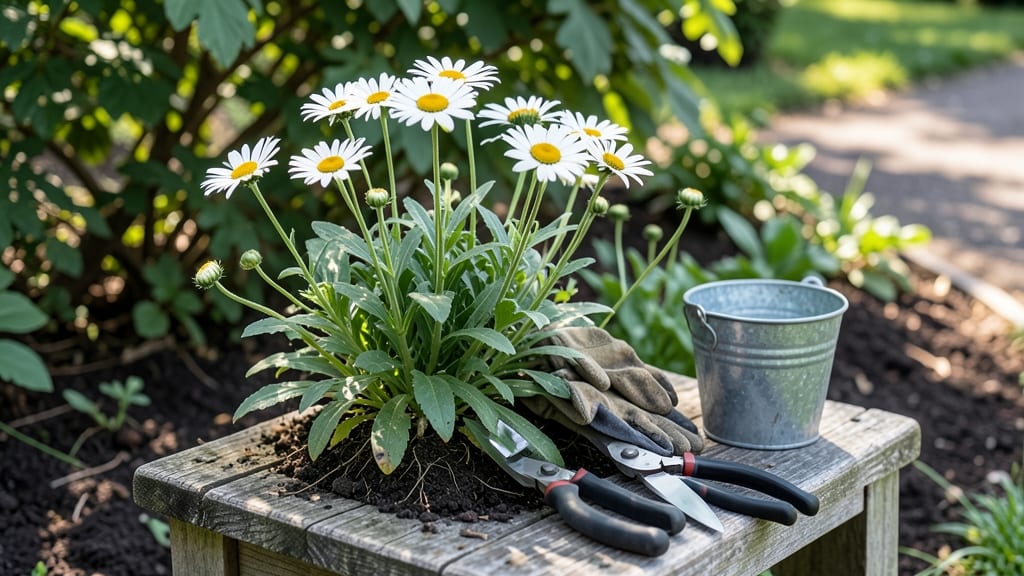
Pruning Shasta daisies isn't just about cutting back—it's the secret to those bold, cheerful blooms that last from early summer through fall. ✨ I used to let mine go wild, only to watch them flop by August.
Now, with a few simple cuts at the right times, they stay lush and productive for months longer.
The key is timing: deadhead spent blooms all summer, trim back by one-third after flowering, and cut back to the ground in late fall. You’ll need sharp pruners and a little patience, but the payoff is worth it—stronger stems, bigger blooms, and plants that bounce back every year.
Even my first attempt last season gave me a second wave of flowers.
What you’ll end up with is a neat, healthy plant that flowers like crazy instead of looking tired by midsummer. The right cuts encourage fresh growth, and the plant focuses its energy on producing more blooms instead of just leaves. It’s like giving your daisies a fresh start every season.
Works for both new and established plants, and the same principles apply whether you’re growing them in full sun or partial shade. Let’s get those blooms looking their best all season long!
The first product explained
Meet the Fiskars ErgoSoft Pruning Shears—your new best friend for tackling those Shasta daisies with ease! 🌼✂️ Designed for precision and comfort, these shears are a favorite among gardeners of all skill levels, making them the perfect tool for your pruning adventures.
🔍 Key Specs & Features
Don’t let the sleek design fool you—these shears pack a punch with:
- Ergonomic Handle: Soft-grip, contoured design reduces hand fatigue during long pruning sessions.
- Precision Bypass Blade: 7-inch stainless steel blades cut cleanly through stems, leaving no jagged edges.
- Self-Sharpening Mechanism: Maintains a razor-sharp edge with minimal effort.
- Locking Safety Feature: Keeps blades securely closed when not in use.
- Durable Construction: Built to last with high-quality materials, even for heavy-duty pruning.
🎯 Who’s It For?
Whether you're a seasoned gardener or a newbie with a green thumb, these shears are ideal for:
- Pruning Shasta daisies and other perennials for deadheading or shaping.
- Trimming overgrown shrubs, roses, or ornamental grasses.
- General garden maintenance, from trimming herbs to shaping topiaries.
- Gardeners with joint concerns—the ergonomic design minimizes strain.
💰 Price Point & Value
Priced at $25–$30, the Fiskars ErgoSoft Pruning Shears offer exceptional value for their quality and versatility. While it’s an investment, the durability and ease of use make it a worthwhile addition to any gardening toolkit. Plus, you’ll save money in the long run by avoiding frequent replacements!
Pro Tip: 💡 Pair these shears with a pair of garden gloves for extra protection and grip, especially when tackling thorny stems!
The second product explained
Next up, let’s dive into Fiskars ErgoSoft Bypass Pruners—a game-changer for gardeners who want precision, comfort, and durability in their pruning tools. 🌸✂️ These pruners are designed with both beginners and seasoned gardeners in mind, making them a versatile addition to your pruning arsenal.
📏 Specs & Features
Here’s what makes these pruners stand out:
- Ergonomic Design: Soft-grip handles reduce hand fatigue, so you can prune Shasta daisies (or any other plants) for hours without discomfort.
- Bypass Blade Action: The sharp, 5.5-inch stainless steel blades deliver clean cuts, minimizing damage to stems and encouraging healthier regrowth.
- Self-Sharpening: The blades stay sharper longer, reducing the need for frequent maintenance.
- Durable Construction: Built with high-quality steel and reinforced joints, these pruners handle tough stems and branches with ease.
- Locking Mechanism: A convenient safety lock keeps the blades closed when not in use, preventing accidental cuts.
- Weight: Lightweight at just 7.5 ounces, making them easy to maneuver even for extended pruning sessions.
🎯 Target Users
These pruners are ideal for:
- Home gardeners who want a reliable, all-purpose tool for pruning Shasta daisies, deadheading, and light landscaping.
- Gardeners with joint or arthritis concerns thanks to their ergonomic design.
- Those who prefer low-maintenance tools—the self-sharpening feature means fewer trips to the sharpening stone.
- Budget-conscious buyers who want a high-quality tool without the premium price tag (compared to professional-grade pruners).
💰 Price Point
The Fiskars ErgoSoft Bypass Pruners typically retail for around $15–$20, making them an affordable yet high-performance option. Given their durability and ergonomic benefits, they offer excellent value for the price. Many gardeners consider them a worthwhile investment for long-term use, especially if you’re pruning Shasta daisies regularly.
Whether you’re tackling overgrown stems or simply maintaining your garden’s beauty, these pruners make the job easier—and more enjoyable!
Head-to-head comparison
When it comes to pruning Shasta daisies, not all methods are created equal! Whether you're a seasoned gardener or just starting out, understanding the differences between traditional hand-pruning and power-tool-assisted pruning can help you make the best choice for your garden.
Below, we break down the key dimensions side by side to help you decide which approach aligns best with your goals, budget, and gardening style. 🌼✂️
🌱 Performance: Precision vs. Speed
How well each method performs depends on your priorities—whether you value meticulous detail or efficiency.
- Hand-Pruning:
- ✅ Superior control: Perfect for shaping individual blooms and stems, ensuring clean cuts that promote healthier regrowth.
- ✅ Ideal for small gardens: Less overwhelming for beginners or those with limited space.
- ❌ Time-consuming: Requires patience, especially for larger patches or overgrown bushes.
- Power-Tool-Assisted Pruning:
- ✅ Blazing speed: Great for large gardens or when time is limited—prune an entire bed in minutes!
- ✅ Consistency: Reduces fatigue and ensures uniformity in cuts.
- ❌ Less precision: Can accidentally nick healthy stems or leaves if not careful.
💰 Price: Upfront Costs vs. Long-Term Savings
Your wallet will thank you for considering the total cost of ownership, not just the initial investment.
| Hand-Pruning | Power-Tool-Assisted Pruning | |
|---|---|---|
| Initial Cost | $10–$50 (high-quality pruners, gloves, knee pads) | $100–$300+ (hedge trimmers, pruning saws, or electric shears) |
| Ongoing Costs | Minimal (sharpener for blades, occasional replacement of tools) | Moderate (battery replacements, blade sharpening, potential repairs) |
| Best For | Budget-conscious gardeners or those who prefer a hands-on approach. | Large properties, commercial landscapes, or frequent pruners. |
💡 Pro Tip: If you opt for power tools, consider renting first to test if the investment is worth it for your needs!
🌡️ Durability: Tool Longevity and Garden Health
How each method impacts both your tools and the health of your Shasta daisies over time.
- Hand-Pruning:
- ✅ Tool durability: High-quality pruners last years with proper care, reducing waste.
- ✅ Garden health: Clean cuts minimize damage to stems, reducing stress on plants.
- ❌ Physical strain: Can lead to hand fatigue or discomfort over time.
- Power-Tool-Assisted Pruning:
- ✅ Reduced physical strain: Ideal for those with mobility issues or large gardens.
- ❌ Tool wear and tear: Blades dull faster, especially on thick stems, requiring frequent sharpening or replacement.
- ❌ Potential damage: Overzealous trimming can harm plant health if not done carefully.
⏰ Time Investment: Quick Fixes vs. Labor of Love
How much time you’re willing to dedicate to pruning will shape your experience.
- Hand-Pruning:
- ⏳ Time per session: 30 minutes to 2+ hours, depending on garden size.
- ⏳ Frequency: Can be spread out over weeks or months for a relaxed pace.
- ✅ Perfect for weekends: Great if you enjoy gardening as a hobby.
- Power-Tool-Assisted Pruning:
- ⏰ Time per session: 10–30 minutes for large areas.
- ⏰ Frequency: Can be done quickly during maintenance windows.
- ✅ Ideal for busy schedules: Get the job done fast and move on!
🌿 Environmental Impact: Eco-Friendly Considerations
If sustainability is a priority, how each method measures up.
- Hand-Pruning:
- ✅ Zero emissions: No fuel or electricity required.
- ✅ Biodegradable waste: Clippings can be composted easily.
- ✅ Low waste: Tools have a long lifespan with minimal environmental footprint.
- Power-Tool-Assisted Pruning:
- ⚠️ Emissions (if gas-powered): Contributes to air pollution if not electric.
- ⚠️ Battery disposal: Requires proper recycling of lithium-ion batteries.
- ✅ Electric options available: Choose cordless or solar-powered tools to reduce impact.
🎯 Best Use Cases: When to Choose Each Method
Not sure which method fits your lifestyle? Here’s a quick guide:
| Choose Hand-Pruning If... | Choose Power-Tool-Assisted Pruning If... |
|---|---|
| You have a small garden or a few Shasta daisy bushes. | You’re maintaining a large landscape or commercial property. |
| You enjoy the therapeutic process of gardening. | You need to prune quickly and efficiently. |
| You’re on a tight budget and prefer low-cost tools. | You’re willing to invest in tools for long-term convenience. |
| You want precise control over each cut. | You don’t mind trading some precision for speed. |
| You’re a beginner looking to learn proper pruning techniques. | You’re experienced and want to tackle bigger projects. |
✨ Pro Tip: For the best of both worlds, start with hand-pruning for small areas and use power tools for larger sections—like trimming the bulk first, then refining with shears!
Which one should you choose?
So, you’ve weighed the options, compared the tools, and now you’re ready to decide: how should you prune your Shasta daisies for the best results? The answer depends on your goals, time commitment, and the specific needs of your garden.
Here’s a tailored verdict and recommendation to help you choose the perfect approach.
🌸 For Beginners or Low-Maintenance Gardeners
If you’re new to gardening or prefer a simpler routine, Product A (the handheld pruning shears) is your best bet. Its lightweight design and precision cutting make it ideal for occasional pruning tasks like deadheading spent blooms or light shaping.
Pair it with Product B’s (the bypass pruners) ergonomic grip for comfort during longer sessions. Pro tip: 💡 Stick to the deadheading method in early fall and spring—just snip off faded blooms at the base to encourage new growth without overwhelming yourself.
🌿 For Serious Gardeners or Large Gardens
If your Shasta daisies are sprawling or you’re aiming for a professional finish, invest in Product B’s bypass pruners for clean cuts and minimal damage to stems. These are perfect for seasonal pruning tasks, like cutting back foliage in late fall or early spring to promote vigorous regrowth.
For extra efficiency, consider adding a small pruning saw (not covered here) if you’re dealing with thick, woody stems. Pro tip: ✨ Schedule a deep pruning session in late winter to remove up to ⅓ of the plant’s height—this rejuvenates the plant and prevents overcrowding.
💰 Budget-Friendly or Multi-Use Needs
If you’re on a budget or want tools that double for other plants, Product A’s versatility wins. Its compact size fits easily in a gardening caddy, and its sharp blades handle everything from daisies to roses.
For a cost-effective combo, pair it with Product B’s pruners for heavy-duty tasks. Pro tip: 🎯 Buy a small sharpening stone to keep both tools in top condition—dull blades tear stems instead of cutting cleanly, stressing your plants.
🌟 Final Verdict: The Ultimate Combo
For the best long-term results, combine both tools:
- Product A for daily deadheading and light maintenance.
- Product B for seasonal pruning and heavy-duty cuts.
Remember: Consistency is key. Even 10 minutes a week of pruning can transform your garden! Whether you’re a casual gardener or a green-thumb enthusiast, these tools—and a little patience—will keep your Shasta daisies thriving for years to come. Happy pruning! 🌼✂️