
Pruning
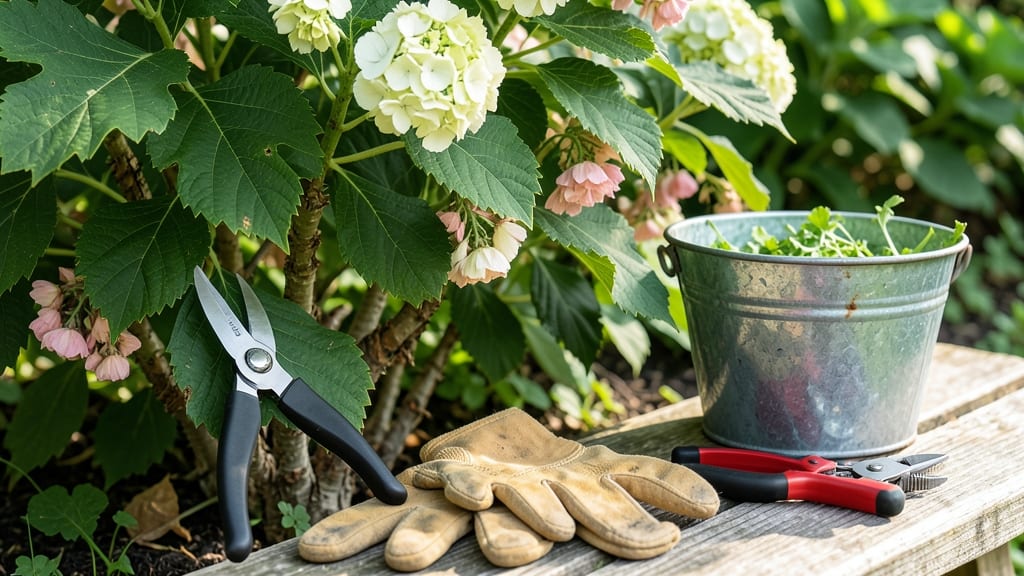
Pruning oakleaf hydrangeas in late winter transforms them from scraggly bushes into showstopping shrubs with bold foliage and abundant blooms. ✂️ I’ve pruned mine every year since I planted them, and the difference in size and flower power is dramatic—last season’s blooms lasted from June through October with minimal care after the cut.
The key is timing and technique: prune when the plant is dormant but buds are swelling, and always cut just above a bud or branch collar. You’ll remove dead wood first, then shape the plant by thinning out crowded branches, which lets light and air reach the center.
Oakleaf hydrangeas bloom on both old and new wood, so you won’t sacrifice next year’s flowers by pruning now. After pruning, your plant will reward you with vibrant green leaves in spring and clusters of white summer blooms that deepen to pink or burgundy in fall.
Just avoid over-pruning—never cut more than one-third of the plant at once, or you’ll stress it. This method works for both young and mature plants, and the same principles apply whether you’re dealing with a 3-foot bush or a 6-foot shrub. Let’s get those shears ready!
📚 In This Guide
- What you need
- Instructions
- Tips and common mistakes
- Wrapping up and next steps
What you need
- ● Pruning shears – Sharp, bypass-style shears (for clean cuts on smaller stems). Size: 5-7 inches.
- ● Loppers – For thicker branches (½–1½ inches). Look for: Ratchet-style for extra leverage.
- ● Hand pruners – Anvil-style (for stubborn, woody stems). Note: Disinfect with rubbing alcohol between cuts to prevent disease.
- ● Garden gloves – Heavy-duty, cut-resistant gloves (oakleaf hydrangeas have serrated edges!).
- ● Ladder or step stool – If your hydrangea is taller than 6 feet.
- ● Heavy-duty trash bags – For collecting pruned branches (aim for 2–3 gallons capacity).
- ○ Marking twine or flags – Optional but helpful for tagging branches to remove (e.g., dead wood or suckers).
- ● Choose the right time: Late winter (just before buds swell) or early spring—avoid pruning after June (old wood bloomers!).
- ● Weather check: Prune on a dry, calm day (rain can spread sap-borne diseases).
- ● Safety first: Wear closed-toe shoes (watch for falling branches!).
- ● Have a first-aid kit handy (just in case of thorn pricks).
- ● Hydrangea health: Inspect for pests (aphids, scale) or diseases (powdery mildew). Treat before pruning if needed.
- ● Pruning sealant – For large cuts (>½ inch) to prevent disease entry (e.g., Tanglefoot Tree Wound Pruning Sealer).
- ● Sharpener – A file or whetstone to keep shears/loppers razor-sharp.
- ● Mulch – 2–3 inches of organic mulch (e.g., shredded bark) post-pruning to retain moisture.
- ● Camera or sketchbook – To map out your hydrangea’s structure before cutting (great for beginners!).
Step-by-Step instructions for pruning oakleaf hydrangeas
Here's how I revive oakleaf hydrangeas for stronger growth and stunning fall foliage—without cutting back too much.
✂️ Step 1: Time Your Pruning for Late Winter
Prune oakleaf hydrangeas in late winter, just as new buds begin to swell but before any leaves emerge. This timing ensures you remove dead wood while preserving next year's blooms. I aim for February or early March in my zone 7 garden, but adjust based on your last frost date—waiting until after the worst cold passes prevents shock to tender new growth.
Look for brown, brittle stems that snap easily when bent—these are dead and should be cut completely. Healthy stems feel firm and green beneath the bark. If you're unsure, make a small cut to expose fresh green tissue inside; if you see only brown, remove the entire stem at its base.
✂️ Step 2: Cut Back Dead and Weak Growth
Use clean, sharp pruners to make cuts at a 45-degree angle, about ¼ inch above a bud or branch collar. This angle helps water runoff, reducing rot risk. For dead stems, cut all the way back to the main trunk or a live branch. I avoid cutting into the center of the plant—this creates a "donut hole" that traps moisture and invites disease.
For weak but still-living stems, shorten them by one-third to encourage bushier growth. Focus on removing branches that cross or rub against others—these wounds weaken the plant over time. Oakleaf hydrangeas bloom on old wood, so never cut back into last year's flower clusters unless they're completely dead.
✂️ Step 3: Thin Out Overcrowded Branches
Step back and assess the plant's shape. Remove 1-2 oldest stems each year to improve airflow and sunlight penetration. Older stems produce fewer blooms and weaker foliage, so thinning them rejuvenates the plant. I prioritize removing stems that grow straight up or outward—these create a messy, unbalanced silhouette.
If your hydrangea has become too large, you can reduce its size by one-third in a single year, but spread this over 2-3 years for less stress. Never remove more than one-third of the plant's total growth in one season—this shocks the roots and delays recovery.
🌿 Step 4: Clean Up and Fertilize for Spring
After pruning, rake up all clippings and dispose of them—never leave them beneath the plant, as they can harbor pests and diseases. I like to spread a 2-inch layer of mulch around the base (but not touching the trunk) to retain moisture and suppress weeds. Use organic mulch like shredded bark or wood chips.
Apply a balanced, slow-release fertilizer (10-10-10) in early spring once new growth appears. Water deeply after fertilizing to help nutrients reach the roots. Avoid high-nitrogen fertilizers—they promote leafy growth at the expense of flowers. Oakleaf hydrangeas reward patience with vibrant fall foliage and long-lasting summer blooms when pruned correctly.
Tips & tricks for pruning oakleaf hydrangeas
These simple strategies will help you prune with confidence and keep your oakleaf hydrangeas thriving for years to come.
Timing is Everything: Don't rush into pruning just because winter's over. Wait until you see those fat, plump buds swelling on the stems—this is your cue that the plant is waking up. In my zone 7 garden, I usually aim for mid-February to early March, but always check your local frost dates first. Pruning too early can expose tender new growth to late frosts, while waiting too long risks cutting off potential blooms for next season.
The 45-Degree Angle Secret: When making your cuts in Step 2, that 45-degree angle isn't just for looks—it's about plant health. The angled cut helps water runoff away from the stem, reducing rot risk. I like to use a small notched trowel to create the angle if my pruners aren't sharp enough. And always cut just above a bud or branch collar—this is where new growth will emerge. If you're unsure which way is up, look for the lighter-colored side of the stem where the bud is attached.
Old Wood, New Blooms: Remember, oakleaf hydrangeas bloom on old wood, so be gentle with last year's growth. In Step 3, when you're thinning those overcrowded branches, focus on removing the oldest stems first—they're usually the ones growing straight up. These stems produce fewer blooms anyway, so removing them actually encourages your plant to put energy into stronger, more productive growth. Think of it like giving your hydrangea a spa day—less clutter means better airflow and more vibrant foliage.
Mulch Magic: That 2-inch layer of organic mulch in Step 4 isn't just decorative—it's working hard to protect your plant's roots. I use shredded hardwood mulch because it breaks down slowly and improves soil structure over time. Just keep it 2-3 inches away from the trunk to prevent rot. In late spring, you'll notice how much healthier your plant looks compared to neighbors who skip this step—it's like putting on sunscreen for your hydrangea's roots!
Pro Tips for Pruning Oakleaf Hydrangea
- These simple strategies will help you prune with confidence and keep your oakleaf hydrangeas thriving for years to come.
- Timing is Everything: Don't rush into pruning just because winter's over.
- The 45-Degree Angle Secret: When making your cuts in Step 2, that 45-degree angle isn't just for looks—it's about plant health.
Frequently asked questions
Got questions about pruning your oakleaf hydrangea? You’re not alone! Here are some of the most common concerns—plus clear, actionable answers to keep your plant thriving.
When is the best time to prune oakleaf hydrangeas?
Late winter (just before new growth begins) is ideal—typically February or early March in most climates. This timing ensures you remove dead wood while leaving next year’s blooms intact. Avoid pruning in fall or early spring, as it can stimulate tender growth that may frost damage. Pro tip: If you missed late winter, wait until after flowering (summer) to do light maintenance.
Should I cut back oakleaf hydrangeas hard or just trim lightly?
Oakleaf hydrangeas bloom on old wood, so avoid heavy pruning. Instead, focus on:
- Removing dead, diseased, or crossing branches (cut to the base or nearest healthy bud).
- Thinning out overcrowded stems to improve airflow (trim to 1/3 of the stem’s length).
- Avoiding cuts near the main trunk unless necessary.
What if I prune at the wrong time and my hydrangea doesn’t bloom?
Don’t panic! Oakleaf hydrangeas are forgiving. If you pruned too late (after buds formed), focus on:
- Keeping the plant well-watered and fertilized (use a balanced 10-10-10 or hydrangea-specific food).
- Monitoring for new growth—buds may still emerge from lower stems.
- Avoiding pruning again until next late winter.
Can I prune oakleaf hydrangeas every year?
Yes, but lightly! Annual pruning keeps the plant healthy by:
- Removing old, weak wood (older than 3–4 years) to encourage younger, stronger growth.
- Preventing disease by eliminating dead branches.
- Shaping the plant for better airflow and sunlight penetration.
What if my oakleaf hydrangea bleeds sap after pruning?
Sap bleeding (a sticky, watery ooze) is normal and harmless—it’s the plant’s way of sealing wounds. To minimize it:
- Prune on a dry, cool day (avoid hot or humid conditions).
- Use sharp, clean tools to make clean cuts (dull blades cause more damage).
- Apply a pruning sealant (optional) to large cuts, but skip it for small trims.
Wrapping up and next steps
Pruning your oakleaf hydrangea in late winter isn’t just a chore—it’s the secret to vibrant blooms and a thriving plant all season long. By following these steps, you’ll encourage stronger growth, better airflow, and those stunning fall foliage colors you love. 🌿✨
Now that you’re armed with the how, grab those pruners and get ready to transform your hydrangea into a showstopper! For extra confidence, watch a quick video tutorial or join a local gardening group to share your progress—your green thumb is about to shine even brighter.