
Pruning
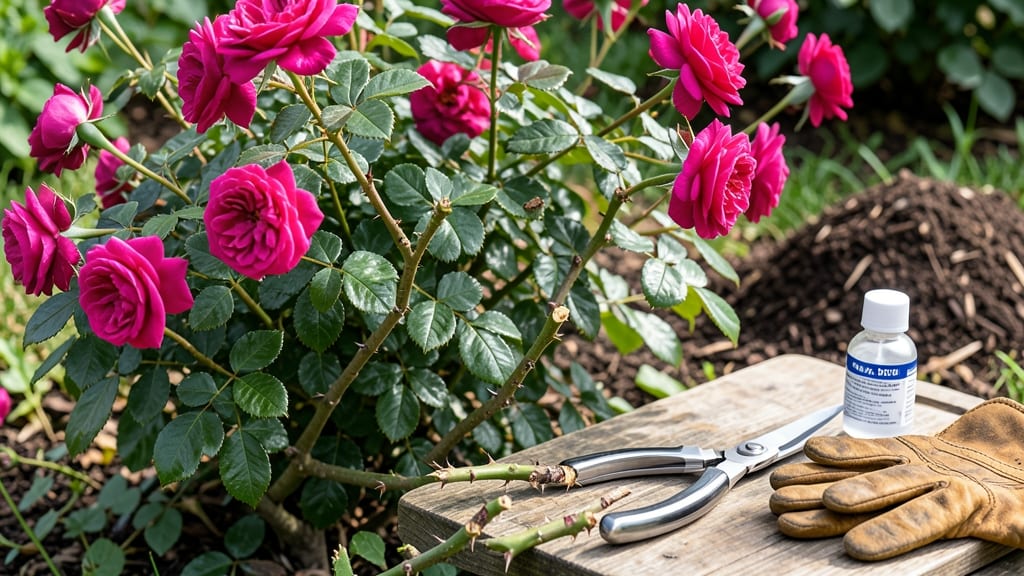
Pruning knockout roses isn't just about shaping—it's about unlocking their full potential. 🌹 I've learned that skipping this step means fewer blooms and weaker stems, but when done right, your bushes will explode with color all season long. The key is timing and technique, not brute force with the shears.
You only need three things: sharp pruners, a clean work surface, and a clear morning to work. The goal is to remove about one-third of the oldest wood each year, which encourages new growth where the blooms form.
I always prune in three stages—early spring, mid-summer, and light touch-ups in fall—to keep the plant productive without stressing it.
After pruning, you'll see fresh green shoots within 10-14 days, and those turn into blooms by summer. The plant stays compact, resists disease better, and produces more flowers than you can count.
The secret is cutting just above an outward-facing bud and never leaving stubs—this simple habit makes all the difference.
This method works for all Knockout varieties, whether you're dealing with a single bush or a whole hedge. The same principles apply whether you're in Zone 5 or Zone 9—just adjust timing slightly for your climate. Let's get those roses looking their best year-round!
📚 In This Guide
- What you need
- Instructions
- Tips and common mistakes
- Wrapping up and next steps
What you need
- ● Bypass pruners: Sharp, high-quality pruners (e.g., Felco or Fiskars) for clean cuts on smaller stems. Size: 6-8 inches.
- ● Loppers: For thicker stems (½ inch or larger). Size: 18-24 inches with long handles for leverage.
- ● Pruning saw: For stubborn, thick branches (1+ inch diameter). Type: Curved blade for precision.
- ● Garden gloves: Heavy-duty, cut-resistant gloves (e.g., Mechanix or Dr. McGregor) to protect hands from thorns.
- ● Disinfectant: 70% isopropyl alcohol or a 10% bleach solution to sterilize tools between cuts (prevents disease spread).
- ● Rubbing alcohol or hand sanitizer: For cleaning hands after pruning.
- ● Rake or broom: To clear fallen leaves/debris from the base of the rose.
- ● Pruning sealant: (e.g., Tree Seal or pruning wax) for large cuts over ½ inch in diameter to prevent disease.
- ○ Marking spray: (Optional) To label pruned branches if you’re experimenting with shaping.
- ● Wheelbarrow or bucket: For collecting pruned branches and debris.
- ● Weather: Prune on a dry, calm day to avoid spreading disease or damaging the plant.
- ● Timing: Choose early morning or late afternoon to minimize stress on the rose.
- ● Safety gear: Long sleeves/pants to protect against thorns and potential scratches.
How to prune Knockout roses for maximum blooms
Here's my go-to method for keeping these hardy roses flowering all season—no fancy tools, just smart cuts.
✂️ Step 1: Time Your Pruning Correctly
Knockout roses bloom on new wood, so you can prune anytime except during active blooming periods. I always tackle it right after the last frost in spring and again in early summer after the first flush of flowers. Avoid cutting back when buds are just starting to swell—you'll sacrifice that season's blooms.
Look for the first flush of flowers as your cue. Once those fade, it's time to prune again to encourage the next round. This year-round approach keeps your bushes dense and productive. If you missed a season, don't worry—Knockout roses are forgiving and will still bloom, though they may need a catch-up prune in late summer.
✂️ Step 2: Remove Dead, Diseased, and Crossing Branches
Start by inspecting your rose bush for any dead wood—it'll be brown, brittle, and won't bend. Snip these out first at the base. Next, look for branches with signs of disease like black spots or powdery mildew. Cut these off ½ inch below the affected area to prevent spread.
Now focus on branches that cross or rub against each other. These create wounds where pests and diseases can enter. Make your cuts just outside the branch collar—the little bump where the branch meets the stem. This ensures the plant can heal properly. I like to step back every few cuts to visualize the bush's shape—I'm aiming for an open center that lets air circulate.
✂️ Step 3: Shape the Bush for Airflow and Light
Knockout roses respond well to a rounded, vase-like shape. Start by cutting back last year's growth by about ⅓ of its length. This encourages bushier growth and more blooms. Make your cuts just above an outward-facing bud—this directs new growth away from the center.
For each cut, angle it slightly away from the bud at about 45 degrees. This helps rainwater run off instead of pooling. Avoid leaving stubs—always cut back to the bud or branch collar. As you work, keep checking the bush's balance. You want the widest part to be about ⅔ of the way up from the base, not too top-heavy.
✂️ Step 4: Thin Out Overcrowded Areas
If your rose bush has too many branches growing too close together, it's time to thin. Look for the thinnest, weakest stems in crowded areas—these are competing with stronger branches for nutrients. Cut these out completely at the base. I usually remove about 20-30% of the oldest stems each year to keep the bush vigorous.
Don't worry about being too aggressive—Knockout roses are tough. After thinning, you'll notice more space between branches. This improves airflow, which reduces disease risk and helps each remaining bloom get the light it needs. Step back frequently to check your progress. The goal is a bush that looks full but not congested.
🌿 Step 5: Clean Up and Apply Post-Pruning Care
Once all your cuts are made, gather up all the pruned branches and dispose of them in the trash—not the compost. Rose debris can harbor diseases that might reinfect your plant. Wipe down your pruners with rubbing alcohol between cuts to prevent spreading any potential pathogens.
After pruning, give your roses a light feeding with a balanced 10-10-10 fertilizer to support new growth. Water deeply right after to help the plant recover. You'll see new shoots emerging from the buds you left in about 2-3 weeks. This is your sign that the pruning worked—watch for those fresh green leaves popping up all over.
Tips & tricks for pruning Knockout roses
Here's what nobody tells you about keeping your Knockout roses blooming like crazy all season long.
Timing is Everything: The first flush of flowers is your golden cue for summer pruning. I've learned this the hard way—pruning too early means missed blooms, while waiting too long can stress the plant. Watch for those first blooms to fade completely before cutting back again. This two-step timing (spring + summer) is what keeps my bushes flowering nonstop through fall.
The ⅓ Rule for Shaping: When you're cutting back last year's growth in Step 3, resist the urge to go heavier than that ⅓ reduction. I've seen people hack back entire branches, thinking more cuts mean more blooms—but you're actually removing next year's potential flowers. Think of it like giving your rose bush a haircut: you want to shape, not shave. Those angled cuts at 45 degrees aren't just for looks—they help water run off and prevent disease entry points.
Thinning Strategy: The 20-30% rule for removing oldest stems might seem aggressive, but trust me—it works. I've had roses that looked like overgrown hedges until I finally committed to this thinning approach. Focus on those weakest stems in crowded areas first. You're not just making space; you're redirecting the plant's energy to the strongest growth. After thinning, your bush should look like it's breathing room to grow.
Cleanup Prevents Reinfection: That trash can rule isn't just about tidiness—rose debris is a disease waiting to happen. I've seen black spot fungus come roaring back after people composted infected branches. The rubbing alcohol wipe-down for your pruners might seem excessive, but it's the difference between a healthy bush and one fighting infections all season. Think of it as your pruning hygiene protocol.
Pro Tips for Pruning Knockout Roses
- Here's what nobody tells you about keeping your Knockout roses blooming like crazy all season long.
- Timing is Everything: The first flush of flowers is your golden cue for summer pruning.
- The ⅓ Rule for Shaping: When you're cutting back last year's growth in Step 3, resist the urge to go heavier than that ⅓ reduction.
Frequently asked questions
Got questions about keeping your Knockout Roses thriving with the right pruning? Here are some of the most common ones—and their answers!
When is the best time to prune Knockout Roses?
Prune your Knockout Roses twice a year: early spring (right before new growth starts) and late winter (to shape and remove dead wood). Light trimming can also happen after each bloom cycle to encourage more flowers. Avoid pruning in fall—it can leave stems vulnerable to winter damage.
How much should I cut back Knockout Roses?
For spring pruning, cut back one-third to half of the plant’s height, focusing on removing dead, diseased, or crossing branches. In late winter, trim to 18–24 inches tall to promote bushy growth. Never remove more than ⅓ of the plant at once—it can stress the rose.
What if I prune at the wrong time?
Pruning too late in the season (fall or winter) can expose stems to frost damage. If you prune after the first flush of blooms, you’ll delay the next set of flowers. Don’t panic! Knockout Roses are forgiving—just adjust your schedule next year and keep an eye out for new growth in spring.
Do Knockout Roses need pruning every year?
Yes! Annual pruning keeps them healthy, compact, and blooming all season. Skipping it can lead to overcrowded canes, fewer flowers, and weaker growth. Think of it like a haircut—regular trims keep them looking (and performing) their best!
Can I prune Knockout Roses differently for bigger blooms?
For larger blooms, prune less aggressively—focus on removing only dead or weak stems. Leave 3–5 strong canes per plant and avoid heavy cuts. Over-pruning can trigger more but smaller flowers. Balance shape and size by trimming just the tips of branches after blooms fade.
Wrapping up and next steps
Pruning your Knockout roses doesn’t have to be intimidating—it’s all about timing, technique, and a little love for your plants! 🌸 With the right tools, a clear plan, and regular maintenance, you’ll reward yourself with vibrant, long-lasting blooms that keep your garden buzzing all season.
Whether you’re a seasoned gardener or just starting out, every trim brings you closer to a thriving, low-maintenance rose bush.
Ready to take the next step? Grab your pruners, mark your calendar for seasonal checks, and watch your Knockout roses flourish! 🌿 For extra tips, join gardening forums or experiment with organic fertilizers to give your roses that extra boost.