
Pruning
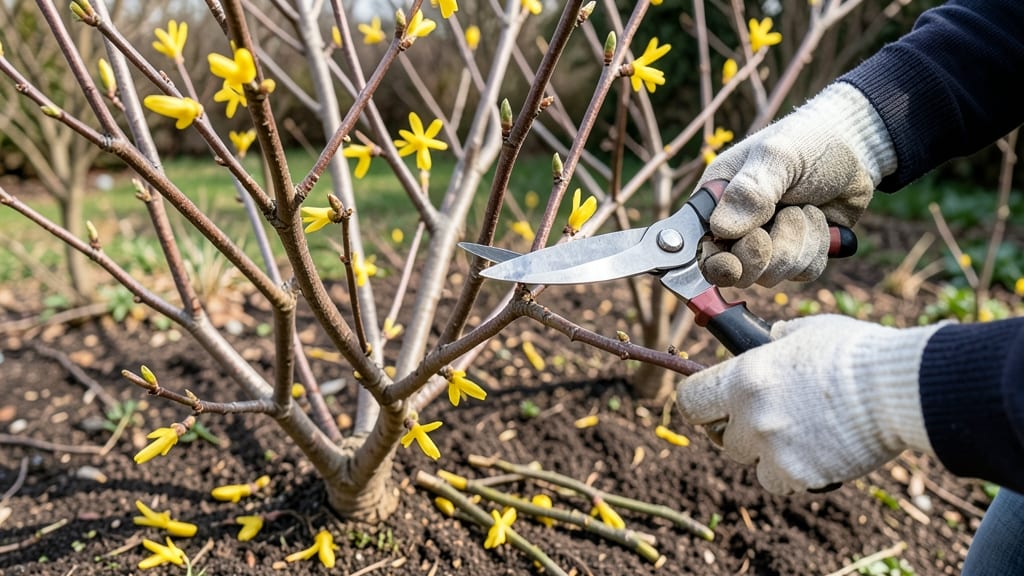
Pruning leggy forsythia turns your shrub into a tangled mess—until you master these three cuts. 🌿 My first attempt left bare branches where bright yellow blooms should be, but now I know exactly where to trim for a full, bushy canopy that flowers like crazy every spring. The secret is timing: prune right after blooming (late April to early May) when the plant has finished flowering but before summer growth kicks in. Grab your loppers and focus on three types of cuts—thinning out crowded stems, heading back leggy branches, and shaping the overall form. You'll see fresh green shoots within weeks, and next year's blooms will be thicker and more vibrant. What you end up with is a forsythia that looks like it was professionally pruned—no more sparse, lanky branches—and blooms so heavily your neighbors will ask how you did it. The bush stays compact, flowers earlier, and produces more buds for next season. Avoid the common mistakes: never prune in fall or winter (you'll cut off next year's blooms), don't remove more than one-third of the plant at once, and always cut at a 45-degree angle just above a bud. Here's how to do it right!
📚 In This Guide
- What you need
- Instructions
- Tips and common mistakes
- Wrapping up and next steps
What you need
- ● Pruning shears or loppers: Sharp, bypass-style blades (for clean cuts on smaller branches). Choose 7- to 10-inch handles for leverage.
- ● Pruning saw: For thicker branches (1+ inch diameter). Opt for a curved blade (e.g., Felco or Fiskars) to avoid splintering.
- ● Gloves: Heavy-duty, cut-resistant gloves (gardening or pruning-specific) to protect hands from thorns and sap.
- ○ Disinfectant (optional but recommended): 70% isopropyl alcohol or bleach solution (1 part bleach:9 parts water) to sterilize tools between cuts and prevent disease.
- ● Rake or broom: For clearing debris after pruning (a leaf rake works best for small branches).
- ○ Pruning sealant (optional): For large cuts (2+ inches)—use a tree wound pruning paste to protect exposed wood.
- ● Timing: Prune immediately after flowering (late spring) or during dormant season (late winter/early spring)—never in fall.
- ● Weather: Choose a dry, overcast day to avoid stressing the plant (wet branches = higher disease risk).
- ● Safety gear: Safety glasses (if dealing with large branches) and long sleeves to protect from sap and thorns.
Instructions for pruning leggy forsythia
Here's how I bring forsythia back to life with just three strategic cuts—no complicated techniques required.
✂️ Step 1: Remove Dead or Weak Branches First
Start by scanning your forsythia for any branches that are completely bare, broken, or showing signs of disease. These are your first targets—they won’t regrow, so cutting them now clears space for new growth. Use sharp pruning shears to make clean cuts just outside the branch collar, the swollen area where the branch meets the trunk. This prevents unsightly stubs and promotes faster healing.
I always work from the bottom up. If a branch is thicker than your wrist, use a pruning saw instead of shears. You’ll know you’ve made the right cut when the branch falls away cleanly without tearing the bark. Don’t worry about making the cuts perfect—focus on removing anything that’s clearly not contributing to the plant’s health.
✂️ Step 2: Thin Out Overcrowded Growth
Now focus on the leggy branches—the long, thin stems that reach outward but don’t have much foliage. Your goal is to open up the center of the plant so light and air can circulate better. Look for branches that cross over each other or grow inward toward the center. These are the ones to cut back entirely, removing them at their point of origin.
I like to step back every few cuts and visualize the plant’s shape. You want to create an open, vase-like structure where sunlight can reach the inner branches. Cut back to just above a outward-facing bud or side branch—this encourages new growth in the right direction. Avoid cutting more than one-third of the plant’s total foliage in a single season to prevent shock.
✂️ Step 3: Rejuvenate Old Wood with Strategic Cuts
For the remaining leggy branches, focus on rejuvenating them by cutting back to a strong lateral branch or bud. Look for side branches that are at least one-third the diameter of the main stem—these will produce thicker, more vigorous new growth. Make your cut just above the bud, at a 45-degree angle to help water run off and prevent rot.
If a branch is completely bare at the base but has some foliage higher up, you can cut it back to a point where there’s still at least 6-8 inches of green growth remaining. This gives the plant enough energy to regenerate. Avoid cutting back into old, woody growth—forsythia blooms on last year’s wood, and over-pruning can reduce next year’s flowers.
🌿 Step 4: Clean Up and Encourage New Growth
After pruning, rake up and dispose of all the clippings—don’t leave them on the ground, as they can harbor pests or disease. Give the plant a light application of balanced fertilizer (10-10-10) to support new growth, but hold off on heavy feeding until you see fresh shoots emerging. Forsythia typically responds quickly, with new buds appearing within 2-4 weeks of pruning.
Water deeply right after pruning to help the plant recover, especially if you’ve cut back a lot of foliage. Keep an eye out for new shoots—these will be your plant’s way of telling you it’s healing. If you notice any yellowing leaves or wilting, it might just need more water, but if the problem persists, check for signs of stress or disease and adjust your care accordingly.
Tips & tricks for pruning leggy forsythia
Here’s what nobody tells you about making those three simple cuts work like magic for your forsythia.
Tool Prep: Sharpen your pruning shears before you start—dull blades tear bark and damage branches. I test mine by cutting a clean line through a sheet of paper; if it tears, it’s time to sharpen. A clean cut heals faster and looks more professional. For branches thicker than your wrist, grab your pruning saw—don’t try to force shears on them, or you’ll end up with jagged cuts that invite disease.
The 1/3 Rule: In Step 2, when you’re thinning out overcrowded growth, remember this golden rule: never remove more than one-third of the plant’s total foliage in a single season. I learned this the hard way after pruning too aggressively and watching my forsythia struggle to recover. Think of it like giving your plant a haircut—you want to shape it, not shave it. If you’re unsure, err on the side of caution and cut back less.
Bud Direction Matters: When you’re making those strategic cuts in Step 3, pay attention to where those buds are facing. Always cut just above an outward-facing bud—this encourages new growth to shoot out and away from the center, creating that beautiful vase shape. If you cut above an inward-facing bud, you’ll end up with more leggy growth in the center, which is exactly what we’re trying to avoid.
Post-Pruning Care: After you’ve finished cutting, don’t just walk away—give your forsythia some TLC. Rake up all the clippings immediately to prevent pests and disease from taking hold. Then, water deeply right after pruning, especially if you’ve cut back a lot of foliage. Think of it like giving your plant a drink after a workout. Within 2-4 weeks, you should see fresh new shoots emerging—those are your plant’s way of saying “thank you” for the pruning!
Pro Tips for Pruning Leggy Forsythia
- Here’s what nobody tells you about making those three simple cuts work like magic for your forsythia.
- Tool Prep: Sharpen your pruning shears before you start—dull blades tear bark and damage branches.
- The 1/3 Rule: In Step 2, when you’re thinning out overcrowded growth, remember this golden rule: never remove more than one-third of the plant’s total foliage in a single season.
Frequently asked questions
Got questions about pruning leggy forsythia?
You’re not alone! Here are some of the most common concerns—and straightforward answers—to help you tackle the job with confidence.
When is the best time to prune leggy forsythia?
The ideal window is right after flowering (late spring) or in early spring before buds swell. Avoid pruning in fall or winter—it can stimulate new growth that won’t harden off before cold snaps. Pro tip: If you missed the spring window, wait until late summer to avoid reducing next year’s blooms.
How much can I cut back without harming the plant?
For rejuvenation, you can safely remove up to ⅓ of the plant’s oldest stems down to the ground. Focus on thin, leggy branches first—they’re often the culprits. Avoid over-pruning: Cutting too aggressively can stress the plant and delay recovery. Think of it like a haircut—you want to shape, not shave!
Will pruning leggy forsythia reduce next year’s flowers?
Not if you do it correctly! Pruning in late spring or early summer after flowering ensures you’re not removing next year’s blooms. The key is to cut back only the oldest, woodiest stems—younger branches will produce flowers. Time it right, and you’ll get a bigger, bushier bloom in spring!
What if my forsythia doesn’t bloom after pruning?
No blooms? You might’ve pruned too late (after mid-summer) or cut back too aggressively. Forsythia blooms on last year’s growth, so prune only after flowering to preserve next year’s buds. If it’s been years since blooming, the plant may need a harder prune—cut ⅓ of the oldest stems down to the base and wait patiently for new growth.
Are there alternatives to pruning if my forsythia is too leggy?
If pruning feels overwhelming, try thinning out just the longest, bare branches to improve airflow and sunlight penetration. You can also fertilize in early spring to encourage denser growth. For extreme cases, consider replacing the plant—some varieties (like ‘Spectabilis’) are more compact and low-maintenance than others.
Wrapping up and next steps
Pruning leggy forsythia doesn’t have to be intimidating—just a few strategic cuts can transform your shrub into a vibrant, bushier beauty! 🌿 By cutting back 1/3 of the oldest stems, removing crossing branches, and pruning for shape, you’ll encourage fresh growth and a fuller canopy.
With the right timing and tools, you’re well on your way to a revitalized, blooming bush that steals the show every spring.
Now that you’re armed with the know-how, grab those shears and get pruning! Start with one section at a time, and soon your forsythia will be the envy of the neighborhood. Happy pruning—your future blooms will thank you! 🌸