
Pruning
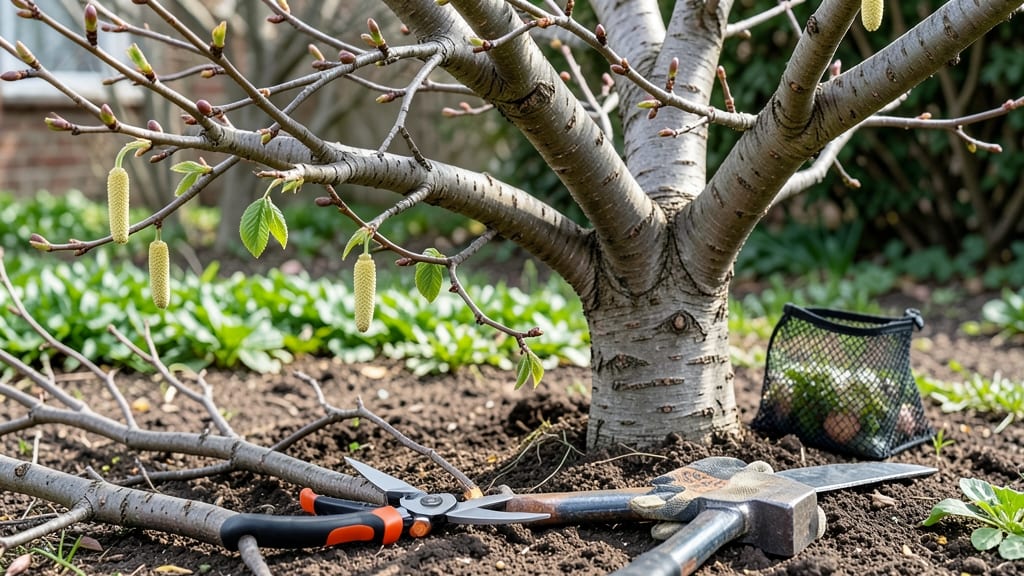
Filbert trees reward you with rich harvests when you prune them right—three strategic cuts transform tangled branches into a productive, open canopy. 🌿 I’ve spent years watching these trees go from chaotic to neatly shaped, and the difference in nut production is night-and-day.
The key? Timing matters more than technique, and most gardeners either prune too late or too aggressively. Start with cleanup cuts in late winter (before buds swell) to remove dead, diseased, or crossing branches—this keeps air circulating and prevents rot.
Then, in early summer after harvest, focus on thinning to let sunlight reach the center. Avoid heavy pruning in fall, as wounds heal poorly before winter. My first attempt left too many stubs, but now I aim for smooth cuts just outside the branch collar.
By summer’s end, you’ll see lush new growth where light once struggled to reach, and next year’s nut clusters will form thicker and healthier. The trees become easier to harvest, and pests have fewer places to hide.
Just remember: filbert trees handle pruning better than most nuts—go slow, and they’ll thank you with bountiful crops for decades. This method works for both dwarf varieties in orchards and standard trees in landscapes. Grab your tools, and let’s get those branches in shape—your future nut harvest depends on it.
📚 In This Guide
- What you need
- Instructions
- Tips and common mistakes
- Wrapping up and next steps
What you need
- ● Pruning shears: Bypass pruners (sharp, 6–8" blades) for small branches (1/4" thick).
- ● Loppers: 8–10" bypass loppers for branches 1/4"–2" in diameter.
- ● Pruning saw: Curved-tooth saw for branches 2" or thicker (avoid tearing bark!).
- ● Disinfectant: 70% isopropyl alcohol or 10% bleach solution (1 part bleach to 9 parts water) to sterilize tools between cuts.
- ● Gloves: Heavy-duty, cut-resistant gloves (e.g., Mechanix Wear or Tough Outdoors).
- ● Safety gear: Safety glasses and long sleeves (filbert trees can be thorny!).
- ○ Pruning sealant: Tree wound paint (e.g., Tanglefoot Tree Wound Pruning Sealer) for large cuts (optional; debate exists on its necessity!).
- ● Extension pole: 6–10' pole saw for high branches (e.g., Fiskars X27).
- ● Marking spray: Fluorescent paint to tag branches for removal (e.g., TreeMark).
- ● Wheelbarrow: For hauling debris (especially post-winter cleanup!).
- ● First-aid kit: Just in case thorns or tools take a toll!
- ● Check the weather: Prune on a dry, overcast day (avoid windy or rainy conditions).
- ● Know your tree’s age: Young trees (under 5 years) need light shaping; mature trees require structural pruning.
- ● Review your pruning plan: Sketch a quick diagram of cuts (open-center vs. central leader shape).
- ● Timing matters: Dormant season (late winter) is ideal for major cuts; light pruning can happen year-round.
Step-by-Step guide to pruning filbert trees for optimal growth
Here's the precise method I use to keep filbert trees productive and healthy year after year.
✂️ Step 1: Perform Winter Dormancy Pruning (Late Winter)
Start your pruning cycle in late winter (just before buds swell) when the tree is fully dormant. This is the best time to remove dead, diseased, or crossing branches—they're easier to spot without foliage interference. I always begin with a 20-30% reduction of the total canopy to maintain a balanced shape while encouraging new growth.
Use clean, sharp pruning shears to make cuts at a 45-degree angle just above an outward-facing bud. This angle helps water run off the cut and prevents rot. For larger branches over ½ inch thick, switch to a pruning saw—never leave stubs, as they invite disease. Watch for suckers (shoots growing from the base) and remove them immediately, as they drain energy from the main tree.
🌿 Step 2: Light Summer Pruning (Mid-July)
In mid-July, focus on thinning out crowded branches to improve air circulation and reduce disease risk. Filbert trees produce nuts on current season's growth, so avoid heavy pruning now—just remove water sprouts (fast-growing vertical shoots) and any branches growing inward toward the center. These compete with productive limbs for sunlight and nutrients.
Make cuts just above a leaf node where new growth can emerge. If a branch is too thick to cut cleanly, use the three-cut method: make an undercut, then an overcut, and finally sever the branch. This prevents bark from tearing. You'll know you're doing it right when the tree's center opens up, allowing sunlight to reach the lower limbs.
⏰ Step 3: Post-Harvest Maintenance (Fall)
After the nuts have fallen (typically late September to October), do a final light cleanup prune. Remove any broken or storm-damaged branches and any limbs that are rubbing against others—these create wounds that invite pests. This is also the time to shape the tree by selectively trimming branches that disrupt the natural vase shape filbert trees prefer.
Disinfect your tools with 70% rubbing alcohol between cuts to prevent spreading diseases like hazelnut blight. Mulch around the base with 2-3 inches of organic mulch (like wood chips) to protect roots and retain moisture. Avoid piling mulch against the trunk—keep it 3-4 inches away to prevent rot.
Tips & tricks for pruning filbert trees
Here's what nobody tells you about keeping your filbert trees thriving—these are the lessons I learned after years of trial and error.
Timing is Everything: Late winter pruning (just before buds swell) is non-negotiable for filbert trees. The dormant season lets you see the tree's structure clearly, making it easier to identify deadwood and crossing branches. I've seen trees with perfect pruning in summer end up stressed because they were pruned too late—new growth needs time to harden off before winter. The 20-30% canopy reduction target in Step 1 isn't arbitrary: it balances growth stimulation with stress avoidance. Too much pruning shocks the tree, while too little lets problems fester.
Cutting Technique Matters: That 45-degree angle above an outward-facing bud in Step 1 isn't just aesthetic—it's about wound healing. The angled cut directs water away from the cut surface, preventing rot that can invite pests. For branches over ½ inch thick, the three-cut method in Step 2 prevents bark tearing that creates entry points for diseases like hazelnut blight. I've had to replace entire branches because I rushed this step—don't make my mistake. Always make clean cuts just outside the branch collar where it meets the trunk.
Seasonal Focus: Mid-July pruning targets water sprouts and inward-growing branches that compete with nut production. These aren't random cuts—they're strategic removals to open the tree's center. I've watched filbert trees go from dense, tangled messes to open, sunlit canopies after just one summer pruning session. The key is working with the tree's natural growth patterns rather than against them. Remember, filbert trees produce nuts on current season's growth, so heavy pruning now would sacrifice next year's harvest.
Post-Harvest Care: The fall cleanup isn't just about removing broken branches—it's about setting up your tree for next year's success. That 2-3 inches of organic mulch creates the perfect root environment, while keeping it 3-4 inches from the trunk prevents rot. I've seen trees with mulch piled against trunks develop fungal issues that took years to recover from. The 70% rubbing alcohol disinfection between cuts might seem excessive, but it's how I've prevented hazelnut blight from spreading through my entire orchard.
Pro Tips for Pruning Filbert Trees
- Here's what nobody tells you about keeping your filbert trees thriving—these are the lessons I learned after years of trial and error.
- Timing is Everything: Late winter pruning (just before buds swell) is non-negotiable for filbert trees.
- Cutting Technique Matters: That 45-degree angle above an outward-facing bud in Step 1 isn't just aesthetic—it's about wound healing.
Frequently asked questions
Got questions about keeping your filbert trees thriving with the right pruning? Here are some of the most common ones—and their straightforward answers!
When is the best time to prune filbert trees?
Filbert trees benefit from three key pruning times: late winter (dormant season), early spring (just before bud break), and summer (to shape and thin). Avoid heavy pruning in fall, as it can stress the tree before winter. Pro tip: Always prune on a dry day to prevent disease spread.
How much can I cut back without harming the tree?
For young filbert trees, limit pruning to no more than 25% of the canopy per year. Mature trees can handle up to 30%, but avoid over-pruning—this weakens growth and reduces nut production. Focus on removing dead, diseased, or crossing branches first. Think of it like a haircut: small, gradual trims keep things healthy!
What if my filbert tree isn’t producing nuts after pruning?
Nut production often drops after aggressive pruning, but strategic cuts (like thinning crowded branches) can actually improve yield by boosting air circulation. If nuts are still scarce, check for:
- Age: Young trees (under 5 years) focus on growth, not nuts.
- Pollination: Filberts need cross-pollination—plant two compatible varieties.
- Environment: Stress from drought or pests can reduce harvests.
Can I use hedge trimmers instead of pruning shears?
While hedge trimmers work for light shaping, they’re not ideal for filbert trees. Their blunt cuts can damage bark and leave jagged wounds that invite disease. For precision (especially on smaller branches), hand pruners or loppers are best. Save the hedge trimmer for hedges!
What should I do with the pruned branches?
Remove diseased or pest-infested branches immediately and dispose of them in sealed bags (not compost). Healthy branches can be:
- Chipped for mulch (keep away from the tree’s base).
- Used as mulch in garden beds (accelerates decomposition).
- Rooted for new trees (if disease-free).
Wrapping up and next steps
Pruning your filbert trees isn’t just about keeping them tidy—it’s the secret to their long-term health and productivity! 🌿 With the right tools, timing, and techniques, you’ll encourage stronger growth, better yields, and a stunning shape.
Remember, consistency is key, so mark those pruning dates and approach each cut with confidence.
Ready to transform your filbert trees into thriving, bountiful plants? Start small—pick one section to prune this season, then build your skills. Before you know it, you’ll be a filbert-tree pruning pro! 🌟