
Pruning
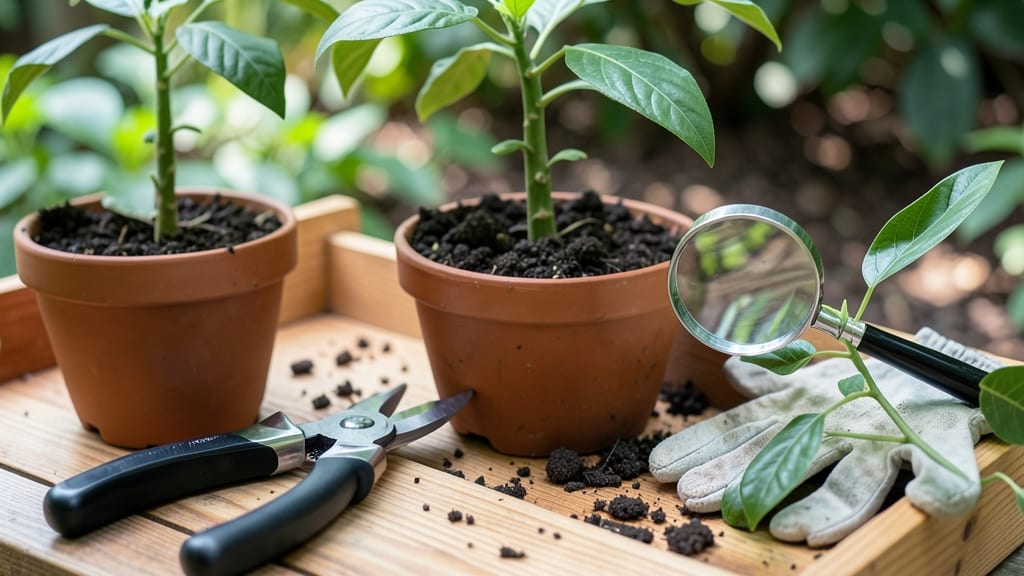
Pruning your avocado seedling isn't just about trimming—it's about shaping a future tree that can handle the weight of its own fruit. ✂️ I learned the hard way when my first seedling grew top-heavy and snapped under its own branches, but these strategic cuts prevent that exact problem while encouraging strong, balanced growth from the start.
The best time to prune is during the seedling's first two years, focusing on removing any branches that grow straight up (called "water sprouts") or cross each other. Use clean, sharp pruning shears to make cuts just above a leaf node or outward-facing bud—this is where new growth will sprout.
Avoid cutting too close to the trunk, as this can leave vulnerable wounds that invite disease.
After pruning, your seedling should develop a sturdy, vase-shaped canopy with branches spreading outward at 45-degree angles. This structure supports heavier fruit later while improving airflow and sunlight penetration. Within weeks, you'll see fresh green shoots emerging from the cuts, signaling the tree is healing and growing stronger.
For best results, prune in late winter or early spring before new growth begins. If you're growing in warmer climates, a light pruning after heavy rains can also help maintain shape.
The key is consistency—small, regular cuts work better than one aggressive pruning session, and always sterilize your tools between cuts to prevent spreading any potential infections.
📚 In This Guide
- What you need
- Instructions
- Tips and common mistakes
- Wrapping up and next steps
What you need
- ● Pruning shears: Sharp, bypass-style shears (avoid anvil shears—they crush stems). A 5-inch (13 cm) pair is ideal for seedlings.
- ● Gloves: Heavy-duty gardening gloves (to protect against thorns and sap). Opt for nitrile-coated or leather for durability.
- ● Disinfectant: 70% isopropyl alcohol or a 10% bleach solution (1 part bleach to 9 parts water) to sterilize tools between cuts.
- ○ Pruning sealant (optional): A tree wound sealant (like Tanglefoot Tree Wound Pruning Sealer) to prevent disease entry on larger cuts.
- ● Sharp knife or razor blade: For micro-cuts (e.g., removing small suckers or water sprouts). A X-Acto knife works well.
- ● Healthy seedling: Ensure your avocado seedling is at least 6–12 months old with a main stem (trunk) of 1–2 inches (2.5–5 cm) in diameter.
- ● Growth assessment: Wait until new growth slows (late winter/early spring) or after a dormant period for best results.
- ● Weather check: Prune on a dry, overcast day to reduce stress on the plant.
- ● Workspace: Clear a clean, flat surface (like a table or tarp) to lay out tools and trimmings.
- ● Hand lens or magnifying glass: For inspecting cuts and identifying pests/diseases up close.
- ● Spray bottle with water: To mist cuts and reduce shock (especially in dry climates).
- ● Compost bin: For disposing of pruned material (avoid leaving it near the seedling to prevent pests).
- ○ Growth regulator (optional): A diluted seaweed extract (like Maxicrop) to apply to cuts for faster healing.
How to prune avocado seedlings for a healthier, more productive tree
Pruning isn't just about shaping—it's how you build a strong avocado tree from the start.
🌱 Step 1: Identify the Right Time to Prune
Wait until your seedling has 4-6 true leaves and a thickened stem—usually when it's 3-4 months old. This timing ensures the plant has stored enough energy to recover quickly. Prune in late winter or early spring before new growth begins, when the tree is still dormant but ready to rebound.
Check for new growth at the base—this signals the seedling is strong enough to handle pruning. Avoid cutting during heatwaves or extreme cold, as the plant will struggle to heal. If you're in a warm climate, prune when temperatures stay above 60°F during the day.
✂️ Step 2: Remove Dead or Weak Growth First
Start by cutting away any brown, mushy, or crisscrossing branches—these are dead or competing for the same space. Use clean, sharp pruners to make a 45-degree angle just above a leaf node (the bump where leaves attach). This encourages new growth to sprout from the right spot.
If you see thin, leggy stems reaching toward the light, trim them back to a stronger branch. These weak stems won’t support fruit later and waste the tree’s energy. You’ll know you’re on the right track when the remaining branches look thick and upright—like sturdy pillars.
☀️ Step 3: Shape the Canopy for Light and Airflow
Step back and visualize the tree’s central leader—the main upward-growing stem. Remove any branches growing too close to it (within 6-12 inches) to prevent crowding. Aim to leave 3-4 main branches spaced evenly around the trunk, like spokes on a wheel.
Cut back overlapping branches that rub against each other—this prevents wounds where disease can enter. Leave 2-3 smaller branches on each main limb to build a fuller canopy over time. Think of it like training a young athlete: you’re shaping strength, not just looks.
🪴 Step 4: Encourage New Growth with Strategic Cuts
Make your final cuts just above a leaf node where new buds form. Avoid leaving stubs—these can rot and invite pests. If a branch is thicker than your thumb, make a small notch on the underside before cutting to guide water flow away from the wound.
After pruning, water the seedling deeply to help it recover. You’ll see new shoots emerging within 2-4 weeks—this is your reward for pruning correctly. If no new growth appears after 6 weeks, the cuts may have been too severe, and you’ll need to adjust next time.
⏰ Step 5: Monitor and Maintain Through the Growing Season
Keep an eye on the tree for new suckers (shoots growing from the base or trunk). Remove these promptly—they drain energy from your main branches. Prune lightly again in late summer to refine the shape, but avoid heavy cuts after June to prevent late-season growth that won’t harden off before winter.
By next spring, your avocado seedling will stand taller, with a stronger trunk and better airflow through the canopy. This is the foundation for a tree that will bear fruit for decades. Real talk: the first few cuts might feel hesitant, but trust the process—your tree will thank you.
Tips & tricks for pruning avocado seedlings
Here's what nobody tells you about pruning young avocado trees—these tricks make all the difference in long-term health.
Timing is Everything: The 3-4 month mark isn't just arbitrary—it's when your seedling has developed enough energy reserves to handle pruning without shock. I learned this the hard way after pruning a 2-month-old seedling that took weeks to recover. Wait until you see that thickened stem and 4-6 true leaves before making any cuts. In warm climates, that 60°F minimum temperature is your cue to start pruning—cooler temps slow healing.
The 45-Degree Angle Secret: When making cuts in Step 2, that 45-degree angle isn't just for looks—it creates a larger surface area for the wound to heal while directing water away from the cut. Use your pruners to make a clean cut just above a leaf node, and resist the urge to leave stubs. I've seen too many pruning wounds fail because of improper angles, leading to rot and disease entry points. Think of it like making a perfect haircut—precision matters!
Canopy Geometry Matters: Those 3-4 main branches in Step 3 should be spaced like spokes on a wheel—about 12 inches apart from the central leader. This spacing prevents crowding and ensures each branch gets sunlight. I've seen seedlings with branches growing too close to the central stem, which creates weak attachment points. Imagine a flagpole with too many flags—it won't stand straight. The goal is to create a balanced structure that can support future fruit weight.
Post-Pruning Recovery: That deep watering after pruning is crucial for recovery. The 2-4 week window for new shoots to appear gives you a clear benchmark—if nothing emerges by 6 weeks, you may have cut too aggressively. I always keep a pruning journal noting the date and type of cuts made, which helps track recovery patterns. And remember, those new suckers at the base? Remove them promptly—they're energy vampires that drain resources from your main branches.
Pro Tips for Pruning An Avocado Seedling
- Here's what nobody tells you about pruning young avocado trees—these tricks make all the difference in long-term health.
- Timing is Everything: The 3-4 month mark isn't just arbitrary—it's when your seedling has developed enough energy reserves to handle pruning without shock.
- The 45-Degree Angle Secret: When making cuts in Step 2, that 45-degree angle isn't just for looks—it creates a larger surface area for the wound to heal while directing water away from the cut.
Frequently asked questions
Got questions about pruning your avocado seedling? You’re not alone! Here are some of the most common concerns—and straightforward answers to help you grow a thriving tree.
How often should I prune my avocado seedling?
Prune your avocado seedling lightly every 4–6 weeks during its first year to encourage a sturdy structure. After the first year, reduce to once or twice annually (spring and early summer). Avoid heavy pruning—focus on shaping and removing only dead or weak growth.
When is the best time of year to prune?
The ideal time is late winter to early spring (just before new growth starts) or summer after fruiting. Avoid pruning in fall or winter in cold climates—avocados are sensitive to frost stress. If you must prune in hot weather, do it early in the morning to reduce shock.
What if I cut too much off my seedling?
Over-pruning can stress your seedling, leading to stunted growth or disease. If you’ve trimmed too aggressively, stop pruning immediately and focus on watering deeply and fertilizing lightly (with a balanced 10-10-10 formula). Monitor for new growth—if none appears after 2–3 weeks, consider repotting or adjusting care.
Do I need special tools for pruning avocado seedlings?
No! Start with clean, sharp bypass pruners for small cuts and sterilized scissors for tiny branches. For thicker stems (over ½ inch), use hand pruners. Always disinfect tools with rubbing alcohol between cuts to prevent bacterial/fungal infections.
Can I prune my avocado seedling too young?
Yes—avoid pruning seedlings under 6 months old unless removing dead/diseased wood. Young seedlings need all their energy for root and stem development. Wait until the seedling has 3–5 strong leaves before light shaping. Patience pays off!
What should I do with the pruned branches?
Small clippings can be composted or discarded (avoid composting if diseased). Larger branches (over 6 inches) can be chopped into cuttings for propagation—just dip in rooting hormone and plant in moist soil. Never burn green waste!
Wrapping up and next steps
Pruning your avocado seedling isn’t just about trimming—it’s about shaping its future! With the right cuts, you’ll encourage a stronger, healthier canopy while preventing disease and pests. Remember, patience and consistency are key, so don’t rush the process.
Now that you’re armed with the know-how, take the next step! Start small with your seedling, and soon, you’ll be rewarded with a thriving, fruit-bearing tree. Happy pruning—your avocado’s growth journey begins with you! 🌱✂️