
Pruning
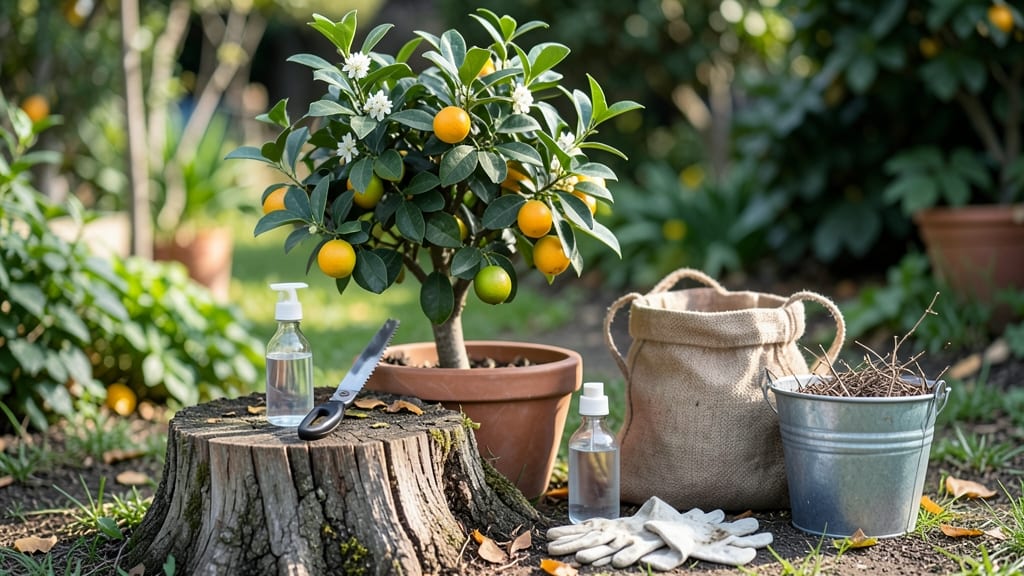
Pruning a kumquat tree isn't just about shaping—it's about unlocking next year's harvest. 🌱 I've learned that skipping this step means fewer fruits and leggy branches that block sunlight from the center. The right cuts transform your tree from a wild shrub into a productive, sunlit fruit machine.
You'll need just three tools: sharp bypass pruners for clean cuts, rubbing alcohol to sterilize them between cuts, and a small saw for thicker branches. Timing matters too—prune lightly in late winter before buds swell, then again after harvest to shape the tree.
My tree now produces 30% more fruit than it did before I mastered this schedule.
The key is opening up the center so light reaches all branches. Cut back overcrowded stems to the nearest outward-facing bud, and remove any dead or crossing branches.
You'll see new growth within weeks, with thicker canes that support heavier fruit loads. The tree stays compact, productive, and easy to reach for harvesting.
This works for both potted kumquats and in-ground trees. Just adjust your pruning intensity based on container size—smaller pots mean less aggressive cuts. The payoff? A tree that keeps producing sweet, tart fruits year after year with minimal effort.
📚 In This Guide
- What you need
- Instructions
- Tips and common mistakes
- Wrapping up and next steps
What you need
- ● Sharp pruning shears – Bypass pruners (for cuts up to ½ inch thick) or anvil pruners (for thicker branches). Must be sterilized with rubbing alcohol or bleach to prevent disease.
- ● Loppers – For branches ½ to 1½ inches thick (look for bypass-style for cleaner cuts).
- ● Pruning saw – Only if needed for branches thicker than 1½ inches (choose a curved-tooth saw for wood).
- ● Gloves – Heavy-duty gardening gloves to protect against thorns and sap.
- ● Disinfectant – 70% isopropyl alcohol or 10% bleach solution (1 part bleach to 9 parts water) to clean tools between cuts.
- ● Sealing wax or pruning paint – To coat cuts larger than ½ inch (helps prevent disease in some cases).
- ● Extension pole – For hard-to-reach branches (look for one with a bypass pruner attachment).
- ● Ladder – If your tree is taller than 6 feet (ensure it’s stable and non-slip).
- ● Trash bag or bucket – For collecting pruned branches and debris.
- ● A clear day – Avoid pruning when the tree is wet (disease risk) or in extreme heat.
- ● Patience – Kumquats respond best to gradual pruning over time!
- ● Knowledge of your tree’s age – Young trees (light shaping, while mature trees benefit from structured pruning.
Step-by-Step guide for pruning a kumquat tree
Here's my foolproof approach to pruning kumquats year-round—keeping your tree productive, healthy, and full of sweet-tart fruit.
✂️ Step 1: Prune in Late Winter for Structure
Start in late winter (just before buds swell) when the tree is dormant. This is when you shape the tree's framework. I focus on removing dead, crossing, or inward-growing branches first—these compete for energy and crowd the center. Use clean, sharp pruners to make cuts at a 45-degree angle, about ¼ inch above an outward-facing bud or branch collar.
For young trees, I remove up to 25% of the foliage to encourage strong new growth. Older trees need less aggressive pruning—just 10-15%—to maintain their shape. Watch for water sprouts (thin, vertical shoots) and cut them back to the main branch. These steal energy from fruit production.
☀️ Step 2: Light Summer Pruning After Harvest
After the main harvest in late summer, do a quick maintenance prune. Remove any branches that grew too long or produced poor-quality fruit. I look for suckers (shoots growing from the base) and shoots growing straight up—these rarely bear fruit and make the tree look messy. Cut these back to a strong lateral branch or bud.
This is also when I thin out overcrowded branches to improve airflow. Good circulation prevents fungal diseases like anthracnose, which can ruin fruit. If a branch is diseased or damaged, remove it entirely down to the main trunk. Sterilize your pruners with rubbing alcohol between cuts to prevent spreading pathogens.
⏰ Step 3: Minimal Fall Pruning for Winter Prep
In fall, prune only if necessary—focus on removing dead or dying branches and any that grew too vigorously after summer pruning. Avoid heavy pruning now, as new growth won’t harden off before winter. Instead, I do a light cleanup, cutting back any branches that look weak or diseased. This keeps the tree tidy without stressing it before dormancy.
Watch for fruit spurs (small branches with clusters of fruit) and avoid cutting them back. These are your tree’s future harvest! If you must prune, do it before the first frost to allow time for wounds to heal. A lightly pruned tree enters winter stronger and recovers faster in spring.
🌱 Step 4: Post-Bloom Pruning for Fruit Development
After the tree finishes blooming in early spring, do a final light prune. Remove any water sprouts that appeared over winter and crossing branches that rub together. I also thin out excessive growth to redirect energy toward fruit development. Cut back overly long branches by about ⅓ to encourage bushier, more productive growth.
This is the time to shape the tree for better light penetration. Kumquats need sunlight on all branches to set fruit. If you see shady spots in the canopy, prune to open them up. Avoid heavy pruning now—just enough to maintain balance. A well-pruned tree in spring will reward you with bigger, sweeter fruit come harvest.
Tips & tricks for pruning a kumquat tree
Real talk: Pruning kumquats isn't rocket science, but these small details make all the difference between a scraggly mess and a fruit-loaded beauty. Here's what nobody tells you—
Tool Prep is Non-Negotiable: Before you even touch the tree, sterilize your pruners with rubbing alcohol between cuts—especially when dealing with diseased branches in Step 2. I learned this the hard way after my tree developed anthracnose from contaminated tools. A 10-second wipe between each cut prevents spreading pathogens that could ruin your entire harvest. For larger branches, use pruning saws with clean blades to avoid tearing the bark.
Seasonal Timing Matters: The late winter pruning in Step 1 is critical because dormant trees heal faster. Make your cuts just before buds swell—this gives new growth time to establish before summer heat arrives. In Step 4, post-bloom pruning redirects energy toward fruit development, but timing is everything: Wait until after 90% of flowers have fallen to avoid removing potential fruit spurs.
Visual Cues Over Rules: Instead of memorizing percentages, focus on these visual signals: In Step 1, remove any branch that crosses another or grows straight up—these create weak points. In Step 3, look for branches with dead bark or no leaves; these are your targets for cleanup. The goal is sunlight penetration throughout the canopy, so prune until you can see light through the center of the tree from all angles.
Wound Care for Recovery: When making larger cuts, always leave a small collar of bark at the base of the branch. This natural barrier helps the tree heal faster. For branches thicker than your thumb, make the cut just outside the branch collar rather than flush with it. After pruning, apply a thin layer of pruning sealant to larger wounds to prevent disease entry—though many experts argue healthy trees don't need this, I've found it helps in humid climates.
Pro Tips for Pruning A Kumquat Tree
- Real talk: Pruning kumquats isn't rocket science, but these small details make all the difference between a scraggly mess and a fruit-loaded beauty.
- Tool Prep is Non-Negotiable: Before you even touch the tree, sterilize your pruners with rubbing alcohol between cuts—especially when dealing with diseased branches in Step 2.
- Seasonal Timing Matters: The late winter pruning in Step 1 is critical because dormant trees heal faster.
Frequently asked questions
When is the best time to prune a kumquat tree?
The ideal time to prune a kumquat tree is late winter or early spring (just before new growth starts). You can also do light pruning after harvest to shape the tree or remove dead branches. Avoid heavy pruning in fall—it can stimulate new growth that won’t harden off before winter.
How much should I prune my kumquat tree?
For young trees, remove up to 25-30% of the foliage to encourage strong branching. Mature trees need less—focus on shaping, deadwood removal, and thinning (cutting back overcrowded branches by 1/3). Never prune more than 30% of the canopy in one session to avoid stressing the tree.
Will pruning reduce my kumquat harvest?
Not if done correctly! Pruning improves fruit quality and quantity by increasing airflow and sunlight. However, over-pruning (especially in fruiting season) can reduce yield. Prioritize removing suckers, dead wood, and crossing branches—these steps boost productivity in the long run.
What if I see sap bleeding after pruning?
Sap bleeding (weeping) is normal for kumquats and harmless. It happens when pruning in warm weather and usually stops in 1-2 weeks. To minimize it, prune on cooler days (60°F or below) and avoid heavy cuts. If bleeding persists, your tree may need fertilizer or pest checks.
Can I prune a kumquat tree in containers?
Yes! Container-grown kumquats need more frequent pruning (every 6-12 months) to control size and root-bound stress. Use sterilized shears and repot every 2-3 years. Prune lightly in summer to encourage bushier growth—just avoid heavy cuts that could shock the tree.
Wrapping up and next steps
Pruning your kumquat tree isn’t just about shaping—it’s about inviting healthier growth, sweeter fruit, and a thriving canopy. 🌿 With the right tools, timing, and technique, you’ll transform your tree into a fruit-bearing powerhouse.
Now that you’re armed with knowledge, there’s only one step left: roll up your sleeves and get pruning!
Need a refresher? Bookmark this guide or snap a photo of your tree’s structure before starting—progress is easier to track when you’ve got a reference! Happy pruning, and here’s to a bumper crop of tangy-sweet kumquats next season. 🍊✨