
Pruning
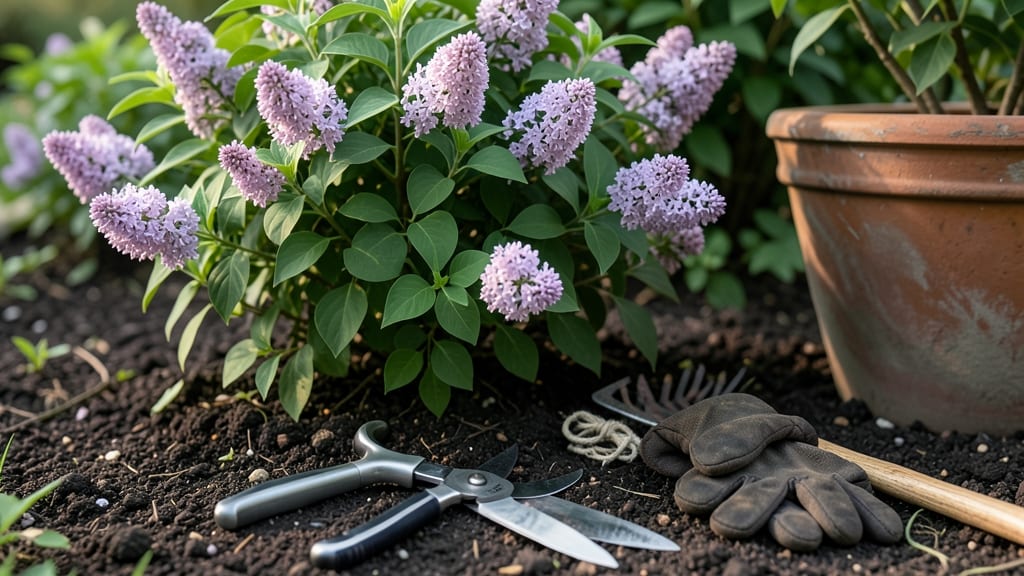
Pruning Miss Kim lilacs in late winter transforms your bush from a tangled mess into a fragrant, thorn-free showstopper. ✂️ I’ve pruned mine every year since planting, and the difference is night-and-day—more blooms, better airflow, and branches that don’t snap under snow.
The key is timing and technique, not brute force.
You’ll need sharp bypass pruners, a pair of gloves (those thorns will get you), and about 30 minutes for a medium-sized bush. Start by removing dead, crossing, or weak branches first—they’re the easiest to spot.
Then, cut back last year’s growth by one-third, always making clean cuts just above an outward-facing bud.
After pruning, water deeply to help the bush recover, and hold off on fertilizer until new growth appears in spring. You’ll see fresh green shoots within 2-3 weeks, and by summer, your lilac will be the most fragrant bush on the block.
The best part? Fewer thorns mean easier maintenance—and way more enjoyment.
Works for any Miss Kim lilac, whether it’s a new plant or a 10-year veteran. Just remember: prune after the blooms fade in summer if you want next year’s flowers, but late winter is the best time for overall health. Ready to give it a try?
📚 In This Guide
- What you need
- Instructions
- Tips and common mistakes
- Wrapping up and next steps
What you need
- ● Pruning shears: Sharp, bypass-style shears (2–4 inches long) for clean cuts. Dull blades crush stems—avoid this!
- ● Loppers: For thicker branches (up to 1.5 inches in diameter). Bypass loppers are ideal.
- ○ Hand pruners: Small, anvil-style pruners for delicate trimming (optional but handy).
- ● Gloves: Heavy-duty, garden gloves (thorn-resistant if your lilac is spiky!).
- ○ Disinfectant: Rubbing alcohol (70%+) or a pruning sealant (optional but recommended to prevent disease).
- ● Bucket or bag: For collecting pruned branches (5-gallon bucket or compostable pruning bag).
- ● Ladder: If your lilac is over 6 feet tall, a stable, 3-step ladder (or a pruning saw for high cuts).
- ● Pruning saw: For stubborn, thick branches (if loppers aren’t enough).
- ● Marking spray: Chalk or paint to mark cuts (helpful for large shrubs).
- ● Safety glasses: To shield eyes from flying debris.
- ● Hose or spray bottle: For rinsing tools between cuts (keeps them clean!).
Step-by-step guide to pruning Miss Kim lilac
Here's the method I use to keep these compact beauties flowering their best every year.
⏰ Step 1: Time Your Prune for Late Winter
Prune your Miss Kim lilac in late winter, just as buds begin to swell but before any new growth appears. This is typically 4-6 weeks before your last frost date. The goal is to shape the plant while it's still dormant, which prevents stress and encourages strong spring growth.
I mark my calendar for February or early March in most climates. If you prune too early, you risk cutting off next year's flowers—Miss Kim lilacs bloom on old wood. If you wait too long, the plant will start pushing new growth, and pruning becomes more stressful. Look for tight, plump buds along the stems as your cue.
✂️ Step 2: Gather Your Tools and Inspect the Plant
You'll need clean, sharp pruning shears and a small pair of gloves—Miss Kim lilacs have thorns! Start by removing any dead, diseased, or crossing branches first. These are easy to spot: dead branches are brown and brittle, while diseased ones may have blackened spots or ooze. Crossing branches rub against each other, creating wounds that invite pests.
Next, step back and examine the overall shape. Miss Kim lilacs naturally grow in a rounded form, so aim to maintain that silhouette. Remove any branches growing inward or downward, as these won't contribute to the plant's structure or flower display. Focus on creating an open center that allows air and light to circulate.
🌿 Step 3: Thin Out Overcrowded Stems
Miss Kim lilacs thrive when they have good airflow, so your next step is to thin out the canopy. Select 3-5 of the strongest, most vigorous stems and remove the rest at the base. These stems should be evenly spaced around the plant and show signs of healthy growth, like smooth, green bark and plump buds.
I like to start from the outside and work inward. Cut each stem back to the ground using a clean, sharp cut at a 45-degree angle. This prevents water from pooling on the wound and encourages faster healing. If you're unsure which stems to keep, prioritize those that are thicker than a pencil and show the most growth energy.
✂️ Step 4: Shape the Remaining Branches
Now focus on the stems you've chosen to keep. Look for branches that are growing in the wrong direction—those that angle inward, downward, or cross over others. Cut these back to a bud or side branch that grows outward. Always make your cuts just above a bud that faces the direction you want the branch to grow.
For a fuller look, you can also lightly trim the tips of the remaining branches to encourage bushier growth. Make these cuts just above a set of 3-5 leaves or a bud. Avoid cutting into the center of the plant, as this can create a dense, shaded interior that discourages flowering. Step back frequently to check your progress and maintain that rounded shape.
🌱 Step 5: Clean Up and Monitor Recovery
Once you've finished pruning, gather all the clippings and dispose of them in the trash—not the compost pile. Lilac leaves and stems can harbor diseases that may spread to other plants. Wipe down your pruning shears with rubbing alcohol to sterilize them before storing.
After pruning, water your lilac deeply to help it recover. Keep an eye on the plant over the next few weeks as new growth emerges. You'll know you've done well if you see plump, green buds and a more open, airy structure. Avoid fertilizing right after pruning—wait until new growth appears before feeding to encourage strong, healthy development.
Tips & tricks for pruning Miss Kim lilac
Here's what nobody tells you about keeping your lilac thriving after pruning—these are the details that make all the difference.
Timing is Everything: The 4-6 week window before your last frost is critical because Miss Kim lilacs bloom on old wood. If you prune too late and new growth starts, you'll cut off next year's flowers. I check for those tight, plump buds—when they're just starting to swell but haven't opened yet, that's your perfect moment. Confession: I skipped this step for years and wondered why my lilacs never bloomed as well.
Tool Preparation Matters: Your pruning shears need to be sharper than a chef's knife—dull blades tear plant tissue instead of making clean cuts. I wipe mine down with rubbing alcohol before and after each use to prevent disease spread. For stubborn branches, I use a small handsaw for clean cuts without tearing. The 45-degree angle isn't just decorative—it prevents water pooling on the wound, which could lead to rot.
Visual Cues for Healthy Stems: When selecting those 3-5 strongest stems to keep, look for ones that are thicker than a pencil with smooth, green bark. The buds should be plump and firm, not shriveled or mushy. I run my fingers along the stem—healthy ones should feel firm all the way through, while weak ones will have soft spots. This simple check saves me from keeping stems that would just die back later.
Post-Pruning Recovery: That deep watering after pruning isn't just symbolic—it helps the plant recover from the stress of cutting. I give mine about a gallon of water per foot of plant height. The key is to water slowly so it soaks into the root zone rather than running off. Avoid fertilizing right away; the plant needs to focus on healing before producing new growth. I wait until I see those plump green buds reappearing before adding any fertilizer.
Pro Tips for Prune Miss Kim Lilac
- Here's what nobody tells you about keeping your lilac thriving after pruning—these are the details that make all the difference.
- Timing is Everything: The 4-6 week window before your last frost is critical because Miss Kim lilacs bloom on old wood.
- Tool Preparation Matters: Your pruning shears need to be sharper than a chef's knife—dull blades tear plant tissue instead of making clean cuts.
Frequently asked questions
about pruning Prunus 'Miss Kim' lilacs—your go-to guide for fragrant, thorn-free blooms!When is the exact best time to prune Miss Kim lilacs?
Prune Prunus 'Miss Kim' lilacs in late winter to early spring (February–March), before new growth starts. This timing ensures you remove dead wood while avoiding buds that haven’t yet formed. Cold dormancy (below 40°F) is ideal—just avoid pruning if frost is forecasted!
How long does it take to prune a mature Miss Kim lilac?
For a small to medium shrub (6–8 feet tall), expect 15–30 minutes if you’re methodical. Larger shrubs (10+ feet) may take 45–60 minutes, especially if you’re thinning dense areas. Pro tip: Work in short bursts to avoid fatigue—lilacs can be heavy!
Can I prune Miss Kim lilacs in summer? Why not?
While you can trim lightly in summer to shape, avoid major pruning because:
- New growth won’t harden off before winter, risking dieback.
- Flower buds form on old wood, so summer cuts may reduce next year’s blooms.
- Bees and pollinators rely on lilac nectar—pruning mid-season disrupts their cycle.
Stick to late winter for the best results!
What if my Miss Kim lilac has no blooms after pruning?
No blooms could mean:
| Issue | Solution |
|---|---|
| Pruned too late (after buds swelled) | Next year, prune before buds show color (Feb–early March). |
| Over-pruned (cut into old wood) | Leave 3–4 healthy branches with buds—lilacs bloom on last year’s growth. |
| Poor sunlight/nutrients | Move to full sun (6+ hours/day) and fertilize with high-phosphorus food in early spring. |
Patience pays off—lilacs can take 1–2 years to rebound!
Are there thorn-free alternatives to Miss Kim lilacs?
Yes! If you love Prunus 'Miss Kim' but want zero thorns, try these thornless or low-thorn options:
- ‘Korean Lilac’ (Syringa meyeri) – Fragrant, compact, and thornless.
- ‘Dwarf Korean Lilac’ (Syringa meyeri ‘Palibin’) – Stay under 3 feet tall, no thorns.
- ‘Ungern-Sternberg Lilac’ (Syringa oblata) – Hardy, thornless, and drought-tolerant.
- ‘Miss Canada’ Lilac – Classic blooms with minimal thorns (easier to handle than ‘Miss Kim’).
Note: Even “thornless” varieties may have tiny, soft spines—wear gloves if sensitive!
Wrapping up and next steps
Pruning your Miss Kim Lilac in late winter isn’t just about shaping—it’s about unlocking its full potential for fragrant blooms and a thorn-free, airy canopy. 🌸 With the right tools, timing, and technique, you’ll reward yourself (and pollinators!) with a showstopping spring display.
The key? Patience and precision—cut back those leggy stems, open the center, and let that sweet perfume fill your garden.
Now’s the time to roll up your sleeves! Grab those pruners, dust off your gloves, and give your lilac the TLC it deserves. Ready to transform your yard into a fragrant paradise? Start pruning today! 🌿