
Pruning
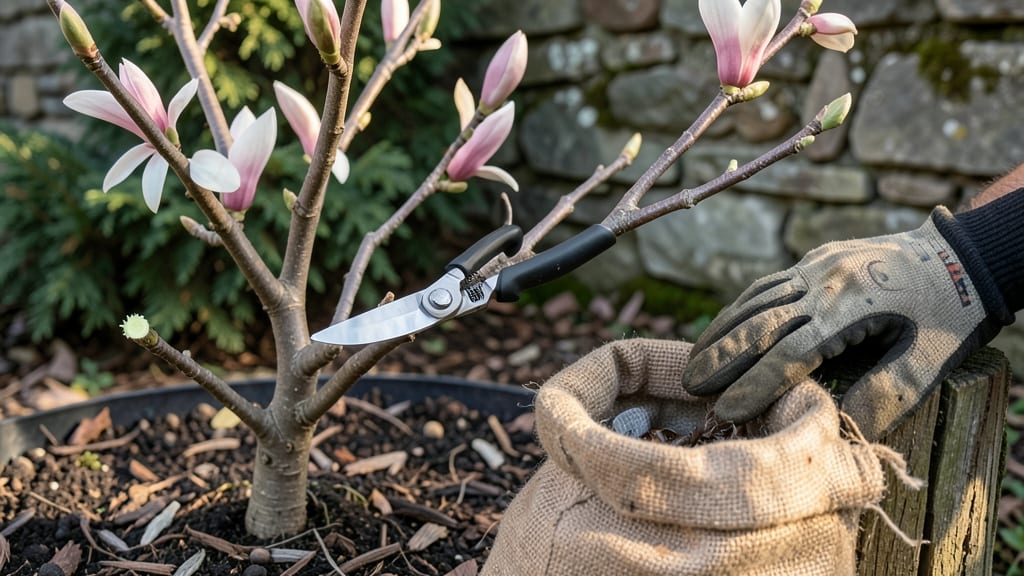
Pruning Magnolia stellata in late winter unlocks its secret to nonstop spring blooms—and I’ve learned the hard way that timing is everything. 🌸 The key is cutting just as buds swell but before they burst, when the plant’s energy shifts from dormancy to growth.
One wrong move, and you’ll sacrifice next year’s flowers entirely.
You only need three things: clean, sharp pruners (sterilized with rubbing alcohol), a bucket for clippings, and a clear head—no power tools here.
The real work is in the technique: remove dead wood first, then thin crowded branches to improve airflow, and shape lightly to maintain the tree’s natural form. Think of it like giving your magnolia a spa day rather than a haircut.
After pruning, water deeply but avoid heavy fertilizer—your tree’s energy should go to healing, not feeding. Watch for sap bleeding (normal!) and new growth within 2-3 weeks.
The payoff? A canopy bursting with fragrant blooms by April, year after year. Just don’t cut into old wood—those branches won’t bloom again.
This method works for both young trees and mature specimens, though larger branches may need three cuts to avoid tearing. The worst mistake? Pruning after buds break—you’ll lose that season’s flowers. But done right, your Magnolia stellata will reward you with weeks of showstopping blooms and fewer pests.
📚 In This Guide
- What you need
- Instructions
- Tips and common mistakes
- Wrapping up and next steps
What you need
- ● Pruning shears – Bypass pruners with sharp, clean blades (4-6 inch blades for small branches). Pro tip: 💡 Sharpen them before starting to avoid crushing branches!
- ● Loppers – For thicker branches (1.5-2.5 inch cut capacity). Pro tip: 🔥 Look for ratcheting models for extra leverage.
- ● Hand pruners (felco or similar) – For precision cuts on smaller stems.
- ● Gloves – Heavy-duty gardening gloves (cut-resistant if your magnolia has thorns).
- ● Disinfectant (70% isopropyl alcohol or pruning sealant) – To sterilize tools between cuts and prevent disease spread.
- ● Ladder or step stool – If your magnolia is taller than 6 feet (ensure it’s stable!).
- ● Trash bags or bucket – For collecting pruned branches and debris.
- ● Pruning saw – For any stubborn, thick branches that won’t yield to loppers.
- ○ Tree wound dressing (optional) – Only use if pruning large branches; otherwise, let wounds heal naturally.
- ● Notebook & pen – To sketch a quick map of cuts for reference.
- ● Safety glasses – Protect your eyes from debris, especially when using a saw.
Step-by-step instructions for pruning Magnolia stellata
Here's how to revive your Magnolia Stellata for vibrant spring blooms—no fancy tools needed.
✂️ Step 1: Time Your Pruning for Maximum Impact
Prune your Magnolia Stellata in late winter or early spring, just as buds begin to swell but before new growth starts. This timing ensures you remove dead wood while preserving next year's blooms, which form on old wood. If you miss the window, wait until after flowering to avoid cutting off next season's flowers entirely.
Look for the first signs of bud activity—small, plump buds along the branches are your cue. I always prune on a dry, sunny day when the tree is fully dormant but not yet pushing new growth. This prevents stress and gives wounds time to heal before warmer weather arrives.
🌿 Step 2: Remove Dead, Diseased, or Crossing Branches
Start by inspecting the tree for any branches that are dead, diseased, or rubbing against others. Dead branches snap easily when bent, while healthy ones bend slightly. Use clean, sharp pruning shears to make cuts just outside the branch collar—the swollen area where the branch meets the trunk.
If branches are crossing or growing inward, remove the weaker of the two to improve airflow and sunlight penetration. I like to step back every few cuts to visualize the tree's shape—this helps me spot hidden issues like crowded branches or awkward angles that could lead to future problems.
☀️ Step 3: Thin Out Overcrowded Areas for Better Airflow
Focus on thinning out the center of the tree to allow light and air to reach all branches. Remove about 20-25% of the total branches, prioritizing those that are small, weak, or growing toward the center. This opens up the canopy and encourages stronger, more vibrant blooms.
Work from the inside out, cutting back to the branch collar. Avoid "heading back" or cutting into old wood—this removes next year's flower buds. If you accidentally cut too far, don’t worry; the tree will still bloom, but you might see fewer flowers that season.
⏰ Step 4: Shape the Tree for Balance and Beauty
Magnolia Stellata naturally grows in a rounded shape, so avoid dramatic changes. Instead, focus on refining the silhouette by removing branches that disrupt the tree's natural form. Cut just above an outward-facing bud to encourage new growth in the right direction.
Step back frequently to check your progress—this helps you see the tree as a whole rather than focusing on individual branches. If you're unsure about a cut, hold your hand where you plan to trim and imagine how the tree will look afterward. Patience is key here; small adjustments make the biggest difference.
🪴 Step 5: Clean Up and Protect the Tree
After pruning, dispose of all cuttings immediately to prevent the spread of disease. Sterilize your tools with rubbing alcohol or a 10% bleach solution to kill any lingering pathogens. This is especially important if your tree has shown signs of disease in the past.
Apply a thin layer of wound sealant to larger cuts (over ½ inch in diameter) to protect the tree from pests and disease. For smaller cuts, sealant isn’t necessary—the tree’s natural healing process will take care of it. Water the base of the tree deeply to help it recover from the pruning stress.
Tips & tricks for pruning Magnolia stellata
Here's what I've learned after years of pruning these stunning trees—and how to avoid the mistakes I made early on.
Timing is Everything: The late winter/early spring window is critical because Magnolia Stellata blooms on old wood. If you prune after flowering, you risk cutting off next year's buds entirely. I've seen gardeners accidentally prune too late and end up with sparse blooms the following spring. Watch for those plump buds along the branches—they're your signal to start.
Visual Cues Over Guessing: When removing branches in Step 3, look for branches that are growing toward the center or are smaller than your thumb's diameter. These are prime candidates for removal to open up the canopy. I like to hold my hand next to the branch to visualize how much space it's taking up—this helps me decide whether to keep it or cut it. Remember, you're aiming to remove about 20-25% of the total branches, not just any branches.
Tool Care Matters: Your pruning shears should be sharp enough to make clean cuts just outside the branch collar. Dull tools crush the bark, creating larger wounds that take longer to heal. I sterilize my tools between cuts with rubbing alcohol, especially if I've worked with diseased branches. This simple step prevents cross-contamination that could spread to healthy parts of your tree.
Post-Pruning Recovery: After finishing, give your tree a deep watering to help it recover from the stress of pruning. I've found that trees pruned on dry days recover faster than those pruned after rain. The deep watering encourages root growth, which helps the tree heal and prepares it for the upcoming blooming season. This is particularly important if you've made several cuts or removed larger branches.
Pro Tips for Prune Magnolia Stellata
- Here's what I've learned after years of pruning these stunning trees—and how to avoid the mistakes I made early on.
- Timing is Everything: The late winter/early spring window is critical because Magnolia Stellata blooms on old wood.
- Visual Cues Over Guessing: When removing branches in Step 3, look for branches that are growing toward the center or are smaller than your thumb's diameter.
Frequently asked questions
Got questions about pruning your Magnolia stellata? Here are answers to the most common ones—so you can keep your star magnolia blooming beautifully year after year!
When is the best time to prune my Magnolia stellata?
The ideal time is late winter or early spring, just before new growth begins (typically February–March in most climates). Pruning during dormancy minimizes stress and prevents disease. Avoid pruning after blooms appear—you’ll cut off next year’s flowers!
How much can I prune my Magnolia stellata?
Keep it light! Remove only 10–20% of the plant’s total volume—focus on dead, crossing, or overcrowded branches. Over-pruning can weaken the tree and reduce flowering. Think of it as a haircut, not a buzz cut!
What if I miss the dormant season? Can I prune later?
Yes, but with caution. If you must prune after blooms, wait until after the flowers fade (late spring/early summer). Avoid heavy cuts—just tidy up. Late pruning may reduce next year’s flowers, but it’s better than leaving dead branches!
My Magnolia stellata isn’t blooming much. Did I prune it wrong?
Not necessarily! Magnolia stellata blooms on old wood, so aggressive pruning can limit flowers. If blooms are sparse, check for:
- Over-pruning (stick to light cuts)
- Poor sunlight (needs 6+ hours of sun)
- Disease or pests (inspect leaves/branches)
Are there alternatives to pruning if my tree looks messy?
If pruning feels too risky, try selective shaping instead—just trim a few branches to open the center for airflow. For a fuller look, avoid pruning entirely and let it grow naturally. Magnolia stellata thrives with minimal intervention!
Wrapping up and next steps
Pruning your Magnolia stellata during dormancy is the secret to unlocking its full potential—think of it as a spa day for your tree! 🌸 With the right tools, timing, and technique, you’ll reward yourself (and your neighbors) with show-stopping spring blooms year after year.
Now that you’re armed with the know-how, there’s no better time to grab those pruners and get to work.
Ready to transform your yard? Start small:
- Pick one branch to practice your cuts.
- Schedule your pruning session on a clear, dry day.
- Celebrate your progress with a fresh cup of coffee (or tea!) under your newly revitalized tree. ☕