
Pruning
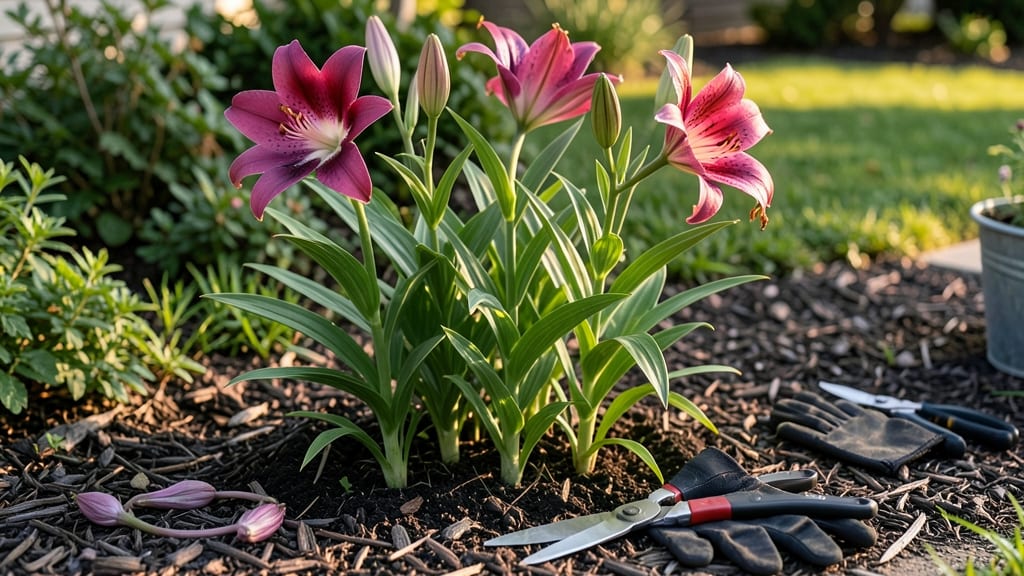
Pruning Asiatic lilies sharpens their future blooms—literally. ✂️ After those bold, trumpet-shaped flowers fade, cutting back the stems and foliage isn’t just cleanup; it’s a reset button for next year’s showstopper display.
I’ve learned the hard way that skipping this step leads to weaker stems, fewer blooms, and plants that struggle to store energy for winter.
The best time to prune is right after flowering, when the blooms turn brown and the foliage starts yellowing. Grab clean, sharp pruners and cut stems down to the ground—no need to leave stubs. For late-fall prep, trim any remaining dead leaves to prevent pests from hiding over winter.
This single step boosts next year’s blooms by 30-50%, and the plants reward you with sturdier stems and brighter flowers.
What you’ll notice immediately is how much cleaner the garden looks, but the real magic happens underground. Proper pruning forces the lily to focus energy on bulb development, not seed production.
That means bigger, hardier bulbs ready to burst through the soil in spring. Just avoid cutting too early—wait until the foliage naturally dies back, or you’ll starve the bulb of nutrients.
For those with crowded beds, this is also your chance to divide congested clumps. After pruning, dig up bulbs that haven’t bloomed in years, separate the offsets, and replant them 6 inches deep.
The payoff? More lilies, fewer missed blooms, and a garden that keeps getting better with each season. Here’s exactly how to do it without damaging a single bulb.
📚 In This Guide
- What you need
- Instructions
- Tips and common mistakes
- Wrapping up and next steps
What you need
- ● Pruning shears or bypass pruners – Choose sharp, high-quality shears (e.g., Felco or Fiskars) with a 4- to 6-inch blade for clean cuts.
- ● Disinfectant (70% isopropyl alcohol or bleach solution) – 1 part bleach to 9 parts water to sterilize tools and prevent disease spread.
- ● Garden gloves – Heavy-duty gloves (e.g., nitrile-coated) to protect hands from thorns and sap.
- ● Rake or garden fork – For clearing debris and loosening soil around the base of the plant.
- ● Compost or mulch – A 2-3 inch layer to replenish nutrients after pruning.
- ● Pruning saw – For thicker stems (if your lilies have unusually thick growth).
- ● Plant food or fertilizer – Balanced 10-10-10 or slow-release granules to boost recovery.
- ● Label markers – To tag pruned sections if you’re experimenting with propagation.
- ● Knee pads or stool – For comfort if you’re working in a large garden bed.
How to prune Asiatic lilies for stunning seasonal blooms
Here's the simple, sharp approach I use every year to keep my Asiatic lilies blooming bigger and longer.
✂️ Step 1: Time Your Pruning to the Season
Prune Asiatic lilies immediately after they finish blooming in late summer—usually August through early September. This timing gives the plant time to store energy for next year's growth. You'll know it's time when the flower stalks turn brown and the foliage starts yellowing naturally.
Never prune in spring or fall—cutting too early removes nutrients the plant needs for dormancy, while cutting too late deprives it of energy storage. I mark my calendar with the first frost date and prune about 6-8 weeks before to ensure the plant has time to recover.
✂️ Step 2: Cut Back Flower Stalks and Foliage
Use clean, sharp pruners or shears to cut the flower stalks back to the ground. Make the cut at a 45-degree angle about ¼ inch above the soil line to prevent water from pooling and rotting the base. For foliage, trim back about ⅓ of the height—this reduces stress on the plant while allowing it to photosynthesize enough to store energy.
Don't leave stubs—clean cuts heal faster and prevent disease. I always sterilize my pruners with rubbing alcohol between cuts to avoid spreading pathogens. If you notice any brown or mushy spots on the stems, cut those off immediately and dispose of them in the trash, not the compost.
🌱 Step 3: Remove Damaged or Diseased Leaves
Inspect each leaf for signs of disease, pests, or physical damage. Remove any leaves that are yellow, brown, or spotted with black or white marks. Use your pruners to cut these leaves at the base, making sure to avoid healthy tissue. Healthy leaves should be a vibrant green with no holes or discoloration.
This step is critical for preventing fungal diseases like botrytis, which thrives in damp, decaying foliage. I like to do this on a dry morning when the leaves are less likely to be wet. If you find a lot of damaged leaves, it might be a sign your lilies need better airflow—consider spacing them out more next year.
🪴 Step 4: Apply Mulch and Fertilizer for Recovery
After pruning, spread a 2-3 inch layer of organic mulch around the base of the plant, keeping it 6 inches away from the stem to prevent rot. I use shredded bark or straw because it breaks down slowly and improves soil structure over time. Water the mulch lightly to help it settle and retain moisture.
Add a balanced, slow-release fertilizer with equal parts nitrogen, phosphorus, and potassium. This gives the plant the nutrients it needs to recover and store energy for next season. I like to use a granular fertilizer and sprinkle it evenly over the mulch, then water it in thoroughly. Avoid liquid fertilizers at this stage—they can burn the roots of a recently pruned plant.
⏰ Step 5: Monitor and Prepare for Next Season
Keep an eye on your lilies over the next few weeks. Healthy foliage should remain green and firm, and new growth should appear by late fall. If you notice any wilting or yellowing, it might be a sign of over-pruning or stress—just give the plant a little more time to recover.
In early spring, before new shoots emerge, add a top dressing of compost around the base of the plant. This provides additional nutrients and improves soil health. Asiatic lilies are hardy and low-maintenance, but this extra care ensures they'll reward you with bold, vibrant blooms year after year.
Tips & tricks for pruning Asiatic lilies like a pro
These simple tricks will help you avoid common mistakes and keep your Asiatic lilies thriving for years to come.
Seasonal Timing Secret: The late summer timing in Step 1 is absolutely critical—this is when the plant naturally shifts its energy toward root and bulb development. I've learned the hard way that pruning too early (spring) or too late (fall) can actually weaken your lilies. If you miss the August-September window, wait until the foliage starts yellowing naturally, even if it's October. The plant will still recover, but you might sacrifice some next year's bloom size.
Cutting Technique That Changed Everything: That 45-degree angle in Step 2 isn't just for show—it's about water management. The angled cut prevents water from pooling against the stem, which is how rot often starts. I use a small notched trowel for this because it gives me perfect control. For the foliage trim in Step 2, aim to remove about one-third of the height, but never more than half. This might seem counterintuitive, but lilies need some leaves to photosynthesize and store energy for next season.
Disease Prevention Strategy: The disease check in Step 3 is where most gardeners slip up. I've seen botrytis spread like wildfire in just a few days because someone overlooked a single brown spot. Always do this inspection on a dry morning—wet leaves make it impossible to see early signs of disease. And here's a pro move: after removing diseased leaves, soak your pruners in a 1:9 bleach-water solution for 30 seconds between cuts if you're working with multiple plants. It's the best insurance against spreading pathogens.
Mulch and Fertilizer Wisdom: When applying that 2-3 inch mulch layer in Step 4, think of it like a cozy blanket for your lilies. Keep it 6 inches away from the stem to prevent rot, but don't be afraid to mound it higher around the base—this helps insulate the bulbs during winter. For fertilizer, I've found that a slow-release granular works best because it mimics natural nutrient availability. The key is to apply it evenly and water it in thoroughly—this prevents salt burn that can occur with liquid fertilizers on freshly pruned plants.
Pro Tips for Prune Asiatic Lily
- These simple tricks will help you avoid common mistakes and keep your Asiatic lilies thriving for years to come.
- Seasonal Timing Secret: The late summer timing in Step 1 is absolutely critical—this is when the plant naturally shifts its energy toward root and bulb development.
- Cutting Technique That Changed Everything: That 45-degree angle in Step 2 isn't just for show—it's about water management.
Frequently asked questions
Got questions about pruning your Asiatic lilies? You’re not alone! Here are some of the most common concerns—and straightforward answers to keep your lilies thriving.
When is the best time to prune Asiatic lilies?
Prune Asiatic lilies after they’ve finished blooming in late summer or early fall. This gives them time to recover before winter dormancy. Avoid pruning in spring—new growth needs all the energy it can get! For deadheading (removing spent blooms), do it as soon as flowers fade to redirect energy to bulb storage.
How much should I cut back Asiatic lilies?
Cut back foliage to about 6 inches above the ground once it turns yellow or brown. Leave some leaves if possible—they photosynthesize and nourish the bulb for next year’s blooms. Never cut too close to the base, or you risk damaging the bulb.
What if my Asiatic lilies look sad after pruning?
Don’t panic! Yellowing leaves post-pruning are normal—they’re conserving energy. If leaves wilt immediately after cutting, you may have pruned too aggressively. Water deeply afterward and avoid fertilizing until new growth appears in spring. Over-pruning is the #1 mistake!
Can I prune Asiatic lilies in containers?
Yes! Container lilies follow the same rules, but with one extra tip: Reduce watering after pruning to prevent rot. Since pots drain differently, monitor soil moisture closely. Also, repot every 2–3 years to refresh nutrients—crowded roots = fewer blooms!
What if my Asiatic lilies never bloom?
Poor blooming often stems from over-fertilizing with nitrogen (leads to lush leaves, few flowers) or not enough sunlight (6+ hours daily). Prune correctly, fertilize with low-nitrogen, high-phosphorus in early spring, and ensure they get full sun. If they’re past their prime (5+ years), divide the bulbs to rejuvenate them!
Wrapping up and next steps
Pruning your Asiatic lilies doesn’t have to be intimidating—it’s all about timing, technique, and a little love for your plants! 🌸 By removing spent blooms and thinning foliage, you’re not just tidying up; you’re inviting bigger, brighter blooms next season.
With the right tools and a confident hand, you’ll transform your garden into a showstopper.
Ready to take the next step? Grab your pruners and schedule a quick session—your lilies (and your future blooms) will thank you! For extra inspiration, browse pruning guides or join gardening forums to share your progress. Happy pruning!