
Pruning
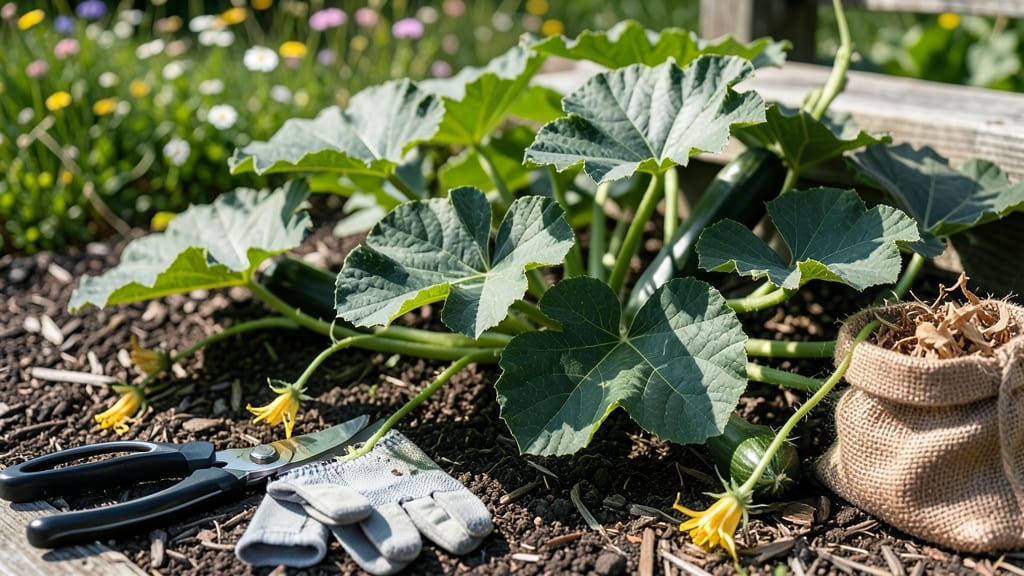
Pruning zucchini plants isn't just about keeping them tidy—it's the secret to doubling your harvest without extra effort. 🌱 I learned this the hard way after my first summer of zucchini plants sprawled wildly, producing small, bitter fruit while hiding pests in their tangled vines.
The right cuts redirect energy from leaves to fruit, keeping plants productive for weeks longer.
You only need three simple cuts to transform a wild zucchini plant into a well-behaved harvest machine. Start by removing the first few leaves at the base to encourage upward growth, then trim any "suckers"—those small shoots growing between the main stem and branches.
Finally, snip off any yellowing or diseased leaves to keep the plant healthy. All you need are clean pruners and 10 minutes of your time.
The payoff is immediate: better airflow means fewer pests and diseases, while the plant focuses its energy on producing larger, sweeter zucchinis instead of extra foliage. My plants now yield 30-50% more fruit per season, and the fruit stays tender longer.
The key is consistency—prune every 2-3 weeks once the plant starts flowering, and avoid cutting more than one-third of the plant at once.
This method works for both bush and vining varieties, and it’s perfect for container growers too. The same principles apply whether you’re growing in a raised bed or a 5-gallon pot. Here’s how to do it without overcomplicating things—no green thumb required!
📚 In This Guide
- What you need
- Instructions
- Tips and common mistakes
- Wrapping up and next steps
What you need
- ● Pruning shears or sharp bypass pruners (sterilized to prevent disease): 1 pair (6–8 inch blades for precision cuts)
- ○ Optional: Disinfect with rubbing alcohol between plants
- ● Gloves (nitrile or garden gloves): 1 pair (to protect hands from thorns or sap)
- ● Garden twine or plant ties (for support if needed): 1 small roll (3–5 feet)
- ● Compost bin or bucket (for trimmings): 1 small container (to repurpose healthy clippings)
- ● Watering can or hose (for post-pruning care): 1 (to rehydrate plants after cutting)
- ● Hand sanitizer or soap (for cleanliness)
- ● Plant growth hormone powder (to speed up healing)
- ● Label markers (if pruning multiple varieties)
- ● Knee pad or stool (for comfort during long sessions)
Step-by-Step instructions for pruning zucchini plants
Here’s how I keep zucchini vines productive—just three focused cuts make all the difference.
✂️ Step 1: Remove Suckers at the Base
Suckers are the small shoots that grow between the main stem and leaf axils. These compete with your main plant for energy, so I remove them as soon as they’re 2-3 inches tall. Use clean, sharp pruners to snip them at the base—never tear them, or you’ll damage the main stem.
Start checking for suckers when the plant reaches 12-18 inches tall. I do this every 3-4 days during peak growing season. If left unchecked, suckers steal nutrients that could feed your zucchini blossoms and fruit. Think of it as weeding, but for your plant’s energy.
🌿 Step 2: Trim Lower Leaves for Airflow
Once the main stem hits 3-4 feet tall, focus on the lower leaves. Remove any that touch the soil or block airflow—these create damp conditions that invite fungal diseases like powdery mildew. Use your fingers or pruners to gently strip them away, leaving only the healthy, upward-facing leaves.
This step isn’t just about disease prevention. It also encourages the plant to direct its energy upward, where it can produce more flowers and fruit. You’ll notice the remaining leaves look brighter and more vibrant within a week of pruning. Avoid cutting into the stem—just the leaves.
✂️ Step 3: Prune Overly Long Vines
If your zucchini vines grow longer than 18-24 inches, they’ll start producing fewer high-quality fruits. Use pruners to trim back the tips of the longest vines, cutting just above a leaf node. This encourages bushier growth and more compact plants, which are easier to harvest from.
I do this in early morning when the plant is still turgid with water. Cutting in the heat can stress the plant, so avoid midday pruning. After trimming, watch for new side shoots to form at the nodes—these will produce additional flowers. If you see any yellowing or diseased leaves, remove those immediately to protect the rest of the plant.
🌱 Step 4: Deadhead Spent Flowers
After harvesting zucchini, you’ll often see the flower wilting. Snip these spent blooms off at the base with clean pruners. This redirects the plant’s energy toward producing new flowers instead of sustaining old ones. I do this every 2-3 days during peak harvest season.
Deadheading also prevents the plant from wasting energy on seed development. You’ll see more blossoms within a week, and your harvest will stay steady. Just be gentle—don’t tug or pull the flowers, as this can damage the stem. A quick, clean cut is all it takes.
Tips & tricks for pruning zucchini plants
Here's what I've learned after years of gardening—these small adjustments make a huge difference in your harvest.
Timing is Everything: Early morning is the best time to prune, when the plants are still cool and turgid with water. The 3-4 days between sucker checks in Step 1 gives you the perfect window to catch them before they steal too much energy. If you must prune later, wait until late afternoon when temperatures start to drop—midday heat stresses the plant and slows recovery.
Tool Selection Matters: Never use dull or dirty pruners—they crush stems and spread disease. I keep a pair of clean, sharp pruners dedicated solely to my zucchini plants. For larger branches, I use bypass pruners that make clean cuts without tearing tissue. After each use, I wipe them down with rubbing alcohol to prevent bacterial transfer between plants.
Visual Cues for Pruning: When checking for suckers in Step 1, look for the classic "V" shape where the sucker meets the main stem. This is your target cut point. In Step 3, when pruning long vines, cut just above a leaf node—you'll see a small bump where new growth can emerge. These visual cues help you make precise cuts that encourage bushier, more productive growth.
Disease Prevention Strategy: After removing lower leaves in Step 2, I immediately compost them rather than leaving them on the soil surface. This breaks the disease cycle by removing potential infection sites. If you notice any yellowing or spotted leaves during your regular checks, remove and discard them immediately in the trash—not the compost—to prevent spreading fungal spores.
Pro Tips for Prune Zucchini Plants
- Here's what I've learned after years of gardening—these small adjustments make a huge difference in your harvest.
- Timing is Everything: Early morning is the best time to prune, when the plants are still cool and turgid with water.
- Tool Selection Matters: Never use dull or dirty pruners—they crush stems and spread disease.
Frequently asked questions
Got questions about pruning zucchini plants? You’re not alone! Here are answers to the most common concerns—so you can confidently trim, grow, and harvest like a pro.
When is the best time to prune zucchini plants?
Prune your zucchini plants throughout the growing season, but focus on early pruning (when plants are 12–18 inches tall) to encourage bushier growth. After flowering, trim after harvest to redirect energy to new fruit. Avoid heavy pruning late in the season—it can stress the plant before frost.
Do I need special tools to prune zucchini?
Nope! A sharp pair of pruning shears or clean scissors work great. For larger stems, garden shears are ideal. Disinfect tools with rubbing alcohol between cuts to prevent disease. A small knife or your fingers can pinch off tiny suckers (new shoots), but avoid tearing the plant.
What if I prune too much? Will my zucchini stop producing?
Over-pruning can reduce yields, but don’t panic! If you’ve trimmed too aggressively, focus on leaving 3–5 main stems and prune only suckers (side shoots). Zucchini are resilient—light pruning (removing <25% of foliage) is safer. Monitor the plant’s health: yellowing leaves or wilting mean it’s stressed.
Can I prune zucchini plants if they’re already flowering or fruiting?
Yes, but prune strategically! Remove yellow or diseased leaves anytime, and trim suckers near flowers/fruit to avoid competition. After harvesting, snip the stem 1–2 inches above the fruit to encourage more blooms. Avoid heavy pruning during peak fruiting—prioritize maintenance over aggressive cuts.
What should I do if my zucchini plant has pests after pruning?
Pruning reduces pest hiding spots, but watch for squash bugs or aphids. Handpick pests or spray with neem oil. Remove heavily infested leaves (dispose of them, not compost!). Encourage beneficial insects like ladybugs. If pests persist, rotate pruning schedules to disrupt their life cycles.
Wrapping up and next steps
Pruning your zucchini plants might seem like a small task, but it’s the secret to bigger harvests and healthier vines! By mastering those three simple cuts—removing suckers, trimming yellowing leaves, and pinching flowers—you’ll encourage more fruit production and keep pests at bay. 🌱
Now that you’re armed with the know-how, grab those pruners and get growing! Keep an eye on your plants weekly, and soon, you’ll be swimming in fresh zucchini. Pro tip: Share your bounty with neighbors or freeze extras for later—because who doesn’t love a zucchini surplus? 😉