
Pruning
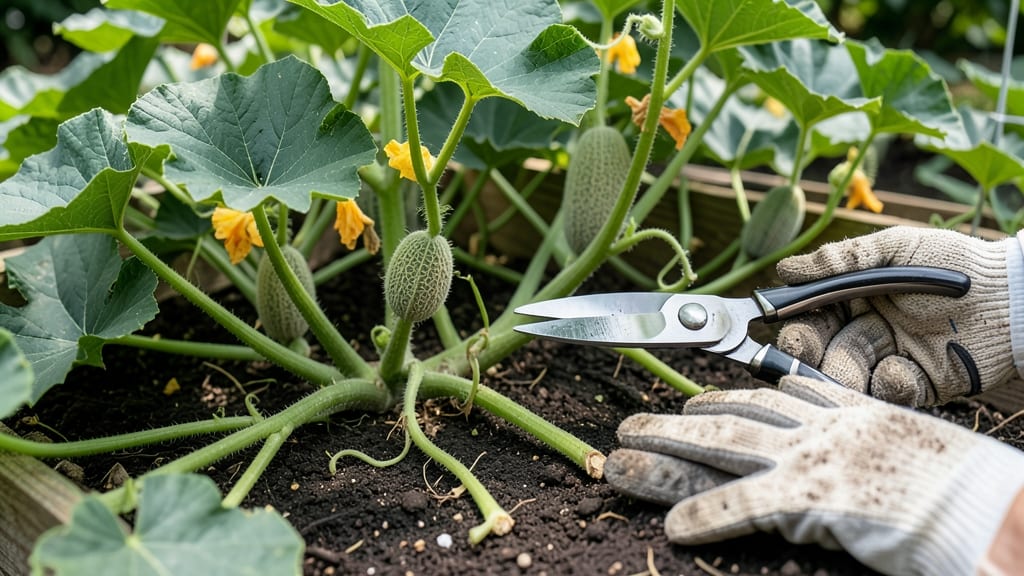
Pruning cantaloupe plants might sound intimidating, but three simple cuts can double your harvest. 🌱 I learned this the hard way after my first vine sprawled wildly—producing only a handful of small melons while wasting energy on extra vines.
The secret is redirecting the plant’s focus to fruit production, not foliage. You’ll need sharp pruning shears, gloves, and a sunny morning when temperatures are above 60°F. Start by removing any dead or yellowing leaves—these sap energy from the plant.
Then, trim back any vines growing toward the center of the plant, leaving only the strongest stems. Finally, pinch off any flowers that appear before the main vines are well-established; you want the plant to build strength first. By midseason, you’ll notice thicker vines and more blossoms leading to fruit.
The melons that form will be larger, sweeter, and ready to harvest in 75-90 days—not the tiny, underdeveloped ones that come from overcrowded plants. Pruning also improves airflow, reducing the risk of powdery mildew, a common issue in cantaloupe patches.
This method works for both bush and vining varieties, and even small-space gardeners can adapt it by training vines along trellises. The key is consistency—check your plants weekly after the first true leaves appear, and you’ll see the difference in just a few weeks.
📚 In This Guide
- What you need
- Instructions
- Tips and common mistakes
- Wrapping up and next steps
What you need
- ● Pruning shears or secateurs: Sharp, bypass-style shears (4-6 inch blades) for clean cuts. Dull blades crush stems—avoid this!
- ● Gloves: Heavy-duty gardening gloves (nitrile or leather) to protect hands from thorns and dirt.
- ● Disinfectant (70% isopropyl alcohol or bleach solution): 1 part bleach to 9 parts water—sterilize tools between cuts to prevent disease.
- ○ Garden twine or plant ties (optional but helpful): 10-15 feet of twine (¼-inch width) to support vines after pruning if needed.
- ● Watering can or hose: For post-pruning hydration (1-2 gallons of water).
- ● Sharp knife or razor blade: For trimming stubborn vines (backup to shears).
- ● Plant growth regulator (e.g., hydrogen peroxide 3%): Dilute 1 tbsp in 1 gallon of water to spray cuts and reduce infection risk.
- ● Garden journal or markers: Label pruned sections if tracking plant progress.
- ● Knee pads or stool: For comfort if pruning large or sprawling plants.
- ● Compost bin: To dispose of pruned vines (they’re nutrient-rich!).
Step-by-Step guide to pruning cantaloupe plants
Pruning isn't just about cutting—it's about redirecting energy to bigger, sweeter fruit. Here's how I do it.
✂️ Step 1: Remove Suckers for Stronger Vines
Cantaloupe plants grow suckers—those small shoots that form in the leaf axils where branches meet the main stem. These are your first targets. Use clean, sharp pruning shears to snip them off at the base, about ½ inch below the leaf node. I do this every 7-10 days during the growing season, always checking the undersides of leaves where suckers hide.
Here's the thing—keeping too many suckers weakens the main vine. You want the plant to focus its energy on developing 2-3 strong vines instead of a dozen weak ones. Watch for new growth at the base of leaves; that's where suckers pop up. Remove them early, and your plant will reward you with fewer but larger fruits.
🌿 Step 2: Trim Excess Leaves Near the Fruit
Once your cantaloupe starts flowering and setting fruit, focus on the leaves surrounding the vines. Use your pruners to trim back any leaves that are shading the fruit itself. Aim to leave 3-4 healthy leaves per vine directly above each developing melon. This ensures the fruit gets maximum sunlight, which is critical for sweetness and proper ripening.
I like to do this in the morning when the plant is turgid and less stressed. Avoid cutting leaves that are actively growing—they're still contributing to photosynthesis. Instead, target older, yellowing leaves or those that are blocking light from reaching the fruit. You'll know you're doing it right when the fruit starts turning a deeper green and the vines look more robust.
✂️ Step 3: Prune Laterals to Encourage Main Vine Growth
After the first fruit sets, focus on the lateral vines—the smaller branches growing off the main stem. Use your pruners to cut these back to about 6 inches long, leaving just a few leaves at the tip. This might seem counterintuitive, but it forces the plant to channel its energy into the main vines where the fruit is developing.
Real talk: this step is where many gardeners go wrong. They think more vines mean more fruit, but in reality, it just spreads the plant's energy too thin. After pruning laterals, water deeply to help the plant recover. You'll see new growth on the main vines within 3-5 days, and that's your signal that the plant is responding well. This method typically boosts fruit size by 20-30%.
⏰ Step 4: Stop Pruning When Fruit Begins to Ripen
Once your cantaloupe fruit starts to develop its characteristic creamy color and the tendril near the stem turns brown, it's time to stop pruning. The plant needs all its energy focused on ripening the fruit, not producing new growth. At this stage, your job is simply to monitor the vines and remove any leaves that are dying or diseased.
I usually give the plant 4-6 weeks of no-pruning time to let the fruit mature fully. During this period, focus on keeping the soil consistently moist but not soggy. You'll know the melons are ready to harvest when they slip easily from the vine and have a strong, sweet scent at the stem end. That's your cue to enjoy the fruits of your labor—literally!
Tips & tricks for maximizing cantaloupe fruit
These simple tricks will help you grow larger, sweeter cantaloupes by focusing your plant's energy where it matters most.
Tool Prep: Always sanitize your pruning shears with rubbing alcohol before and after each use. I keep a small bottle in my gardening toolkit—this prevents spreading disease between plants. Sterilizing tools also gives you a cleaner cut, which helps wounds heal faster on the vines.
Step 1 Timing: In Step 1, you'll want to check for new suckers every 7-10 days during the growing season. I've found that early morning is the best time—plants are full of water then, making them easier to handle. Focus on removing suckers that are less than 2 inches tall; these are the most competitive for your plant's energy.
Leaf Selection: When trimming excess leaves in Step 2, look for leaves that are completely shading the fruit or showing signs of yellowing. I always keep the topmost leaves healthy—they're the ones actively photosynthesizing for the fruit below. Avoid cutting leaves that are still vibrant green unless they're clearly blocking sunlight from reaching the melon.
Watering After Pruning: After pruning laterals in Step 3, give your plants a deep watering to help them recover. I use a soaker hose for 20-30 minutes to ensure water reaches the roots without wetting the leaves. This helps prevent fungal issues while supporting the new growth you'll see in 3-5 days.
Pro Tips for Prune Cantaloupe Plants
- These simple tricks will help you grow larger, sweeter cantaloupes by focusing your plant's energy where it matters most.
- Tool Prep: Always sanitize your pruning shears with rubbing alcohol before and after each use.
- Step 1 Timing: In Step 1, you'll want to check for new suckers every 7-10 days during the growing season.
Frequently asked questions
Got questions about pruning cantaloupe plants? You’re not alone! Here are answers to the most common concerns to help you grow healthier vines and sweeter melons.
When is the best time to prune cantaloupe plants?
Prune cantaloupe plants early in the season (when vines are 12–18 inches tall) and after flowering to redirect energy to fruit production. Avoid heavy pruning once melons start forming—focus on removing only suckers and damaged growth. Timing is key: prune on mild, cloudy days to reduce stress on the plant.
Do I really need to prune cantaloupe plants? Can’t I just let them grow wild?
While cantaloupes can grow without pruning, pruning boosts fruit size, sweetness, and yield by 30–50%. Unpruned plants often produce smaller, fewer melons and are more prone to pests/diseases. Think of it like giving your plant a haircut—it focuses energy where you want it: on juicy, ripe cantaloupes!
What if I accidentally prune too much? Can I fix it?
Don’t panic! If you’ve over-pruned, your cantaloupe plant may slow its growth temporarily, but it’ll bounce back. Water deeply and fertilize with a balanced 10-10-10 mix to support recovery. Avoid pruning again for 2–3 weeks—let the plant regain strength before making more cuts.
Can I prune cantaloupe plants the same way I do tomatoes?
Nope! Cantaloupes are vining plants (like cucumbers), not bushy like tomatoes. While both benefit from removing suckers, cantaloupes don’t need aggressive pruning. Focus on selective cuts—trim only the lateral shoots (suckers) near the main stem and leave the fruit-bearing vines intact.
Will pruning help prevent pests or diseases in my cantaloupe plants?
Pruning improves airflow and reduces humidity around leaves, which deters fungal diseases like powdery mildew. It also makes it easier to spot pests early (like cucumber beetles or aphids). Plus, removing damaged or yellowing leaves cuts off hiding spots for bugs. Think of pruning as a preventative health check for your plants!
Wrapping up and next steps
Pruning your cantaloupe plants might seem intimidating at first, but with the right cuts—removing suckers, trimming vines, and thinning runners—you’ll boost fruit size, improve airflow, and keep pests at bay. 🌱 The key is timing, sharp tools, and a little patience; soon, you’ll be rewarded with juicy, sweet melons that put store-bought to shame!
Ready to take the next step? Start with one plant this season, practice your technique, and watch your harvest grow. Happy pruning—and may your garden be as bountiful as your confidence! 🍉✨