
Pruning
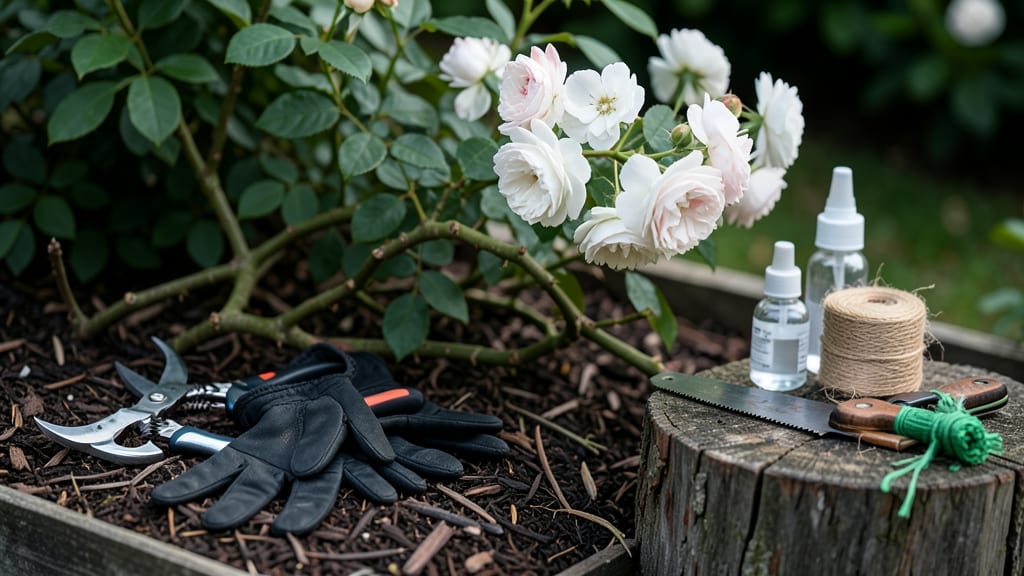
Pruning your Lady Banksia rose transforms it from a tangled mess to a graceful, thorn-free beauty. ✨ I learned the hard way that these roses reward gentle hands—overzealous cuts lead to fewer blooms, not more.
The key is working with its natural climbing habit while keeping the canopy open and airy. This rose blooms on new wood, so timing matters: prune lightly after the first flush of flowers in early summer, then again in late winter to shape the structure.
You’ll need sharp bypass pruners, gloves (those thorns are no joke), and a ladder if your plant climbs high. Focus on removing dead wood first, then thin out crowded branches to improve airflow.
By summer, you’ll see lush, healthy growth with clusters of fragrant blooms reaching every corner of the trellis. The secret is patience—Lady Banksias respond best to gradual shaping rather than dramatic cuts. That first flush of blooms will make every careful snip worth it. Common mistakes?
Pruning too late in the season or cutting into old wood where flowers form. Trust the plant’s natural shape and you’ll end up with a rose that’s as productive as it is beautiful. Let’s get those shears ready!
📚 In This Guide
- What you need
- Instructions
- Tips and common mistakes
- Wrapping up and next steps
What you need
- ● Bypass pruners: A sharp, high-quality pair (e.g., Felco or Fiskars) to make clean cuts on smaller branches.
- ● Loppers: For thicker branches (½" to 1½" diameter), opt for bypass loppers with a 15–20" handle for leverage.
- ● Pruning saw: A curved-tooth saw (like the Felco Pruning Saw) for branches over 1½" in diameter.
- ● Gloves: Heavy-duty, thorn-proof gloves (e.g., FrogToggs or Southwood) to protect your hands.
- ● Disinfectant: 70% isopropyl alcohol or a 10% bleach solution to sterilize tools between cuts and prevent disease.
- ● Rubbing alcohol or hand sanitizer: For cleaning cuts on your skin if thorns snag you.
- ○ Bucket or bag: A sturdy container to collect pruned branches (optional: a lined bag to reduce mess).
- ● Pole saw or extendable pruners: If your rose is tall or dense, save your back with an 8–12 ft. reach tool.
- ● Knee pads: For comfort if you’re working on the ground or bending frequently.
- ● Pruning sealant: (e.g., Tanglefoot Tree Wound Pruning Seal) to coat larger cuts and reduce sap loss (controversial—skip if your rose is healthy!).
- ● Plant food: A balanced fertilizer (e.g., 10-10-10) to apply post-pruning for a nutrient boost.
- ● First-aid kit: Bandages, antiseptic wipes, and tweezers for quick thorn-related emergencies.
Step-by-Step guide to pruning Lady Banksia roses
Here's how I keep these stunning roses thriving with minimal thorns and maximum blooms—season by season.
✂️ Step 1: Late Winter Pruning for Structure
Prune your Lady Banksia rose in late winter (just as buds begin to swell) when the plant is still dormant. This is the most critical step because it sets up the entire year's growth pattern. I always start by removing any dead, diseased, or crossing branches first—these compete with healthy growth and invite pests.
Use clean, sharp pruners to cut back to an outward-facing bud or branch. Aim for a 45-degree angle just above the bud to prevent water from pooling. Lady Banksia roses respond well to aggressive pruning, so don't be shy about cutting back one-third of the plant's height. This encourages bushier growth and fewer thorns later in the season.
Here's the thing—if you see any branches growing straight up, prune them back to a lateral bud. Vertical growth creates weak stems with more thorns. You'll know you're doing it right when you see new buds forming along the branches within a few weeks.
☀️ Step 2: Summer Maintenance Pruning
After the first flush of blooms in early summer, it's time for light maintenance. This isn't about drastic cuts—just tidying up. Remove any spent blooms by cutting just above the first set of healthy leaves below the flower head. This encourages more blooms and keeps the plant looking neat.
Watch for any branches that are growing too close together or rubbing against each other. These create weak points and can lead to disease. Thin out the weakest stems to improve air circulation. I also check for any suckers growing from the base—these are non-flowering shoots that drain energy from your rose. Cut them off at the base immediately.
Real talk: If you notice any yellowing leaves, don't just prune them off. This could be a sign of black spot or another fungal issue. Instead, remove the affected leaves and treat the plant with a fungicide to prevent spread. Healthy leaves mean fewer problems later.
⏰ Step 3: Light Fall Cleanup
In late fall, after the last major flush of blooms, do a final light pruning to clean up the plant for winter. Remove any dead or diseased wood, and cut back any branches that have become overgrown or leggy. This is also the time to shape the plant if it's looking too wild.
I like to step back and look at the overall shape of the rose bush. If one side is significantly larger than the other, prune back the more vigorous side slightly to balance the plant. This ensures even growth next spring. Avoid heavy pruning now—you don't want to stimulate new growth that won't have time to harden off before winter.
After pruning, give your Lady Banksia rose a good drink of water to help it recover. Then, apply a layer of mulch around the base (but not touching the stem) to protect the roots from freezing temperatures. This simple step makes all the difference in keeping your rose healthy through winter.
Tips & tricks for pruning Lady Banksia roses
Here's what nobody tells you about keeping these roses lush and thorn-free—lessons learned from years of pruning battles.
Tool Prep: Before you even touch a branch, clean your pruners with rubbing alcohol or a bleach solution to prevent spreading disease between cuts. I learned this the hard way after a fungal infection spread through my entire rose patch. Also, sharpen your blades—dull tools crush stems instead of making clean cuts, which invites infection. A quick test: if your pruners can't slice through a piece of paper cleanly, they're too dull.
Bud Selection: In Step 1, when cutting back to an outward-facing bud, look for buds that are about the size of a pea and plump to the touch. These are the healthiest and will produce the strongest new growth. Avoid cutting to buds that are shriveled or have blackened tips—these won't develop properly. I always make a habit of tracing the cut back to the bud with my finger to visualize where the new growth will emerge.
Seasonal Timing: The late winter timing in Step 1 is non-negotiable for Lady Banksia roses. The plant needs to be fully dormant but with buds just beginning to swell—this means no more than a tiny green bump showing. If you prune too early, you'll cut off potential blooms. If you wait too long, you risk encouraging tender new growth that can't handle spring frosts. I mark my calendar for the first week of February as my target window.
Post-Prune Care: After any pruning session, especially in Step 3, avoid fertilizing for at least 4-6 weeks. New growth needs time to establish roots before it can handle extra nutrients. Instead, focus on watering deeply once a week and applying a 2-3 inch layer of organic mulch (like shredded bark) around the base. This mimics the plant's natural environment and helps retain moisture while protecting roots from temperature swings.
Pro Tips for Prune Lady Banksia Rose
- Here's what nobody tells you about keeping these roses lush and thorn-free—lessons learned from years of pruning battles.
- Tool Prep: Before you even touch a branch, clean your pruners with rubbing alcohol or a bleach solution to prevent spreading disease between cuts.
- Bud Selection: In Step 1, when cutting back to an outward-facing bud, look for buds that are about the size of a pea and plump to the touch.
Frequently asked questions
Got questions about pruning your Lady Banksia rose? You’re not alone! Here are answers to the most common concerns—so you can keep your thorny beauty thriving without the guesswork.
When is the best time to prune Lady Banksia roses?
Prune your Lady Banksia rose in late winter or early spring (just before new growth starts) for the best results. This timing promotes healthy blooms while avoiding frost damage. Avoid pruning in fall—it can leave your rose vulnerable to winter stress. Pro tip: If you missed the window, a light trim in early summer (after flowering) is better than nothing!
How much can I cut back my Lady Banksia rose?
You can safely remove up to one-third of the plant’s height during a single pruning session. For mature roses, aim to cut back old canes to outward-facing buds (about ¼ inch above the bud) to encourage an open, airy shape. Never cut into green wood—focus on brown, woody stems for cleaner cuts.
What if my rose doesn’t bloom after pruning?
If your Lady Banksia rose skips blooms, check these fixes:
- Light levels: Ensure it gets 6+ hours of direct sun daily.
- Fertilizer: Use a rose-specific feed (high in phosphorus) in spring.
- Deadheading: Remove spent blooms regularly to redirect energy.
- Age: Young roses (under 2 years) may need one more season to mature.
Can I prune Lady Banksia roses in containers?
Yes! Container-grown Lady Banksia roses follow the same pruning rules, but with extra care:
- Use sterilized shears to prevent disease in tight spaces.
- Prune after watering to reduce stress.
- Fertilize lightly post-prune (half-strength) to avoid root burn.
- Watch for overcrowding—containers need annual root pruning too!
Do I need to prune Lady Banksia roses in cold climates?
In zones 6–8, prune after the last frost (March–April) to avoid cold snaps damaging fresh cuts. If your rose is bare-rooted or shows winter dieback, wait until new growth appears before pruning. In colder zones (5 or below), mulch heavily first—prune lightly in early spring to reduce shock.
Wrapping up and next steps
Pruning your Lady Banksia rose isn’t just about keeping it tidy—it’s your secret to a thriving, thorn-free beauty that blooms year after year! 🌸 By mastering the three-season approach (light pruning in spring, shaping in summer, and deep cuts in late winter), you’ll encourage lush growth, vibrant flowers, and better airflow.
Remember, patience and sharp tools are your best friends—every snip brings you closer to that dream canopy.
Now that you’re armed with the know-how, grab those shears and get pruning! Start with just one branch to build your confidence, and soon, your rose will reward you with stunning blooms and effortless elegance. Happy gardening! 🌿✂️