
Pruning
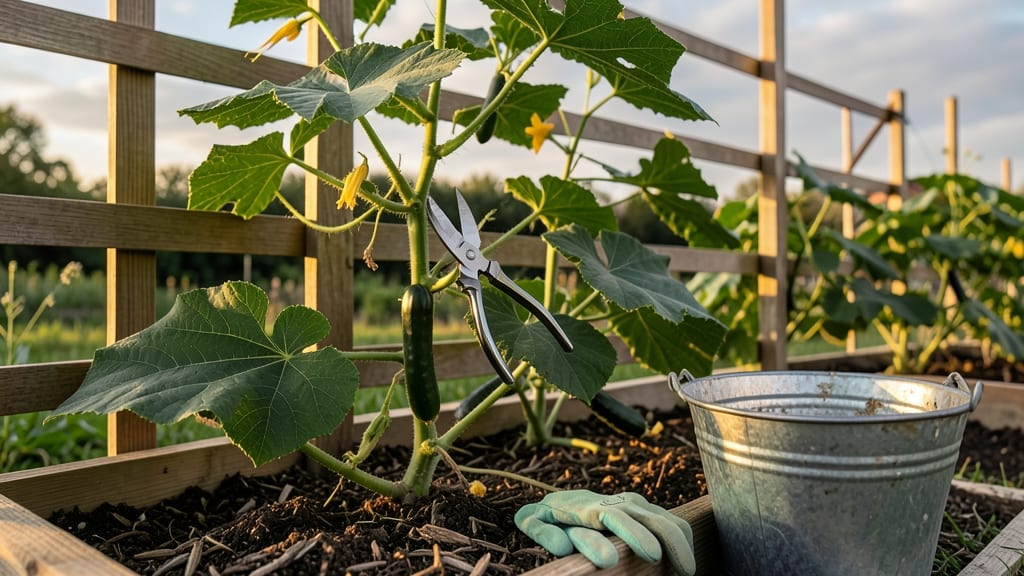
Pruning cucumber vines isn't just about keeping them tidy—it's the secret to doubling your harvest this season. 🌱 I learned the hard way that skipping this step means fewer fruits, more disease, and vines that sprawl everywhere.
The right cuts redirect energy where it matters: to bigger, straighter cucumbers and healthier plants.
You only need three key cuts to transform your cucumber patch: removing suckers (those little shoots between the main stem and leaves), trimming lateral vines to encourage upward growth, and pruning yellow or diseased leaves.
This keeps air flowing, reduces pests, and lets sunlight hit the main stems where new fruit forms. Best of all, it takes just 10-15 minutes per plant during active growth.
What you'll end up with is a neat, productive vine that climbs upward instead of sprawling. Cucumbers grow straighter, ripen faster, and stay cleaner—no more dirt-crusted fruits from ground contact.
Plus, the plants handle heat and humidity better, which means a longer harvest window. The first batch of cucumbers will be ready in just 50-60 days after proper pruning begins.
Works for both bush and vining varieties, whether you're growing in a backyard, container, or trellis. The same principles apply whether you're using clean shears or a sharp knife—just focus on the right cuts at the right time. Here's how to do it without overdoing it.
📚 In This Guide
- What you need
- Instructions
- Tips and common mistakes
- Wrapping up and next steps
What you need
- ● Sharp pruning shears or bypass pruners – Choose sterilized, high-quality shears with a 5-6 inch blade (1 pair). Avoid dull tools that crush stems.
- ● Clean, sharp garden knife or scissors – For smaller cuts or tender vines (1). Sanitize with rubbing alcohol before use.
- ○ Gloves (gardening or work gloves) – Heavy-duty to protect against thorns and rough vines (1 pair). Optional: Nitrile gloves for extra grip.
- ● Disinfectant (rubbing alcohol or bleach solution) – 1 part bleach to 9 parts water (small spray bottle or cloth). Prevents disease spread.
- ○ Twine or plant ties – 3-4 feet per vine (optional but helpful for trellising). Use biodegradable twine if possible.
- ● Trellis, cage, or stakes – If pruning for vertical growth. Height: 6-8 feet for vining varieties.
- ● Best time to prune: Early morning or late afternoon when vines are less stressed. Avoid pruning during heatwaves.
- ● Weather check: Wait for dry, calm conditions. Wet vines are harder to handle and prone to disease.
- ● Know your cucumber type: Bush varieties: Minimal pruning needed (focus on removing yellow leaves).
- ● Vining varieties: Require regular pruning for trellising (e.g., 'Straight Eight' or 'Marketmore').
- ● Safety first: Wear long sleeves and closed-toe shoes—cucumber vines can have surprisingly sharp thorns!
Step-by-Step guide to pruning cucumber vines for bigger harvests
Pruning cucumbers isn't just about shaping the plant—it's about redirecting energy to where it matters most: fruit production.
🌿 Step 1: Remove Suckers for Stronger Growth
Suckers are the small shoots that sprout in the leaf axils where branches meet the main stem. These energy vampires divert nutrients from fruit production. I start pruning when vines reach about 12-18 inches tall, using clean, sharp pruning shears to snip suckers at their base. The first few suckers appear near the bottom, so work your way upward as you spot them.
Here's the thing—don't remove every single sucker. Leave the first 2-3 suckers on the bottom of the main vine to encourage early branching. After that, remove them all. You'll see thicker stems and more robust growth within a week of consistent pruning. If you're growing bush varieties, skip this step entirely—they don't benefit from pruning.
✂️ Step 2: Trim Overly Long Vines to Improve Airflow
When vines grow longer than 6-8 feet, they become tangled and shaded, creating perfect conditions for powdery mildew. I prune back the longest tendrils to about 3-4 feet from the main stem, focusing on the outer edges first. This opens up the plant's canopy, letting sunlight reach all surfaces and drying out foliage faster after watering.
Watch for vines that grow parallel to the ground—they're prime candidates for trimming. Cut just above a leaf node (the bump where leaves attach), leaving a small stub. This ensures new growth emerges from the right spot. Real talk: I used to cut too close to the main stem, which left ugly scars and weakened the plant. Always leave that little stub.
🌱 Step 3: Prune Yellow or Diseased Leaves Immediately
Yellowing leaves are the plant's way of saying, "I'm stressed." Remove them completely at the base to prevent fungal spores from spreading. I check my vines every 3-4 days during warm, humid weather, as that's when diseases like powdery mildew take hold. Use your fingers to gently twist off small leaves or cut larger ones with pruners.
Don't just pull leaves—cut them cleanly to avoid tearing the stem. If you see brown, crispy patches or white powdery coatings, those leaves need to go immediately. Pruning them early can save your entire plant. I've had cucumbers recover from early mildew when I caught it fast, but once it spreads to the fruit, it's too late.
☀️ Step 4: Train Main Vines Along a Trellis or String
If you're growing vertically, prune any side vines that aren't following your trellis direction. I use 4-6 inch spacing between leaves when training the main vine upward. This keeps the plant from becoming top-heavy and ensures all fruit gets good airflow. Cut back any lateral branches that grow downward—they'll just create a mess at ground level.
Here's where it gets fun: Watch how the plant responds. If you see new flowers forming on the lower branches, you're doing it right. Vertical growth should have 1-2 leaves between each fruit, while horizontal branches can carry more. Adjust your pruning as you go—some varieties need more aggressive trimming than others.
⏰ Step 5: Time Your Final Pruning Before Harvest
Stop pruning 2-3 weeks before your first expected harvest. This gives the plant time to redirect its energy into ripening existing fruit. I prune one last time when vines are about 80% covered in flowers, focusing only on removing any remaining suckers or overly long tendrils that might shade developing cucumbers.
You'll know you've timed it right when you see a surge in fruit production. The plant will look fuller, with more flowers opening daily. If you prune too late, you'll delay harvest. If you stop too early, you might end up with more leaves than cucumbers. It's a delicate balance, but you'll get the hang of it after your first few plants.
Tips & tricks for perfect cucumber vine pruning
Mastering these pruning techniques transforms your cucumber plants from leafy chaos into high-yielding fruit factories.
Timing Secret: In Step 1, when you notice those first suckers appearing near the bottom of vines at 12-18 inches tall, that's your cue to start pruning. I've found that waiting until they're larger than a pencil eraser means you're already losing valuable energy to fruit production. Work your way upward every 3-4 days—this matches the plant's natural growth rhythm and prevents overwhelming it with too much pruning at once.
Tool Technique: For Steps 2-4, I can't stress this enough: sterilize your pruning shears between cuts with rubbing alcohol. I learned this the hard way when my cucumbers developed bacterial spots from contaminated tools. Also, always cut at a 45-degree angle just above a leaf node—this prevents water from pooling and causing rot. That little stub you leave becomes the perfect spot for new growth to emerge.
Visual Cue: In Step 3, when you're removing diseased leaves, look for these three signs: yellowing edges, white powdery residue, or crispy brown patches. These are your plant's SOS signals. I've saved entire plants by catching mildew on just 2-3 leaves—don't wait until half the plant is affected. The moment you see these signs, remove the leaves completely at the base and dispose of them in the trash, not your compost.
Variety Awareness: Remember that bush varieties mentioned in Step 1? They're the exception, not the rule. For vining types, pay special attention to Step 4 when training along trellises. I've seen gardeners accidentally prune away potential fruit-bearing branches by being too aggressive with downward-growing vines. Leave those lateral branches that grow outward—they'll produce more cucumbers than the upward growth.
Pro Tips for Prune Cucumber Vines
- Mastering these pruning techniques transforms your cucumber plants from leafy chaos into high-yielding fruit factories.
- Timing Secret: In Step 1, when you notice those first suckers appearing near the bottom of vines at 12-18 inches tall...
- Tool Technique: For Steps 2-4, I can't stress this enough: sterilize your pruning shears between cuts with rubbing al...
Frequently asked questions
Got questions about pruning cucumber vines? You’re not alone! Here are answers to the most common queries to help you grow like a pro.
When is the best time to prune cucumber vines?
Prune cucumber vines early and often—start when plants are 12–18 inches tall and continue throughout the growing season. Focus on removing suckers (side shoots) in the morning to allow wounds to heal by evening. Avoid pruning late in the day, as this can stress the plant.
Should I prune all side shoots off cucumber plants?
No! Leave 1–2 strong side shoots per main vine to support fruit production. Prune only the weak, leggy, or crowded shoots. Over-pruning can reduce yield, while under-pruning may lead to disease or pest issues. Balance is key!
What if I skip pruning altogether?
Skipping pruning won’t kill your cucumbers, but you’ll likely see fewer, smaller fruits and more disease risk. Unpruned vines can become overcrowded, blocking sunlight and airflow. Pruning improves air circulation, boosts fruit quality, and maximizes harvests—worth the effort!
Can I prune cucumber vines too much?
Yes! If you remove more than 30% of the foliage at once, the plant may struggle to recover. Prune gradually, focusing on weak growth rather than aggressive trimming. Always leave enough leaves to photosynthesize—aim to retain at least half the plant’s canopy.
Will pruning affect cucumber flavor or size?
Pruning improves flavor and size by directing energy to fewer, healthier fruits. Overcrowded plants produce smaller, bitter cucumbers. Proper pruning ensures larger, sweeter cucumbers by reducing competition for nutrients. Just avoid cutting too close to the main stem—leave a small stub!
What if it’s too hot or cold to prune?
Avoid pruning during extreme heat (above 90°F) or cold snaps, as stress can harm the plant. Wait for mild, overcast days. If you must prune in heat, do it early morning or late evening to minimize shock. Cold weather? Wait until temperatures stabilize.
Wrapping up and next steps
Pruning your cucumber vines might seem like extra work, but it’s the secret weapon for a bountiful harvest! 🌱 By mastering just three key cuts—removing suckers, trimming runners, and pruning yellow leaves—you’ll boost airflow, redirect energy to fruit production, and keep pests at bay.
Think of it as giving your plants a spa day: a little effort now means big rewards later!
Ready to put your new skills to the test? Grab your pruners, head to the garden, and watch your cucumbers thrive! 🌿 For even more tips, check out our guide on when to harvest cucumbers to keep your plants productive all season long.