
Pruning
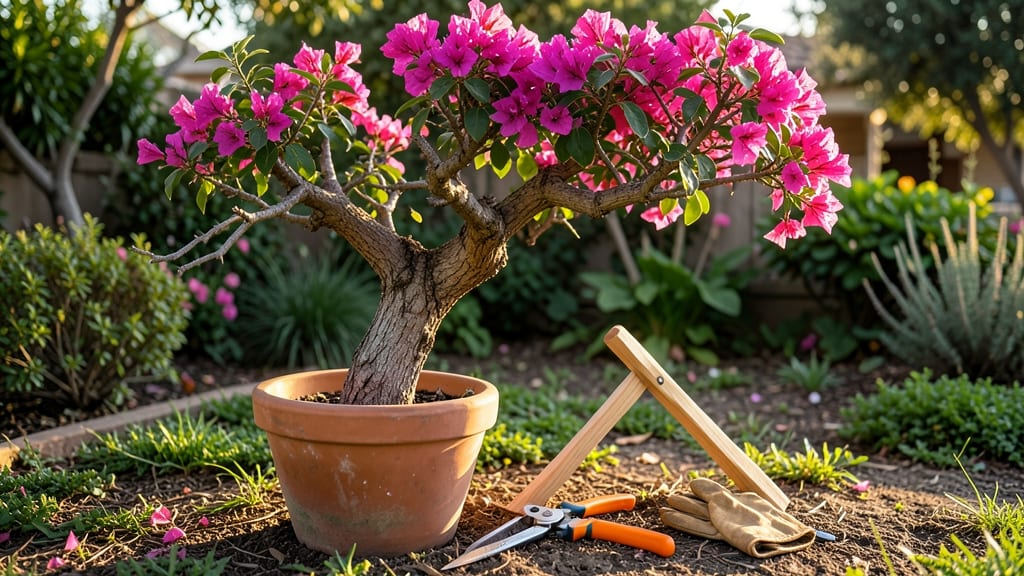
Pruning bougainvillea into a tree transforms wild vines into a stunning focal point with just three strategic cuts. 🌿 I’ve turned tangled growth into a sculpted canopy that rivals nursery-grown specimens—no green thumb required.
The secret lies in cutting back old wood while encouraging new vertical growth, which bougainvillea does naturally if guided properly.
You’ll need sharp pruning shears, a ladder (for taller plants), and a glove—plus a clear vision of your desired trunk height. The best time to prune is late winter or early spring before new growth begins, but you can shape it lightly throughout the year.
Start by removing dead or crossing branches first, then focus on the three cuts that define your tree’s structure.
After pruning, your bougainvillea will reward you with bold new growth within weeks, and those vibrant blooms will follow in summer. Water deeply after cutting to help recovery, and fertilize lightly to support fresh foliage. The result? A tree-shaped bougainvillea that stands out in any landscape—no over-pruning or messy regrowth.
This method works for both potted and in-ground bougainvillea, though container plants may need extra support as they grow taller. If you’re nervous about making mistakes, start with a small branch to practice—your bougainvillea will thank you with lush, controlled growth all season long.
📚 In This Guide
- What you need
- Instructions
- Tips and common mistakes
- Wrapping up and next steps
What you need
- ● Pruning shears or loppers – Sharp, bypass-style shears (for clean cuts) or loppers (for thicker stems). Size: 6-8 inches for shears, 8-12 inches for loppers.
- ● Hand pruners – For smaller, delicate cuts. Quantity: 1 pair (preferably ergonomic).
- ● Gloves – Heavy-duty, gardening gloves (thorns are sharp!). Material: Leather or reinforced fabric.
- ○ Disinfectant (optional but recommended) – 70% isopropyl alcohol or rubbing alcohol to sterilize tools between cuts.
- ● Rope or twine – Jute or plastic-coated (3-5mm thickness) to secure branches to the trunk.
- ● Support stake or bamboo poles – 3-4 ft tall (1-2 per plant, depending on size).
- ● Tree ties or soft plastic strips – To gently bind branches without damaging bark.
- ● Healthy bougainvillea plant – Choose a vine with thick, woody stems (at least pencil-sized) for structural support.
- ● Sunny location – Ensure your plant gets full sun (6+ hours/day) for optimal growth post-pruning.
- ● Watering can or hose – For post-pruning hydration. Tip: Water before pruning to reduce stress.
- ● Clear weather day – Avoid pruning in extreme heat or rain to prevent shock or fungal issues.
- ● Pruning sealant – Tree wound dressing (like Tanglefoot Pruning Seal) for large cuts to prevent disease.
- ● Ladder or step stool – If your bougainvillea is taller than 6 ft.
- ● Camera or sketchpad – To map out your design before cutting!
- ● Mulch – Organic mulch (like bark chips) to retain moisture after pruning.
Instructions for pruning bougainvillea into a tree
Here’s how to transform sprawling bougainvillea into a striking, tree-like specimen with just three strategic cuts.
✂️ Step 1: Select and Mark Your Main Trunk
Start by identifying the strongest, straightest stem—this will be your future trunk. Bougainvillea grows from woody stems, so choose one that’s at least 6-8 inches in diameter at the base. Use a permanent marker to outline a clean, vertical line where you’ll make your first cut. This stem should be free of major scars or damage—those weaken the plant’s ability to support new growth.
I like to work when the plant is dormant in late winter (just before new growth begins). The lack of leaves makes it easier to visualize the final shape. If you’re pruning in warmer months, do it on a cool, overcast day to reduce stress on the plant. Avoid pruning during heatwaves—bougainvillea bleeds sap aggressively in high temperatures, which can attract pests.
✂️ Step 2: Make the First Cut to Define the Trunk Height
Using clean, sharp pruning shears, cut horizontally just above a leaf node (the small bump where leaves or branches emerge). Aim for a height of 3-4 feet from the base—this gives your tree a balanced, mature look while allowing room for the canopy to develop. The cut should be smooth and even, not jagged. Ragged cuts invite disease and slow healing.
Remove all side branches below your cut line—these will compete with your main trunk for energy. Dispose of these clippings immediately (don’t compost them if they show signs of disease). After cutting, step back and visualize the space above your new trunk line. This is where your primary scaffold branches will emerge, so leave at least 12 inches of clear stem above the cut before making your next cuts.
✂️ Step 3: Prune the Canopy for Balance and Structure
Now focus on shaping the upper canopy. Select 3-4 strong, outward-facing branches that emerge from the trunk above your first cut. These will become your main scaffold branches. Cut back each of these branches by one-third of their length, making the cut just above a leaf node. This encourages bushier, more vibrant growth while maintaining the tree’s natural silhouette.
For the remaining branches in the canopy, prune back any that grow inward or downward—these create a dense, unbalanced look. You’ll also want to remove any weak, leggy, or crossing branches (where two stems rub against each other). These cuts should be made at a 45-degree angle, about ¼ inch above a leaf node, to promote faster healing and new growth. After pruning, your bougainvillea should resemble a wide, open umbrella rather than a dense bush.
💧 Step 4: Post-Pruning Care for Strong Recovery
Water the plant deeply immediately after pruning to help it recover. Bougainvillea is drought-tolerant once established, but fresh cuts need moisture to heal properly. Apply a balanced, water-soluble fertilizer (like 10-10-10) diluted to half strength to encourage new growth. Avoid heavy fertilizers right after pruning—they can burn tender new shoots.
Monitor the plant closely for the next 2-3 weeks. If you see yellowing leaves or wilting, it’s a sign of stress—reduce watering slightly and provide light shade during the hottest part of the day. New growth should appear within 4-6 weeks, and by the next growing season, your bougainvillea will have filled out into a striking, tree-like shape. Prune lightly in subsequent years to maintain the form, focusing on removing dead wood and shaping the canopy rather than drastic cuts.
Tips & tricks for perfect bougainvillea tree pruning
Transforming sprawling bougainvillea into a tree-like masterpiece takes precision—and these pro tips will help you avoid common pitfalls while achieving that sculpted canopy.
Timing is Everything: Late winter is ideal for pruning because bougainvillea is dormant, making it easier to visualize your cuts. If you must prune in warmer months, choose a cool, overcast day to minimize stress on the plant. Avoid heatwaves entirely—bougainvillea bleeds sap aggressively in high temperatures, which can attract pests and slow recovery. The 2-3 weeks of post-pruning care mentioned in Step 4 are critical for healing, so don’t rush this phase.
Cutting Technique Matters: When making your first cut to define the trunk height, use clean, sharp pruning shears and cut horizontally just above a leaf node. A smooth, even cut prevents disease and promotes faster healing. For the canopy branches, cutting at a 45-degree angle, about ¼ inch above a leaf node, encourages new growth while reducing the risk of infection. Jagged cuts are a common mistake—take your time to make precise, clean cuts.
Visualizing the Final Shape: Step back after each major cut to visualize the space above your new trunk line. This is where your primary scaffold branches will emerge, so leaving at least 12 inches of clear stem above the first cut ensures your bougainvillea has room to develop a balanced canopy. If you’re unsure about the height, aim for 3-4 feet from the base—this creates a mature look while allowing room for growth. Sketching a rough outline on paper first can help you plan the cuts more effectively.
Post-Pruning Recovery Hacks: After pruning, water the plant deeply to help it recover, but avoid overwatering—bougainvillea is drought-tolerant once established. Apply a balanced, water-soluble fertilizer (like 10-10-10) diluted to half strength to encourage new growth without burning tender shoots. If you notice yellowing leaves or wilting within the first 2-3 weeks, reduce watering slightly and provide light shade during the hottest part of the day. This simple adjustment can make all the difference in your bougainvillea’s recovery.
Pro Tips for Prune Bougainvillea Into A Tree
- Transforming sprawling bougainvillea into a tree-like masterpiece takes precision—and these pro tips will help you avoid common pitfalls while achieving that sculpted canopy.
- Timing is Everything: Late winter is ideal for pruning because bougainvillea is dormant, making it easier to visualize your cuts.
- Cutting Technique Matters: When making your first cut to define the trunk height, use clean, sharp pruning shears and cut horizontally just above a leaf node.
Frequently asked questions
Got questions about transforming your bougainvillea into a stunning tree? You're not alone! Here are some of the most common queries—plus expert answers to help you prune with confidence.
When is the best time to prune bougainvillea into a tree shape?
The ideal time is late winter or early spring (just before new growth begins). Avoid pruning during flowering season or extreme heat—this stresses the plant. For tropical climates, prune in dry seasons to reduce disease risk. Pro tip: Prune after a light frost if you’re in a cooler zone to encourage vigorous regrowth.
How do I know which branches to cut to create a tree shape?
Start by identifying the main trunk (your future "tree" base) and remove any competing vertical stems at the base. Cut back 1/3 of the plant’s height to encourage branching. For a clean tree form, trim lateral branches unevenly—leave some longer for natural layers. Use a step-by-step guide (like the 3-cut method in this article) to visualize your design before cutting!
What should I do if my bougainvillea bleeds sap after pruning?
Sap bleeding is normal but can attract pests. To minimize it, prune on a dry day and avoid cutting into wet wood. Seal cuts with pruning sealant (optional) or let them air-dry. If sap persists, ensure your plant isn’t overwatered—stress worsens sap flow. Most bougainvilleas recover quickly, so don’t panic!
Can I prune bougainvillea into a tree if it’s already flowering?
Pruning during flowering will remove blooms, but it’s not the end of the world! If you must shape it now, focus on light trimming (e.g., removing dead or overcrowded branches). For a full tree makeover, wait until after flowering (late spring/early summer). Prioritize health over aesthetics—prune aggressively next season instead.
Are there alternative pruning methods for small spaces or containers?
Yes! For containers or limited space, prune to create a miniature tree (3–4 feet tall) by:
- Trimming to 1/2 the plant’s height to control size.
- Using espalier techniques to train branches along a trellis or wall.
- Pruning new growth tips to encourage bushier, denser foliage.
Wrapping up and next steps
Transforming your bougainvillea into a stunning tree shape is totally within reach—just remember: confidence in your cuts and patience with growth are your best tools. With the right timing, sharp tools, and a little creativity, you’ll soon enjoy a showstopping focal point in your garden. 🌿✨
Ready to take it further? Experiment with different shapes or try training new growth to create intricate designs. Your bougainvillea’s journey doesn’t end here—keep refining, and watch it thrive!