
Pruning
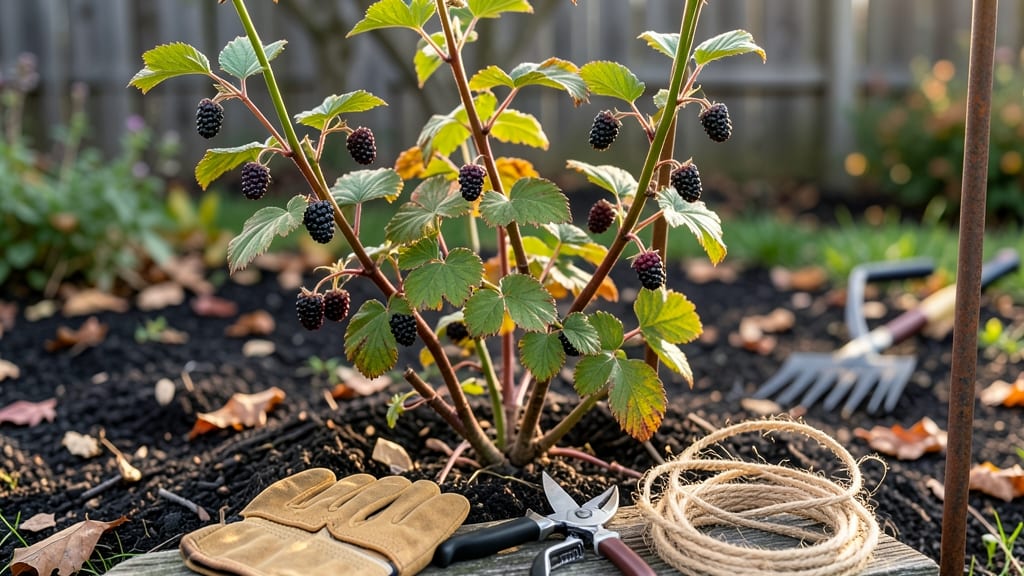
Fall blackberry pruning transforms next year's harvest before the first frost hits. ✂️ I learned the hard way that skipping this step means tangled canes, fewer berries, and plants that struggle to recover. The right cuts now mean stronger growth and bigger fruit by summer—plus, it keeps diseases at bay.
Timing is everything: prune after harvest but before hard freezes, when canes are dormant but still visible. You'll need sharp pruners, gloves, and a clear day to work. The goal is simple—remove dead, weak, or crossing canes first, then thin the thickest ones to improve airflow.
Just don’t overdo it; leave at least 10-12 healthy canes per plant.
What you’ll end up with is a blackberry patch that looks like a well-groomed hedge, not a tangled mess. The remaining canes will produce 20-30% more fruit next season, and the plants handle winter stress better. Plus, fewer hiding spots means fewer pests and diseases lurking in the shadows.
Works for both thornless and traditional blackberries, and the same principles apply whether you're in Zone 5 or Zone 9. The key is consistency—do this every fall, and your plants will repay you with years of bountiful harvests. Ready to get started?
📚 In This Guide
- What you need
- Instructions
- Tips and common mistakes
- Wrapping up and next steps
What you need
- ● Pruning shears or loppers: Bypass pruners (for clean cuts) or loppers (for thicker canes). Look for sharp, sterilized tools to prevent disease spread. Quantity: 1 pair (or 2 if working with large bushes).
- ● Gloves: Heavy-duty, gardening gloves to protect hands from thorns and debris. Recommended: Nitrile-coated for durability.
- ● Disinfectant: Rubbing alcohol (70% isopropyl) or a gardening disinfectant spray to sterilize tools between cuts.
- ● Trash bags or compost bin: For disposing of pruned canes and debris. Quantity: 1–2 bags (depending on bush size).
- ○ Markers or flags (optional but helpful): Color-coded plant tags or bright flags to label new vs. old canes if needed.
- ● Saw: A pruning saw for any stubborn, thick canes that won’t yield to shears.
- ● Knee pads or stool: For comfort, especially if pruning large or sprawling bushes.
- ● Garden hose or spray bottle: To rinse tools and canes post-pruning for hygiene.
- ● Garden twine or stakes: For temporarily securing canes if training or shaping is part of your plan.
Instructions for fall blackberry pruning
Here's how I prepare blackberries for next year's harvest—clean cuts and strategic thinning make all the difference.
✂️ Step 1: Identify and Remove Weak Canes
Start by examining your blackberry patch after the first hard frost when canes have turned dormant. Look for thin, spindly canes—these won't produce fruit and compete with stronger growth. Also target any canes showing signs of disease (blackened spots, mold, or unusual growth patterns). I like to snap these off at the base with my hands rather than cutting—they break cleanly and reveal the root system.
Next, identify last year's fruiting canes. These are the ones that bore fruit this season—they'll be thicker at the base and show signs of wear. Mark these with flagging tape if you're unsure, as we'll remove them in the next step. Healthy canes should have a smooth, slightly woody texture and no visible damage.
✂️ Step 2: Cut Out Fruiting Canes Completely
Using clean, sharp loppers, cut all fruiting canes at the ground level. The goal is to remove them entirely—these canes have already given their energy to fruit production and won't recover. I make the cut just above the soil line to prevent any regrowth. This step is critical because it opens up space for next year's primocanes (new growth) to thrive without competition.
Don't worry about leaving stubs—blackberries don't sprout from old wood. If you're unsure which canes fruited this year, look for thicker, more mature canes with visible scars or pruning marks from earlier in the season. These are the ones to remove entirely.
✂️ Step 3: Thin Remaining Canes to 6-8 Strong Ones
Now focus on the primocanes—these are the new, thinner canes that emerged this growing season. Select the 6-8 healthiest, straightest canes and remove the rest at the base. I space these evenly around the plant to ensure good air circulation, which prevents fungal diseases like botrytis. Thin canes should have smooth bark, bright green leaves (if any remain), and no signs of damage.
If you have more than 8 strong canes, prioritize those with the best structure. Look for canes that grow upright or slightly outward rather than inward toward the center of the plant. This spacing ensures sunlight reaches all canes evenly, which is key for next year's fruit production.
✂️ Step 4: Prune Tips of Remaining Primocanes
For the canes you're keeping, cut the top third off each one using your loppers. This encourages bushier growth next season by promoting lateral branching. Make the cut just above a bud that faces outward—this ensures new growth will spread rather than crowd the center. I like to make these cuts at a 45-degree angle to prevent water from pooling on the wound.
After pruning, step back and visualize the plant. You should see an open, airy structure with room for new growth. If any canes are still crossing or rubbing against each other, remove one of the weaker ones. This step is all about setting up your blackberries for strong, productive canes next year.
🪴 Step 5: Clean Up and Apply Mulch
Rake up and dispose of all pruned canes—don't leave them in the patch, as they can harbor pests and diseases. I burn or bag them immediately to prevent reinfestation. Next, spread a 2-3 inch layer of mulch around the base of the plant, keeping it 6 inches away from the crown to prevent rot. Organic mulch like shredded leaves or straw works well and helps retain moisture.
Finally, water the base of the plant deeply to settle the mulch. This step prepares the soil for winter and gives your blackberries a strong start in spring. Avoid fertilizing now—wait until early spring when new growth begins. Your pruned blackberries are now ready to rest through winter, stronger and more productive for next year's harvest.
Tips & tricks for perfect fall blackberry pruning
These essential techniques will help you transform your blackberry patch into a high-yielding powerhouse next season.
Timing is Everything: The dormant season pruning window is brief—focus on the period between the first hard frost and when temperatures drop below 20°F. Pruning too early (when canes still have leaves) stresses the plant, while waiting too long (deep winter) makes cuts harder. I aim for late November to early December in most climates when canes are bare but still flexible. This timing ensures your plant enters winter with optimal energy reserves for spring growth.
Tool Selection Matters: Using clean, sharp loppers is non-negotiable—dull blades crush cane tissue, creating larger wounds that invite disease. I disinfect my tools with rubbing alcohol between cuts on different plants to prevent spreading any potential pathogens. For thicker canes, a pruning saw works better than loppers. Remember, the cleaner the cut, the faster the wound seals, which is crucial for winter survival.
Visual Cues for Healthy Canes: When selecting primocanes in Step 3, look for canes with bright green leaf scars (the marks left where leaves attached). These indicate the cane was healthy during the growing season. Avoid canes with dark, sunken scars or excessive twig growth—these often produce poor fruit. I also check for cane thickness at the base: aim for canes about pencil-width or thicker, as these will support better fruit production next year.
Pro Tips for Fall Blackberry Pruning
- These essential techniques will help you transform your blackberry patch into a high-yielding powerhouse next season.
- Timing is Everything: The dormant season pruning window is brief—focus on the period between the first hard frost and when temperatures drop below 20°F.
- Tool Selection Matters: Using clean, sharp loppers is non-negotiable—dull blades crush cane tissue, creating larger wounds that invite disease.
Frequently asked questions
Got questions about pruning blackberries in the fall? You’re not alone! Here are some of the most common concerns—and straightforward answers—to help you tackle dormant-season cuts with confidence.
When is the exact best time to prune blackberries in fall?
Prune after the first hard frost (when leaves drop) but before winter freezes set in. Aim for late fall to early winter—typically November to December in most U.S. zones (5-8). This timing ensures canes are dormant but still resilient for spring growth. Pro tip: If your region has unpredictable winters, wait until after a frost to avoid stressing the plant.
Do I need to prune every year, or can I skip a season?
Annual pruning is ideal for blackberries, but you can skip a year if you’ve been consistent. Focus on removing dead, diseased, or weak canes first. If you’ve neglected pruning for 2+ years, prioritize thinning old canes to improve airflow and fruit production. Think of it like a spring cleaning for your bushes!
What’s the difference between “floricane” and “primocane” pruning?
Blackberries are either floricane-fruiting (like ‘Triple Crown’) or primocane-fruiting (like ‘Arapaho’). Floricane types bear fruit on second-year canes—prune old canes to ground level in fall. Primocane types fruit on current-year canes—prune lightly in fall, then heavily in late winter/early spring. Check your variety!
Can I prune blackberries too aggressively? What are the signs?
Yes! Over-pruning (removing <50% of canes) can stress the plant, leading to fewer berries or stunted growth. Signs include bare stems, yellowing leaves, or no new canes in spring. Leave 3-5 strong, healthy canes per plant as a rule of thumb. If you’ve gone overboard, don’t panic—blackberries are forgiving!
What if I don’t have pruning shears? Can I use other tools?
Use clean, sharp loppers for thicker canes or a hand saw for stubborn branches. Avoid hedge trimmers—they can tear canes. For small-scale pruning, gloves and a sturdy knife work in a pinch. Just sterilize tools with rubbing alcohol between cuts to prevent disease.
Should I fertilize or mulch after pruning?
Lightly fertilize with a balanced 10-10-10 or compost in early spring (not fall), but mulch now with 2-3 inches of organic matter (straw or wood chips) to protect roots. Avoid fresh mulch too close to canes—it can cause rot. Bonus: Mulch also suppresses weeds and retains moisture!
Wrapping up and next steps
Pruning your blackberries in the fall is a game-changer for healthier canes, bigger yields, and easier maintenance next season! By removing dead, diseased, or weak growth now, you’re setting the stage for vibrant new shoots and sweeter berries in spring.
Don’t let overwhelm hold you back—start small, take your time, and soon you’ll be rewarded with a thriving blackberry patch! 🌱
Ready to take action? Grab your pruners, mark your calendar, and tackle one section of your patch at a time. Before winter arrives, you’ll have a well-maintained, productive blackberry bush—and that’s a harvest worth celebrating!