
Shrubs
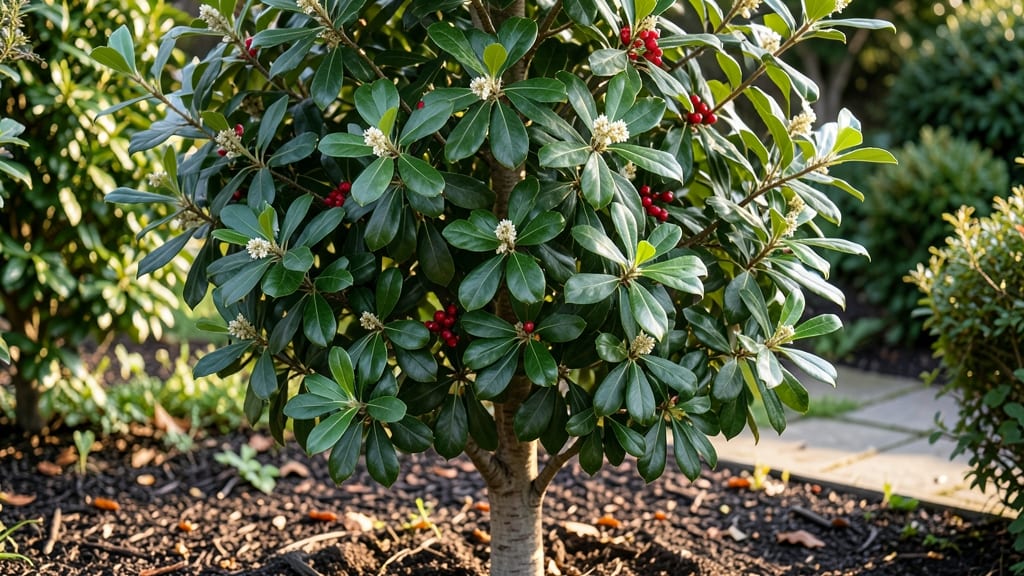
English laurel (Prunus laurocerasus) grows into a thorn-free privacy screen faster than most shrubs—3 years of steady growth if you plant it right. 🌿 I’ve watched mine transform from a scraggly 2-foot-tall bush into a 12-foot-tall, lush green wall that blocks neighbors’ views without the hassle of barbed wire.
The secret isn’t fancy soil or rare fertilizers—it’s full sun, well-draining soil, and regular pruning to encourage dense branching. Mine thrives in zones 6-9, handles drought once established, and even tolerates urban pollution.
That glossy, dark green foliage stays vibrant all year, and the red berries add winter interest (though they’re toxic to pets). You’ll spend less time fussing over pests or diseases than with other privacy plants. Leaf spot? Rare. Overgrowth? Just prune back in late winter.
By year three, you’ll have a neighborhood-worthy hedge that’s easier to maintain than most. Perfect for fences, borders, or standalone screens—and it works just as well in containers for smaller spaces. Here’s how to grow one that looks like it’s been there for decades in just a few years.
📚 In This Guide
- What you need
- Instructions
- Tips and common mistakes
- Wrapping up and next steps
What you need
- ● English Laurel Plants: 3–5 nursery-grown Prunus laurocerasus (choose fast-growing varieties like 'Rotundifolia' or 'Schipkaensis' for quicker results).
- ● OR Seeds (if starting from scratch—germination takes 3–6 months!).
- ● Soil Amendments: 50 lbs well-draining garden soil (mix with compost for fertility).
- ● 2–3 lbs organic matter (compost or aged manure per 10 sq ft).
- ● 1 lb slow-release fertilizer (10-10-10 or balanced NPK).
- ● Planting Tools: 1 shovel or spade (for digging holes).
- ● 1 garden trowel (for precision planting).
- ● 1 measuring tape (to space plants 4–6 ft apart).
- ● Watering Supplies: 1 hose with adjustable nozzle or watering can (for deep watering).
- ● Mulch (2–3 inches of wood chips or straw to retain moisture).
- ● Pruning shears (for shaping young plants).
- ● Soil pH test kit (English Laurel prefers slightly acidic to neutral soil (pH 6.0–7.0)).
- ● Epsom salt (1 tbsp per plant annually for magnesium boost).
- ● Plant stakes or trellis (if training as a hedge or screen).
How to plant and grow English laurel for a fast, thorn-free privacy screen
Here's the method I rely on to establish a dense, evergreen hedge in just three years—no thorns, no fuss.
🪴 Step 1: Choose Planting Locations and Prepare the Soil
English laurel thrives in full sun to partial shade, but for fastest growth, select a site with at least 6 hours of direct sunlight daily. The plant tolerates a range of soil types, but it grows best in well-draining, slightly acidic soil with a pH between 5.0 and 7.0. If your soil is heavy clay, amend it with 2-3 inches of compost mixed into the top 12 inches of soil.
Space your plants 4-6 feet apart for a dense hedge. You’ll need to prune less later if you start with proper spacing. Dig holes twice as wide as the root ball but no deeper—this encourages root expansion rather than settling. Water the holes deeply before planting to prevent root shock.
🌱 Step 2: Plant and Water for Immediate Establishment
Remove the plant from its container and loosen the roots gently if they’re circling. Place the root ball into the hole so the top of the root ball sits 1 inch above ground level—this prevents soil from settling and smothering the stem. Backfill with native soil, pressing lightly to remove air pockets but not compacting too firmly.
Water deeply right after planting to settle the soil and eliminate air gaps. Use 2-3 gallons of water per plant to ensure moisture reaches the entire root zone. Mulch around the base with 2-3 inches of organic mulch, keeping it 6 inches away from the stem to prevent rot. This retains moisture and suppresses weeds while keeping roots cool.
☀️ Step 3: Provide Consistent Care for Rapid Growth
English laurel is drought-tolerant once established, but young plants need 1-2 inches of water per week during the first growing season. Water deeply in the morning to allow foliage to dry before evening, reducing the risk of fungal diseases. You’ll know your plants are getting enough water when the top 2 inches of soil feel dry to the touch.
Fertilize in early spring with a balanced, slow-release fertilizer (10-10-10 or similar) applied at half the recommended rate. Over-fertilizing encourages soft, fast growth that’s prone to pests. Prune lightly in late spring to shape the plant, but avoid heavy cuts in the first year—this can stress the root system.
✂️ Step 4: Prune Strategically for Density and Shape
Start pruning in the second or third year to encourage bushier growth. Prune just after flowering in late spring or early summer, cutting back 1/3 of the new growth to promote branching. Use sharp, clean shears to make cuts just above a leaf node or bud—this ensures the plant heals quickly and new growth emerges from the right spot.
For a formal hedge, prune twice a year: once in late spring and again in mid-summer. Avoid pruning in fall or winter, as new growth may not harden off before cold weather. You’ll see the hedge fill in quickly if you prune correctly—watch for new shoots emerging within 4-6 weeks after pruning.
⏰ Step 5: Monitor for Pests and Diseases
English laurel is generally pest- and disease-resistant, but watch for aphids or spider mites in hot, dry weather. You’ll spot these pests as tiny webs or sticky residue on leaves. Treat infestations early with a strong spray of water or insecticidal soap—avoid harsh chemicals, as they can damage the plant’s glossy foliage.
If you notice yellowing leaves or leaf drop, it could signal root rot from overwatering or poor drainage. Adjust your watering schedule and ensure the soil drains well. English laurel is tough once established, but young plants need consistent but not excessive moisture. With proper care, your hedge will grow 2-3 feet per year, providing full privacy in just three years.
Tips & tricks for perfect English laurel privacy screens
These game-changing strategies will help you establish a lush, thorn-free hedge faster than you'd expect.
Soil Preparation Insight: Before amending your soil with compost, test its pH using a simple soil test kit—English laurel thrives in that 5.0 to 7.0 range. If your soil tests outside this, adjust with sulfur (to lower pH) or lime (to raise it) before planting. I've seen plants struggle when soil pH is off by even 0.5 points, so this small step prevents future headaches. The 2-3 inches of compost in the top 12 inches of soil creates ideal conditions for root expansion.
Planting Depth Secret: That 1-inch above ground level positioning for the root ball isn't arbitrary—it creates a natural transition zone where roots can establish without smothering. If you plant too deeply, you risk stem rot from excess moisture. After backfilling, gently press the soil to remove air pockets but avoid compacting too firmly, which can restrict root growth. Think of it like tucking in a cozy blanket—just enough support without suffocating.
Watering Strategy: The 2-3 gallons per plant immediately after planting is crucial for eliminating air gaps in the soil. For the first 1-2 inches of weekly water during the growing season, use a rain gauge or tuna can to measure—eyeballing often leads to overwatering. Watering in the morning prevents fungal diseases by allowing foliage to dry before evening. And remember, the top 2 inches of soil should feel dry before watering again—this prevents soggy roots while keeping the plant hydrated.
Pruning Precision: When pruning in the second or third year, focus on cutting just above a leaf node or bud—this ensures new growth emerges from the right spot. For formal hedges, the 4-6 week window between prunings gives the plant time to recover and fill in beautifully. I always prune after flowering in late spring or early summer because the plant has stored energy from the previous season, making it more resilient to pruning stress.
Pro Tips for English Laurel Prunus Laurocerasus
- These game-changing strategies will help you establish a lush, thorn-free hedge faster than you'd expect.
- Soil Preparation Insight: Before amending your soil with compost, test its pH using a simple soil test kit—English laurel thrives in that 5.0 to 7.0 range.
- Planting Depth Secret: That 1-inch above ground level positioning for the root ball isn't arbitrary—it creates a natural transition zone where roots can establish without smothering.
Frequently asked questions
about Prunus laurocerasus (English Laurel) can help you make the best decisions for your privacy hedge. Here are some common queries:How fast does English Laurel grow?
English Laurel grows 2–3 feet per year under ideal conditions, reaching 15–25 feet tall in 3–5 years. With proper pruning and care, you can shape it into a dense, thorn-free privacy screen quickly!
Does English Laurel need full sun?
While it thrives in full sun, English Laurel tolerates partial shade (4+ hours of sunlight daily). In shadier spots, growth may slow, but it remains hardy. For best results, plant it where it gets morning sun and afternoon shade in hot climates.
How do I prune English Laurel for a dense hedge?
Prune in late winter or early spring before new growth starts. Cut back 1/3 of the plant annually to encourage bushiness. Use clean, sharp shears and avoid over-trimming—never remove more than 1/3 in a single season to prevent stress.
What pests or diseases should I watch for?
English Laurel is disease-resistant but may attract aphids, spider mites, or scale insects. Treat infestations early with neem oil or insecticidal soap. Fungal issues (like leaf spot) can occur in humid, poorly drained soil—ensure good airflow and avoid overhead watering.
Can I grow English Laurel in containers?
While possible, English Laurel is best suited for ground planting due to its size. If container-grown, use a large pot (15+ gallons) with well-draining soil and prune aggressively to control growth. Expect slower growth and more frequent watering.
Wrapping up and next steps
Ready to transform your outdoor space with a thorn-free, fast-growing privacy screen?
The English laurel (Prunus laurocerasus) is your perfect solution—offering lush greenery, low maintenance, and rapid growth in just 3 years! 🌿 Whether you’re shielding noise, adding curb appeal, or creating a serene retreat, this shrub delivers year-round beauty with minimal effort.
Take the next step: measure your space, gather supplies, and plant your first row this season. With the right care, you’ll enjoy a vibrant, impenetrable hedge in no time. Happy gardening! 🌱