
Shrubs
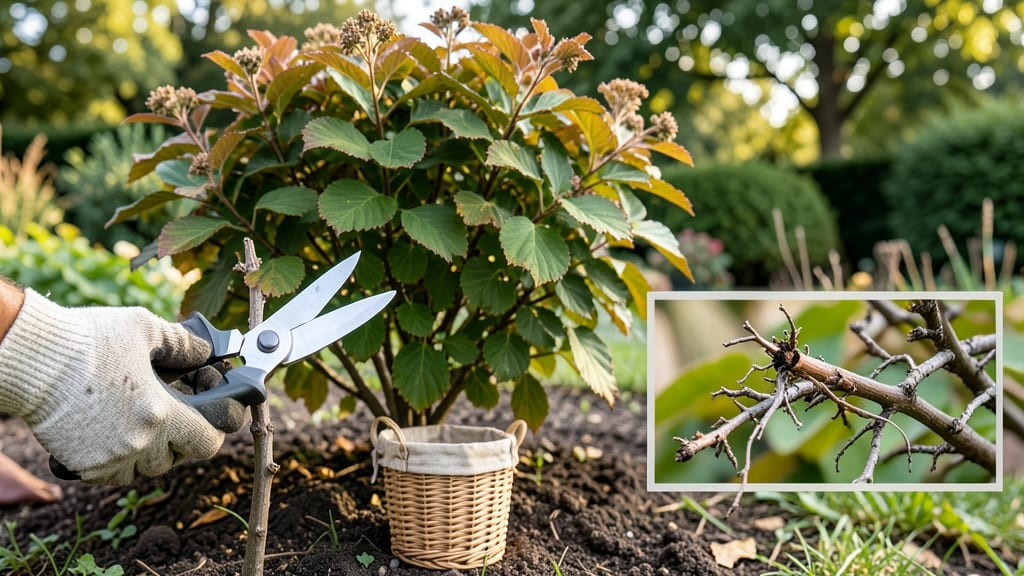
You can prune shrubs in the fall only for specific types—evergreens, spring-blooming varieties, and severely overgrown specimens—after leaves drop but before early winter dormancy. Most shrubs should avoid fall pruning to prevent frost-sensitive new growth.
Fall pruning becomes tricky because many shrubs enter dormancy to survive winter. 🌿 When you cut back too late, the plant may sprout tender new growth that can't withstand freezing temperatures, leading to winter dieback.
The key is timing: prune evergreens and spring bloomers after their foliage falls but before hard frost sets in. For overgrown shrubs, light shaping in fall can reduce stress, but heavy pruning should wait until early spring.
This approach helps shrubs establish proper dormancy cycles, ensuring they're better prepared for winter's challenges. For example, azaleas and lilacs—both spring bloomers—should never be pruned in fall, as you'll risk removing next year's flower buds.
Instead, focus on cleanup pruning for dead or diseased branches, and save major reshaping for late winter or early spring.
💡 In This Article
- Fall Pruning Risks for Shrubs and When to Avoid It
- Safe Fall Pruning Guidelines for Different Shrub Types
Fall pruning risks for shrubs and when to avoid it
The danger of fall pruning lies in a shrub's biological response to cutting: when you trim branches, the plant perceives it as an invitation to grow.
This triggers the release of auxin hormones, which stimulate cell division and new shoot formation. 🌱 The problem is that tender new growth lacks the time to harden off—developing protective layers like suberin (a waxy substance) and accumulating cold-resistant sugars—before winter frost arrives.
Studies show that new growth needs at least 4-6 weeks of cool temperatures to properly acclimate, a window that shrinks rapidly as winter approaches.
Consider the case of hydrangeas: if you prune their stems in late fall, you risk encouraging soft, green shoots that can't survive 20°F temperatures.
The plant's energy is diverted from root development and storage carbohydrate production (like starches) to support this vulnerable growth. 🌡️ This explains why many gardeners report winter dieback in shrubs pruned after mid-October in most climates.
The same principle applies to roses—fall pruning can lead to "winter burn" where tender canes blacken and die back to the ground.
Timing intersects with a shrub's natural dormancy cycle, which varies by species. Deciduous shrubs like forsythia and serviceberry enter dormancy when temperatures consistently drop below 40°F for 2-3 weeks. Pruning before this stage ensures the plant isn't caught in a vulnerable state.
Evergreens, however, have a different mechanism—they continue slow growth until frost, making them slightly more forgiving for late cuts, provided you avoid heavy pruning that removes more than 25% of foliage at once.
The most critical exception involves spring-blooming shrubs, where fall pruning directly impacts next year's flowers. 🌸 These plants set their flower buds on old wood during the previous summer or fall. For example, lilacs form their buds in late summer, and pruning after September 1st risks removing these buds entirely.
The plant's energy is then wasted on regrowing leaves rather than preparing for spring blooms, which can take 3-5 years to recover from such a mistake.
What most gardeners don't realize is that even light pruning can disrupt a shrub's natural defense mechanisms. When you remove branches, you create open wounds that become entry points for pathogens like Botrytis (gray mold) and Phytophthora (root rot), which thrive in the damp, cool conditions of late fall.
The plant's weakened state from recent growth makes it particularly susceptible during this transition period.
To visualize this, imagine a shrub's growth cycle as a clock: spring is the "go" phase, summer is "grow," and fall is "prepare for dormancy." Pruning in fall is like hitting the "go" button when the plant should be winding down.
The result? A shrub that's caught between growth modes, unable to properly store nutrients or develop frost resistance. This explains why professional arborists recommend waiting until late winter (when the plant is fully dormant) for most pruning tasks.