
Container Gardens
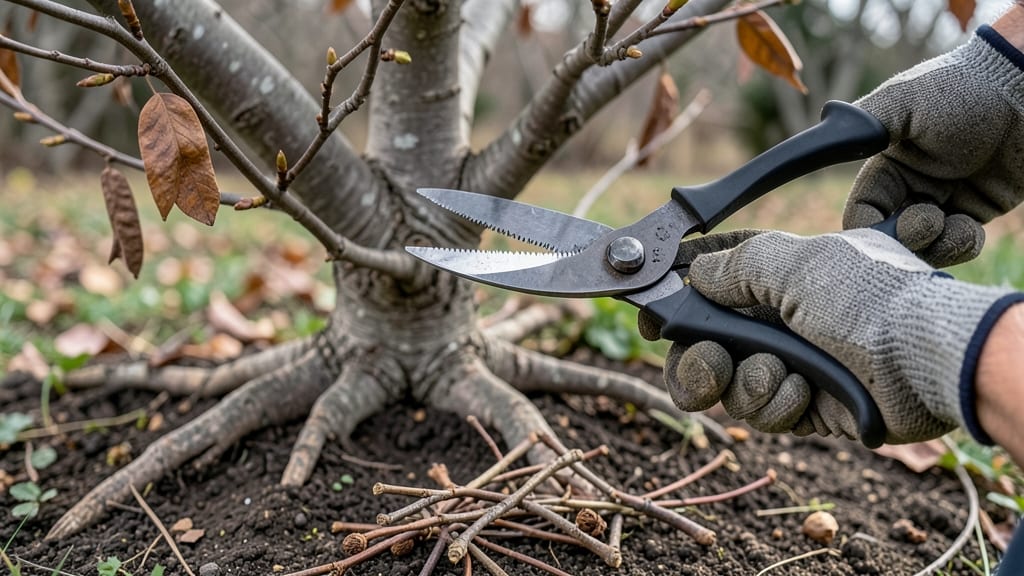
You can't safely prune a redbud tree in the fall because new growth won't harden off before winter, making it vulnerable to frost damage. Instead, prune during late winter or early spring when the tree is dormant but buds haven't yet begun to swell.
Fall pruning sends redbud trees into a dangerous growth spurt they can't recover from before cold snaps arrive. 🌳 The tree's energy shifts to producing tender new shoots that lack the cold resistance of mature branches, leaving them crisped by the first frost.
I've seen this happen firsthand—what looked like a well-timed trim in October resulted in a tree struggling to rebound the following spring. The key is patience: waiting until the tree's natural dormancy period ends but before new growth starts ensures clean cuts that won't stress the plant.
When you do prune, focus on removing only dead, diseased, or crossing branches during the dormant season. Use sharp pruners to make clean cuts just outside the branch collar, and avoid heavy pruning that could shock the tree.
This approach maintains the tree's energy reserves while shaping it properly for the growing season ahead.
💡 In This Article
- Why Fall Pruning Harms Redbud Trees
- Best Times and Techniques for Pruning Redbud Trees
Why fall pruning harms redbud trees
Redbud trees (Cercis canadensis) enter dormancy as temperatures drop, but their growth cycle remains sensitive to late-season disturbances. When you prune in fall, the tree interprets the cuts as a signal to push out fresh, tender shoots—even as nights grow colder.
These new stems lack the protective bark layers of mature wood, making them vulnerable to freezing temperatures below 28°F, which can cause irreversible damage. Studies show that redbuds typically harden off (develop cold resistance) only after 6-8 weeks of consistent temperatures below 40°F, a timeline fall pruning disrupts.
The real danger lies in how quickly these new shoots grow. In ideal conditions, redbuds can sprout 6-12 inches of growth in just 3-4 weeks after pruning—far too fast for the tree to develop frost tolerance.
Imagine cutting back a tomato plant in September: it'll keep producing fruit until the first frost, but the stems will blacken overnight. The same principle applies to redbuds, though the stakes are higher because these trees are long-lived and slow-growing.
A single late-season pruning can set a tree back 2-3 years in terms of maturity and flowering potential.
What most gardeners don't realize is how fall pruning affects the tree's root system. New shoots demand nutrients and water that the roots can't efficiently supply during cooler months. This creates a nutrient imbalance where the tree prioritizes above-ground growth over root development, weakening its overall resilience.
In my experience, redbuds pruned in fall often show stunted growth the following spring, with fewer blooms—a direct result of this internal resource conflict. The tree's energy should be conserved for root strengthening and bud formation, not wasted on vulnerable new growth.
There's also the issue of disease susceptibility. Fall-pruned redbuds develop wounds that remain open as winter approaches, creating entry points for fungal pathogens like anthracnose or canker diseases. These pathogens thrive in the damp, chilly conditions of late fall, turning pruning cuts into potential infection sites.
Healthy redbud bark has a natural resistance to these pathogens when properly hardened off, but tender new growth provides an ideal breeding ground. This is why professional arborists recommend avoiding all non-essential pruning until the tree has fully entered dormancy but before active growth resumes.
To put this into perspective, consider how other spring-blooming trees handle pruning. Azaleas and lilacs—both in the same family as redbuds—are also pruned after flowering to avoid encouraging late-season growth. The timing isn't arbitrary; it's rooted in the tree's biological clock.
Redbuds follow this same pattern, with their peak flowering occurring 2-3 weeks before leaves emerge in spring. Pruning at the wrong time disrupts this carefully timed sequence, much like pulling up a seedling too early in its growth cycle.
The science behind this involves a hormone called abscisic acid, which helps trees prepare for winter. When you prune in fall, you're essentially overriding this natural process, forcing the tree to produce growth hormones like auxin that signal new shoot development.
This hormonal conflict creates stress that manifests as weak, frost-sensitive growth. The tree's survival instincts are hardwired to prioritize winter preparedness over late-season growth spurts—something fall pruning ignores at its own peril. 🌬️