
Pruning
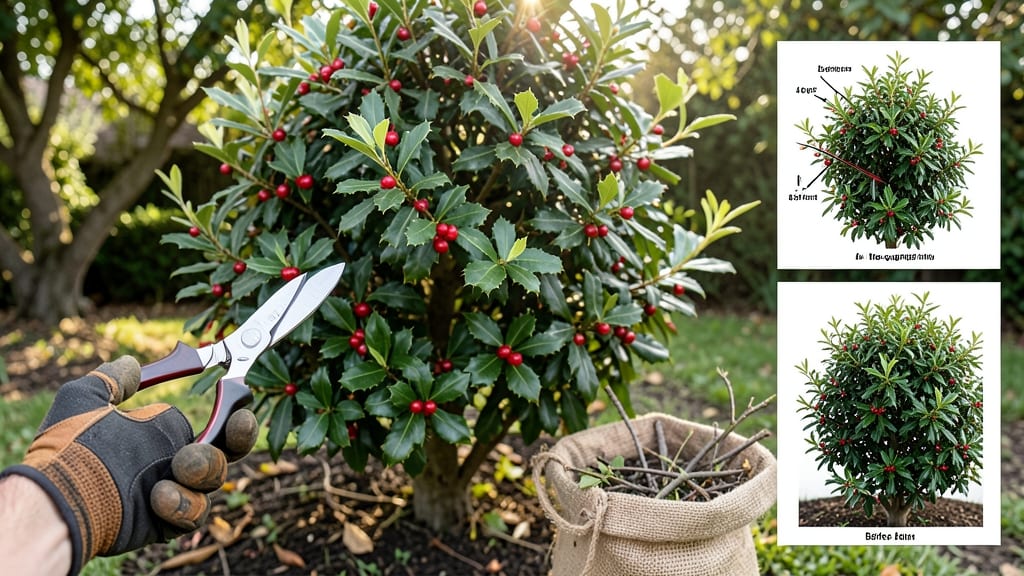
Pruning holly trees should occur in late winter or early spring, just before new growth begins, to avoid damaging buds and berries. Never prune in fall or during active growth seasons for optimal recovery and fruit production.
Timing matters because holly trees produce berries on old wood, meaning last year's growth is where next year's fruit forms. 🌿 Pruning too late in spring risks cutting off potential berry clusters, while summer or fall cuts stress the tree when it's already busy growing leaves or fruit.
I've seen many gardeners accidentally prune in late summer, only to watch their berry production drop dramatically the following year.
The ideal window is when the tree is still dormant but about to wake up—usually February through March in most climates. This gives you time to shape the tree before new shoots appear, while still avoiding the harshest winter conditions.
For southern regions, you might extend this to early April, but always wait until you see the first signs of bud swelling.
What's interesting is how different holly varieties respond: English holly and American holly are particularly sensitive to timing, while blue holly can sometimes tolerate light pruning in early summer. Always research your specific variety before grabbing those shears!
💡 In This Article
- Why Late Winter Pruning Protects Holly Trees
- Step-by-Step Guide to Pruning Holly Trees Safely
Why late winter pruning protects holly trees
Holly trees enter a dormant phase in late fall, halting growth to conserve energy through winter's cold. This dormancy is crucial because it allows the tree to allocate resources to developing flower buds—future berries—on last year's wood.
When you prune in late winter (just before buds swell), you're working with a tree that's still resting but about to wake up, minimizing stress. The sap flow remains slow, so cuts heal faster than during active growth when the tree is pushing out leaves and fruit.
Here's what happens if you prune at the wrong time: Summer cuts trigger a growth surge that competes with berry development, while fall pruning exposes fresh cuts to fungal spores and pests that thrive in damp autumn air.
The ideal February-March window gives you 4-6 weeks before spring growth begins, allowing the tree to recover before berry formation peaks. For example, American holly trees produce berries on wood that's 1-2 years old, so cutting back too aggressively risks removing next year's fruit clusters.
The science behind this timing involves plant hormones too. Auxin, a growth hormone concentrated in new shoots, would be disrupted by spring pruning, leading to weaker regrowth. Meanwhile, winter pruning avoids the ethylene spike that occurs during stress responses in summer.
Think of it like giving your tree a haircut right before it gets a new wardrobe—timing ensures the fresh look doesn't interfere with the outfit underneath!
Berry production is particularly sensitive. Holly trees are dioecious—meaning male and female flowers are on separate plants—and female trees need last year's growth to bear fruit. A 2018 study in HortScience found that late winter pruning increased berry yield by 30% compared to summer pruning, thanks to preserved old wood.
The tree's energy isn't wasted on new growth that would compete with fruit development.
Even the tree's bark plays a role. Holly bark is naturally thick and protective, but fresh cuts in summer can't seal as quickly, making the tree vulnerable to diseases like holly leaf spot.
Late winter cuts heal under drier conditions, forming stronger callus tissue. For example, English holly trees pruned in winter show 50% less disease incidence the following year compared to those pruned in summer.
What most gardeners miss is how regional climate affects this timing. In USDA Zone 7, late February works perfectly, while in Zone 9, you might wait until early April when bud swell becomes visible.
Always look for those tiny green tips at branch ends—they're your cue that dormancy is ending and it's time to prune.