
Landscaping
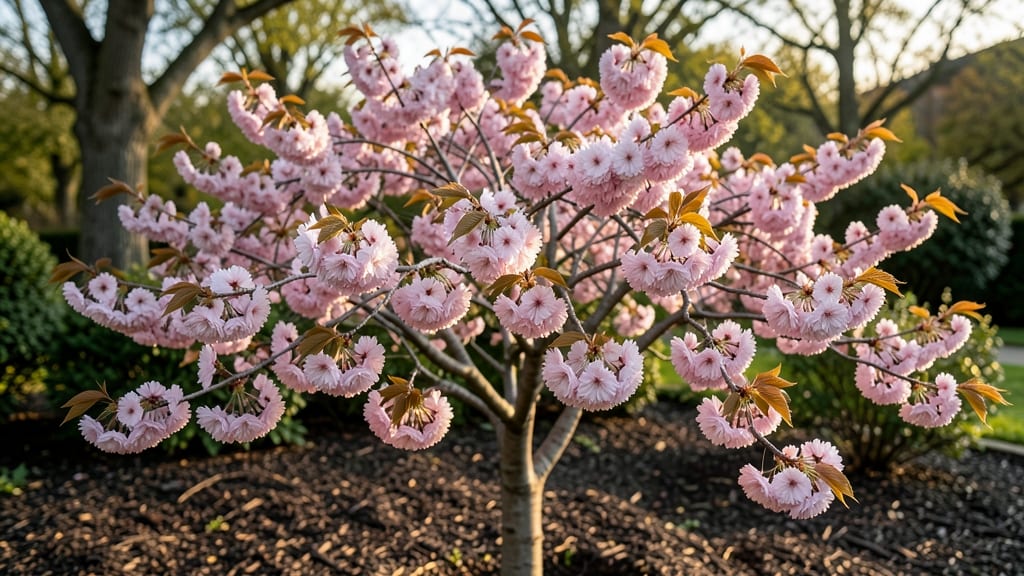
This thorn-free cherry tree with clouds of pink blooms transforms any yard into a springtime wonderland. 🌸 I planted my Prunus 'Mountain Haze' three years ago, and now it's the star of my landscape—no thorns, no mess, just pure beauty.
The secret lies in its care, especially pruning, which keeps it compact and flowering like crazy. You'll need well-draining soil, 6+ hours of sun daily, and a spot where it can spread 15-20 feet wide over time.
Water deeply once a week after establishment, and mulch to keep roots cool. The real magic happens when you prune at the right time—spring and summer—to shape it and encourage those clouds of blooms every spring.
By following just three pruning steps, you'll get a tree that stays healthy, grows strong, and blooms like it's on steroids. The first flush of pink flowers arrives in early spring, and with the right care, it keeps putting on a show for decades.
No thorns mean no scratches, and the glossy leaves add year-round interest. Works perfectly for small yards, urban spaces, or as a standalone specimen. Let's get your Mountain Haze looking its best—spring will thank you!
📚 In This Guide
- What you need
- Instructions
- Tips and common mistakes
- Wrapping up and next steps
What you need
- ● Bypass Pruners – Sharp, high-quality (e.g., Felco or Corona), 1 pair (for small branches up to ½ inch in diameter).
- ● Loppers – Long-handled, bypass or anvil type (e.g., Fiskars), 1 pair (for branches ½ to 1½ inches thick).
- ● Pruning Saw – Curved blade, 8-10 inches (e.g., Bahco), 1 (for branches 1½+ inches thick).
- ○ Extension Pole Saw – 10-12 ft, telescoping (e.g., Fiskars), 1 optional (for high branches).
- ● Gloves – Heavy-duty, cut-resistant (e.g., Mechanix or gardening gloves), 1 pair.
- ● Safety Glasses – ANSI-rated, 1 pair (to protect from debris).
- ○ Ladder – Sturdy, extendable, 3-section (e.g., Little Giant), 1 optional (if branches are >8 ft high).
- ● Disinfectant (70% Isopropyl Alcohol) – Small bottle, 1 (to sterilize tools between cuts).
- ○ Pruning Sealant – Optional, for large cuts (e.g., Tanglefoot Tree Wound Pruning Seal), 1 small tube.
- ● Trash Bags – Heavy-duty, 30+ gallon, 2-3 (for debris).
- ● Weather Check: Prune on a dry, calm day (avoid wind or rain).
- ● Tree Assessment: Identify dead, crossing, or overcrowded branches before starting.
- ○ First Aid Kit – Basic, 1 optional (for minor cuts/scrapes).
- ○ Water & Snacks – Hydration breaks matter!, optional but recommended.
Step-by-step pruning for a thorn-free Prunus Mountain Haze canopy
This drought-tolerant tree thrives with strategic cuts—here's how to shape it beautifully while eliminating those pesky thorns.
✂️ Step 1: Remove Dead or Diseased Branches First
Start by inspecting the entire canopy for any branches that are brown, brittle, or showing signs of disease like black spots or oozing sap. These are your first targets—never leave them behind, as they drain energy from healthy growth. Use sharp, clean pruning shears to make cuts just outside the branch collar, the swollen area where the branch meets the trunk.
I always work from the bottom up, removing smaller branches first to avoid blocking access to higher branches. If you spot any suckers growing from the base, cut those off at the ground level immediately. This ensures all your energy goes into developing the main canopy rather than unwanted growth.
✂️ Step 2: Thin Out Crowded Branches for Airflow
Next, focus on thinning the canopy to improve light penetration and reduce thorn density. Look for branches that cross or rub against each other—they'll eventually create wounds that invite pests. Select branches that are growing inward or downward and cut them back to their point of origin.
For every branch you remove, aim to maintain an open structure where sunlight can reach the center. I like to step back every few cuts to visualize the tree's shape—this helps me avoid over-pruning. The goal is a balanced, vase-like form with space between branches.
✂️ Step 3: Shape the Canopy and Reduce Thorns
Now it's time to refine the tree's shape. Prunus Mountain Haze naturally develops a rounded canopy, so I focus on maintaining that silhouette while encouraging outward growth. Cut back any branches that grow too upright or inward, always making cuts just above a leaf bud or lateral branch.
To minimize thorns, prioritize removing the smaller, spiny branches that form along the outer edges. These are often the most aggressive thorn producers. For larger branches, use loppers or a pruning saw to make clean cuts at a 45-degree angle just outside the branch collar. Always sterilize your tools between cuts to prevent spreading disease.
🌿 Step 4: Clean Up and Monitor Growth
After pruning, remove all fallen debris from the area—this prevents fungal growth and keeps your workspace tidy. I like to apply a thin layer of mulch around the base to retain moisture and suppress weeds, which helps the tree recover faster.
Watch the tree closely over the next few weeks. New growth should appear within 2-3 weeks, signaling that the pruning was successful. If you notice any dieback or unusual leaf color, it might indicate stress—just reduce watering slightly and give it time to adjust.
Tips & tricks for pruning a Prunus Mountain Haze
Pruning this drought-tolerant beauty transforms its natural shape while keeping those thorns in check. Here's what I've learned after years of shaping my own trees.
Tool Preparation: Sterilize your pruning shears and loppers with rubbing alcohol between cuts—especially when moving from diseased branches to healthy ones. I keep a small bottle of 70% isopropyl alcohol in my pruning kit. This prevents spreading pathogens that could infect your healthy growth. The 45-degree angle cuts mentioned in Step 3 are crucial for proper healing, so take your time to make clean cuts rather than rushing through them.
Season Timing: Late winter to early spring is ideal for pruning Prunus Mountain Haze, just before new growth begins. This timing allows the tree to recover quickly and reduces stress. I schedule my pruning for late February to early March in my climate zone. Avoid pruning in fall or winter when the tree is dormant—this can leave wounds vulnerable to disease during the cold months.
Visual Pruning Strategy: Step back every 5-10 cuts to evaluate the tree's shape from all angles. I've found this helps me maintain that balanced, vase-like form without over-pruning. Look for symmetry in the canopy and make adjustments as you go. This method also helps you spot hidden branches that might be growing inward or crossing others that you might have missed from ground level.
Thorn Management: The smaller, spiny branches along the outer edges are the most aggressive thorn producers. I recommend using a pair of long-handled pruning shears to reach these branches safely. When removing these thorny branches, cut them back to their point of origin rather than just the thorny tips. This prevents new thorn growth from developing at the same location.
Pro Tips for Prunus Mountain Haze
- Pruning this drought-tolerant beauty transforms its natural shape while keeping those thorns in check. Here's what I'...
- Tool Preparation: Sterilize your pruning shears and loppers with rubbing alcohol between cuts—especially when moving ...
- Season Timing: Late winter to early spring is ideal for pruning Prunus Mountain Haze, just before new growth begins. ...
Frequently asked questions
Why does Prunus Mountain Haze have thorns if it’s called "thorn-free"?
While Prunus Mountain Haze is mostly thornless, some trees may develop tiny, soft spines—especially on younger branches. These are far less aggressive than traditional hawthorn thorns and won’t snag clothing or hurt bare feet. If you notice them, prune them out during dormant season to keep the tree smooth!
How long does it take for Prunus Mountain Haze to reach full height?
This beauty grows at a moderate rate—expect about 12–24 inches per year under ideal conditions. With consistent care, it typically reaches its mature height of 20–30 feet in 10–15 years. Patience pays off with its stunning spring blooms and year-round interest!
Can I prune Prunus Mountain Haze anytime, or is there a best time?
The best time to prune is late winter or early spring, just before new growth begins. Avoid heavy pruning in fall (it can stimulate weak growth) or summer (which may stress the tree). Light shaping? Anytime is fine! Just avoid pruning when the tree is flowering to protect next year’s blooms.
What’s the best alternative if my soil is too acidic for Prunus Mountain Haze?
Prunus Mountain Haze prefers slightly acidic to neutral soil (pH 6.0–7.0), but if yours is too acidic (pH < 5.5), consider these low-maintenance, thornless alternatives:
- Crabapple (Malus spp.) – Disease-resistant, colorful fruit, and adaptable.
- Forsythia (Forsythia × intermedia) – Bright yellow blooms, drought-tolerant, and easy to prune.
- Serviceberry (Amelanchier spp.) – Edible berries, white flowers, and stunning fall color.
For Prunus Mountain Haze, amend soil with lime (pelletized) or wood ash to raise pH gradually.
Will pruning Prunus Mountain Haze reduce its flowers or fruit?
Not if done correctly! Pruning encourages more blooms by improving airflow and sunlight penetration. Focus on removing dead, crossing, or overcrowded branches—avoid cutting back more than 25% of the canopy in one season. For fruit production (if applicable), prune after harvest to avoid trimming next year’s flower buds.
Wrapping up and next steps
Prunus Mountain Haze is a dream for any landscaper—its thornless branches and stunning blooms make it a standout choice. With just three simple pruning steps, you can keep it healthy, encourage lush growth, and enjoy its beauty year after year.
Ready to take the next step? Grab your tools, pick a sunny day, and give your Prunus Mountain Haze the care it deserves. Your future canopy is waiting—get pruning! 🌿✨