
Pruning
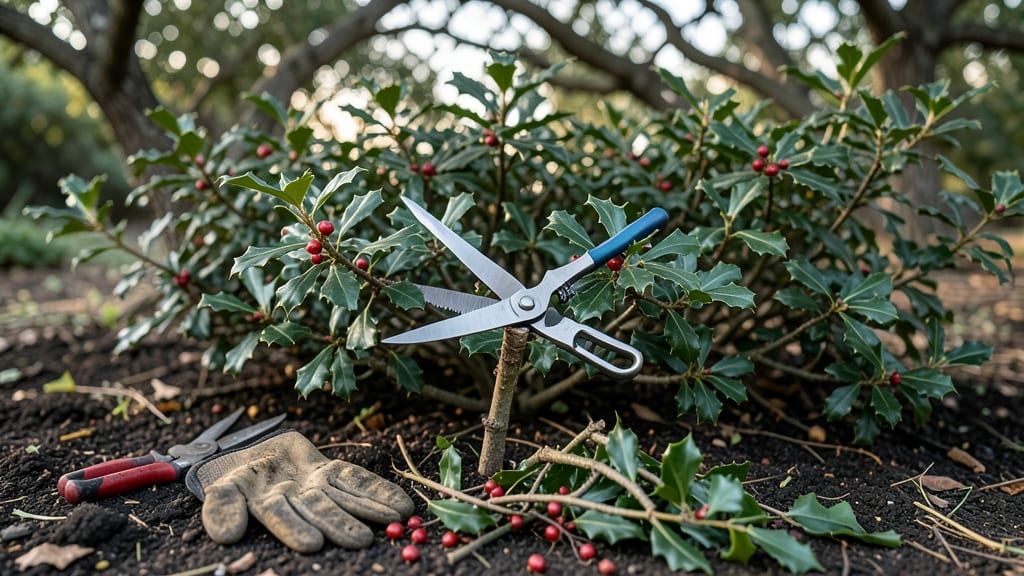
Pruning yaupon holly transforms it from a wild, thorny mess into a lush, sculpted showstopper. ✂️ I’ve spent years refining my approach—learning which cuts encourage dense growth and which ones invite pests.
The key is timing: prune lightly in late winter when the plant is dormant, then do light maintenance in early summer to shape without stressing the plant. You’ll need sharp pruners, gloves (those thorns are no joke), and a ladder if your holly’s over 6 feet tall.
The goal is to remove dead or crossing branches first, then thin out the center to improve airflow. Yaupons handle pruning well, but they’ll reward you with thicker foliage and fewer thorns if you prune strategically—not randomly.
After pruning, your holly will push out fresh, vibrant growth within 4-6 weeks. The berries (if female) stay longer on the branches, and the overall shape becomes neater and more balanced. Just avoid heavy pruning in fall—it invites winter dieback.
This method works for hedges, specimen plants, or even topiaries. The secret? Consistency. A little effort now means years of low-maintenance beauty—and fewer scratches from those pesky thorns.
📚 In This Guide
- What you need
- Instructions
- Tips and common mistakes
- Wrapping up and next steps
What you need
- ● Pruning shears: Bypass pruners (4–6-inch blades) for small branches. Choose sharp, stainless steel blades to avoid crushing stems.
- ● Loppers: 1 pair (8–12-inch cutting capacity) for thicker branches (½–1½ inches in diameter). Look for ratcheting or bypass styles.
- ● Pruning saw: 1 curved-tooth saw for branches >1½ inches thick. A folding or bypass saw works best.
- ● Gloves: Heavy-duty, thorn-resistant gardening gloves (leather or reinforced mesh). Yaupon holly is no joke—these will save your hands!
- ● Disinfectant: 70% isopropyl alcohol or a pruning sealant (like Tanglefoot Tree Wound Pruning Seal) to sterilize tools between cuts.
- ● Ladder or step stool: For reaching higher branches. Ensure it’s stable and rated for your weight.
- ● Trash bags or bucket: For collecting pruned branches and debris. A 5-gallon bucket with a lid keeps mess contained.
- ● Hand pruners: For precision trimming of tiny twigs or shaping delicate growth.
- ● Long-handled pruners: Extendable loppers (12–18 inches) for overhead branches without a ladder.
- ● Marking spray: Temporary paint or chalk to outline cuts before pruning (great for complex shapes!).
- ● Safety glasses: Protect your eyes from flying debris, especially when using a saw.
- ● Knee pads: For comfort if you’re kneeling or working on the ground.
- ● Check the weather forecast: Prune on a cloudy day or early morning to avoid stressing the plant with heat or sun.
- ● Gather local regulations: Some areas restrict pruning near power lines or in protected landscapes.
- ● Plan your pruning strategy: Sketch a rough outline of your desired shape or note areas needing attention.
- ● Have a cleanup plan: Dispose of pruned branches properly (check for local composting or mulching rules).
Instructions for pruning yaupon holly like a pro
Here's how I transform dense, thorny yaupon holly into a lush, manageable shrub—anytime of year.
✂️ Step 1: Assess Growth Patterns and Identify Target Branches
Start by examining the shrub for crossing branches (where two limbs rub together) and overcrowded growth (where stems grow too close). These are your first targets—they create weak points and encourage disease. I look for branches growing inward at 45-degree angles or less to the trunk or main stems, as these will never receive proper sunlight and become leggy.
Run your hand along the stems to feel for thorn clusters—these form where branches grow too densely. Mark these areas with a small piece of twine or a plant marker if you're working alone. The goal is to open up the center of the shrub by 30-40% to improve airflow and sunlight penetration. This prevents the holly from becoming a dense, impenetrable thicket.
✂️ Step 2: Prune for Structure and Airflow
Use clean, sharp bypass pruners to make cuts just above a bud or outward-facing leaf—never leave stubs. For larger branches over ½ inch thick, switch to loppers or a pruning saw to avoid tearing the bark. I always cut at a 45-degree angle to prevent water from pooling on the wound, which could rot the stem.
Remove one-third of the oldest wood first to rejuvenate the shrub. Focus on branches that are woody, brittle, or dead—they won’t regenerate and only take energy from healthier growth. After thinning, step back and visualize the shape. Yaupon holly responds well to natural, rounded forms, so avoid geometric cuts that look too manicured. The goal is to create a balanced silhouette where sunlight can reach the inner branches.
✂️ Step 3: Refine Shape and Encourage Bushier Growth
Now’s the time to shape the shrub. For a rounded form, cut back the tips of outward-growing branches by ¼ to ⅓ of their length to encourage branching. If you want a taller, narrower shape, trim the lower branches more aggressively while leaving the top longer. Always cut back to a bud or leaf node—never into the middle of a stem.
Watch for water sprouts (fast-growing, vertical shoots) and remove them entirely—they sap energy from the main structure. For thorn-heavy areas, prune just above a thorn-free lateral branch to redirect growth. After shaping, step back again and check for gaps in foliage—these are spots where you’ll need to thin additional branches to even out the canopy. A well-pruned yaupon holly should look full but not overcrowded, with sunlight visible through the center.
🌿 Step 4: Clean Up and Monitor for New Growth
Rake up all pruned branches and dispose of them in the trash—never compost diseased or thorny material. Sterilize your pruners with rubbing alcohol between cuts if you notice any signs of bacterial leaf spot (black or brown spots on leaves). After pruning, water the base of the shrub deeply to stress the plant less and encourage rapid recovery.
Within 4-6 weeks, you’ll see new growth at the pruned points—this is your reward for a job well done. If the holly doesn’t respond within 8 weeks, it may need fertilizer (a balanced 10-10-10 formula works well) or more aggressive pruning next season. Keep an eye out for new thorn clusters forming on the outer edges—these are signs you need to prune again in late winter to maintain a thorn-free zone.
⏰ Step 5: Schedule Year-Round Maintenance
Yaupon holly is one of the few shrubs you can prune anytime of year, but timing affects results. For spring pruning, focus on light shaping after the first flush of new growth appears—this encourages dense, bushy foliage. In summer, prune to control height and remove any dead or diseased branches immediately. Fall pruning is ideal for structural adjustments, as the shrub enters dormancy and heals quickly.
Winter is the best time for major pruning—the shrub is dormant, so it won’t bleed sap or stress. However, avoid pruning in freezing temperatures (below 32°F), as new cuts are vulnerable to cold damage. I like to prune in early spring (February-March) for a clean slate before the growing season kicks in. Mark your calendar now—pruning every 6-8 weeks keeps yaupon holly lush, thorn-free, and full of vibrant red berries.
Tips & tricks for pruning yaupon holly like a pro
Here's what transforms a chaotic yaupon holly into a thriving, manageable landscape staple—without the guesswork.
Tool Selection Matters: Your pruners are the most important tool, and using the wrong ones can damage your shrub. For branches under ½ inch thick, bypass pruners are ideal—they make clean cuts without crushing stems. For anything thicker, switch to loppers or a pruning saw to avoid tearing bark. I keep a pair of each sharpened and ready—dull tools create jagged cuts that invite disease. Always sterilize between cuts with rubbing alcohol, especially if you notice signs of bacterial leaf spot.
The 30-40% Rule for Airflow: When you're assessing the shrub's center in Step 1, aim to remove enough branches to open up the canopy by 30-40%. This might sound vague, but here's how to visualize it: After pruning, you should be able to see sunlight filtering through the center when standing directly in front of the shrub. If you can't, keep thinning until you achieve this balance. This airflow prevents fungal diseases and encourages even growth throughout the shrub.
Shape with Purpose: Yaupon holly responds beautifully to natural forms, but the key is intentional shaping. When refining in Step 3, focus on creating a rounded silhouette by cutting back outward-growing branches by ¼ to ⅓ of their length. This encourages bushier growth at the tips. For a more formal look, you can create a taller, narrower shape by trimming lower branches more aggressively while preserving the upper canopy. The secret is always cutting back to a bud or leaf node—this ensures new growth emerges in the right direction.
Seasonal Timing Secrets: While yaupon holly can be pruned anytime, the results vary dramatically by season. For spring pruning, wait until after the first flush of new growth appears to avoid removing potential flowering branches. In summer, focus on height control and disease management. Fall is perfect for structural adjustments as the plant enters dormancy. The best time for major pruning is early spring (February-March) when the shrub is dormant but temperatures are above 32°F. This gives the plant maximum time to recover before summer heat arrives.
Pro Tips for Pruning Yaupon Holly
- Here's what transforms a chaotic yaupon holly into a thriving, manageable landscape staple—without the guesswork.
- Tool Selection Matters: Your pruners are the most important tool, and using the wrong ones can damage your shrub.
- The 30-40% Rule for Airflow: When you're assessing the shrub's center in Step 1, aim to remove enough branches to open up the canopy by 30-40%.
Frequently asked questions
Got questions about pruning your Ilex vomitoria? You’re not alone! Here are answers to the most common concerns—from timing to tools—to keep your yaupon holly thriving without the stress.
When is the best time to prune yaupon holly?
Late winter or early spring (before new growth starts) is ideal for major pruning. Light shaping can happen year-round, but avoid heavy cuts in summer or fall—this can stimulate tender, frost-sensitive growth. Pro tip: If you must prune in summer, do it on a cloudy day to reduce stress.
Can I prune yaupon holly too much?
Yes! Over-pruning (removing more than 25-30% of foliage at once) weakens the plant and may reduce berry production. Yaupon holly is resilient but prefers gradual shaping. If you’ve already overdone it, focus on recovery pruning—light cuts to encourage regrowth.
How do I encourage bushier growth after pruning?
To promote density, prune just above a leaf node (where leaves meet the stem). Avoid cutting back to bare wood—this encourages leggy growth. After pruning, water deeply and fertilize lightly with balanced 10-10-10 to support new shoots. Bonus: Pinch back new growth in spring for even fuller foliage!
What should I do if my yaupon holly isn’t recovering after pruning?
If leaves yellow (chlorosis) or growth stalls, check for root stress, overwatering, or pests. Adjust care: prune less aggressively next time, ensure well-draining soil, and inspect for spider mites or scale. If roots are exposed, mulch lightly to protect them. Warning: Avoid pruning if the plant is already stressed (e.g., drought or disease).
Can I turn my yaupon holly into a tree instead of a shrub?
To create a tree form, prune all lower branches up to 3–4 feet from the ground, leaving 3–5 strong stems. Thin out crossing or weak branches annually. It’ll take 2–3 years to establish, but the result is a stunning, upright yaupon with a single-trunk look. Tip: Use a tree collar when removing large branches to prevent damage.
Wrapping up and next steps
Pruning your yaupon holly doesn’t have to be intimidating—it’s all about timing, technique, and a little patience! 🌿 With the right tools and a clear plan, you’ll enjoy a thorn-free, lush shrub that thrives year-round.
Start small, stay consistent, and soon your yaupon will reward you with vibrant growth and stunning shape.
Ready to take the next step? Grab your pruners and schedule your first pruning session—your perfectly shaped yaupon is waiting! 🌟