
Pruning
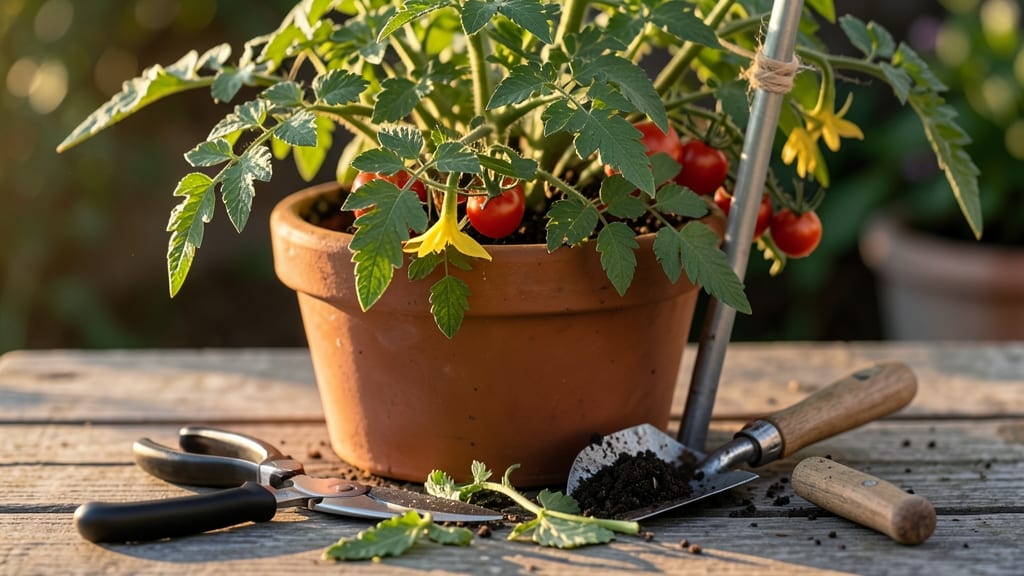
Pruning tomato plants in pots isn't just about trimming—it's the secret to doubling your harvest in limited space. 🌱 I learned the hard way that skipping this step leaves plants leggy and fruitless, but mastering three simple cuts transformed my container tomatoes from sad vines to productive powerhouses.
The key is timing: start when plants hit 12 inches tall, then repeat every 2-3 weeks through summer.
You only need sharp pruning shears and a clear goal: remove suckers (those little shoots between stems and leaves), trim lower leaves to improve air flow, and pinch back the main stem after the first flower cluster.
Container tomatoes need this pruning more than in-ground plants because crowded growth leads to disease and fewer fruits. My 5-gallon pots now produce 20+ tomatoes where I used to get five.
What you'll end up with is a bushy, sunlit plant that focuses energy on fruit instead of foliage. The first harvest comes 2-3 weeks earlier, and the tomatoes stay larger and sweeter because the plant isn't struggling to support excess leaves.
Plus, you'll avoid the heartbreak of blight or cracked fruit from overcrowding.
This method works for determinate (bush) and indeterminate (vining) varieties, though indeterminates need more frequent pruning. Even if you've killed tomatoes before, these cuts are foolproof—just follow the three-step system and watch your container garden thrive. Ready to turn those sad little pots into a tomato bonanza?
📚 In This Guide
- What you need
- Instructions
- Tips and common mistakes
- Wrapping up and next steps
What you need
- ● Pruning shears or sharp scissors: Clean, sterilized (bleach or rubbing alcohol works). Avoid dull tools—they crush stems instead of cutting cleanly.
- ○ Gloves: Heavy-duty gardening gloves (optional but recommended to protect against thorns and sap).
- ● Disinfectant (bleach or hydrogen peroxide): 1 part bleach to 9 parts water (for sterilizing tools between cuts).
- ○ Small container or bucket: For collecting pruned stems (optional but handy for composting).
- ● Plant tie or soft twine: To support the main stem if needed (especially for indeterminate varieties).
- ● Garden twine or stakes: 4-6 feet tall (for trellising if your pot allows).
- ● Compost bin or bag: For disposing of diseased or pest-infested prunings.
- ● Magnifying glass: (For spotting tiny pests or early signs of disease.)
Step-by-step guide to pruning potted tomato plants
Here’s how I shape my potted tomatoes for bigger yields—without stressing the plants.
🌱 Step 1: Identify and Remove Suckers Early
Suckers are the small shoots that grow between the main stem and branches. These compete for energy, so I remove them when they’re no bigger than a pencil eraser—that’s usually 2-3 weeks after transplanting. Pinch them off with your fingers or snip with clean pruning shears just above the leaf where they meet the stem.
I check for suckers once a week during active growth. The key is consistency—waiting too long means the plant wastes energy on unnecessary growth. If you miss a sucker, don’t panic; it’ll still produce fruit, just not as efficiently. Focus on the main stem and primary branches first.
✂️ Step 2: Prune Lower Leaves for Airflow
Start 3-4 weeks after transplanting when the plant reaches 18-24 inches tall. Remove the bottom 2-3 sets of leaves—these are the oldest and closest to the soil. Use sharp pruners to cut just above the leaf stem to avoid tearing. This prevents soil-borne diseases and improves airflow around the fruit.
I stop pruning lower leaves when the first flower cluster appears. Beyond that, you risk exposing too much stem to sunburn. If your plant is leggy, leave more leaves on the lower stem to support photosynthesis. The goal is balance—enough foliage for energy, but not so much that it chokes the plant.
☀️ Step 3: Top the Plant at the Right Height
When your potted tomato reaches the top of its container (usually 4-5 feet for standard varieties), it’s time to top it. Use clean pruners to cut the main stem just above a leaf node—this encourages bushier growth and redirects energy to fruit production. I do this late in the day to reduce stress on the plant.
After topping, watch for new lateral branches growing from the cut. These will become your new main stems. Prune these branches to 2-3 leaves above the last flower cluster to keep the plant compact. In pots, overgrowth leads to crowded fruit and poor air circulation—so less is more here.
🌿 Step 4: Maintain Pruning Through Harvest
Continue removing suckers throughout the growing season, but focus on fruit-bearing branches after the first harvest. Prune any diseased or yellowing leaves immediately to prevent spread. I also trim back any branches growing toward the center of the plant—this ensures light and air reach all fruit.
By late summer, slow down pruning. The plant is directing energy to ripening fruit, not new growth. Stop cutting after mid-August in most climates, unless you’re in a warm-weather zone. Over-pruning late in the season can delay ripening or reduce yield. Always prune early in the morning when the plant is hydrated and less stressed.
Tips & tricks for pruning potted tomato plants
These simple tricks will help you shape your tomato plants like a pro—without sacrificing yield or stressing your plants.
Timing is Everything: The 2-3 week mark after transplanting is critical for removing suckers. This is when they're still small enough to pinch off without causing stress. I check for new suckers once a week during active growth, always using clean pruners to avoid introducing diseases. Confession: I skipped this step for years and wondered why my plants never produced well—turns out, those suckers were stealing all the energy!
Pruning Technique Matters: When removing the bottom 2-3 sets of leaves at 3-4 weeks, make clean cuts just above the leaf stem. This prevents tearing and helps the plant heal faster. I also recommend stopping lower leaf pruning when the first flower cluster appears—this prevents sunburn on exposed stems. The goal is balance: enough foliage for photosynthesis, but not so much that it blocks airflow to developing fruit.
Topping Strategy: When your plant reaches the top of its container (4-5 feet), topping redirects energy to fruit production. I always do this late in the day to minimize stress. After topping, watch for new lateral branches and prune them to 2-3 leaves above the last flower cluster—this keeps the plant compact and prevents overcrowding of fruit in pots.
Seasonal Adjustments: By mid-August, slow down pruning entirely. The plant is focusing on ripening fruit, not new growth. I've learned the hard way that over-pruning late in the season can delay ripening or even reduce yield. Always prune early in the morning when plants are hydrated and less stressed from heat.
Pro Tips for Pruning Tomato Plants In Pots
- These simple tricks will help you shape your tomato plants like a pro—without sacrificing yield or stressing your pla...
- Timing is Everything: The 2-3 week mark after transplanting is critical for removing suckers. This is when they're st...
- Pruning Technique Matters: When removing the bottom 2-3 sets of leaves at 3-4 weeks, make clean cuts just above the l...
Frequently asked questions
Got questions about pruning tomato plants in pots? You’re not alone—this step can feel tricky, but with the right know-how, you’ll boost your harvest like a pro! Here are answers to the most common concerns to keep your potted tomatoes thriving.
When is the best time to start pruning tomato plants in pots?
Prune your potted tomatoes after they’ve developed their first 5-6 sets of true leaves (about 3-4 weeks after transplanting). For indeterminate varieties, prune regularly throughout the growing season to encourage air circulation and fruit production. Skip pruning until later for determinate (bush) tomatoes—they don’t need it!
How do I know which stems or leaves to cut?
Focus on removing:
- Suckers: Small shoots growing between the main stem and branches (cut with clean shears).
- Lower leaves: Trim any touching the soil to prevent disease.
- Yellow/damaged leaves: These drain energy—snip them off.
Leave 6-8 main stems (indeterminate) or all stems (determinate) to maximize fruit.
Can I prune tomato plants in pots during hot or cold weather?
Avoid heavy pruning during heatwaves (above 90°F) or cold snaps (below 50°F), as it stresses plants. Opt for light trimming on mild days (60–80°F) to minimize shock. If pruning in extreme heat, do it early morning or evening and water thoroughly afterward.
Will pruning reduce my tomato yield in pots?
Not if done right! Pruning increases yield by directing energy to fruit production and improving airflow (which prevents disease). However, over-pruning can backfire—never remove more than 1/3 of the plant’s foliage at once. For potted tomatoes, less aggressive pruning (removing only suckers and lower leaves) often works best due to limited space.
What should I do if my potted tomato plant looks weak after pruning?
Weakness is normal for a day or two, but act fast if you see:
- Wilting beyond recovery (24+ hours
- Yellowing leaves: Could signal nutrient deficiency—feed with a balanced fertilizer (like 10-10-10).
- Pests: Inspect for aphids or spider mites (spray with neem oil if needed).
Keep soil moist but not soggy and place pots in partial shade for a few days to help recovery.
Pro Tip:
Use a sterilized pair of pruners (wipe with rubbing alcohol) to avoid spreading disease. For potted tomatoes, prune every 1-2 weeks during peak growth to stay ahead of suckers!
Wrapping up and next steps
Pruning your potted tomato plants might seem daunting, but with the right cuts—removing suckers, pruning leaves, and trimming the top—you’ll unlock bigger, healthier fruit and a thriving plant! 🌱 The key is consistency and confidence: a little effort now means a bountiful harvest later.
Ready to see your tomatoes flourish?
Your next step? Grab those shears and start pruning—one strategic cut at a time. Watch your plants reward you with juicy, vine-ripened tomatoes all season long! 🍅