Pruning
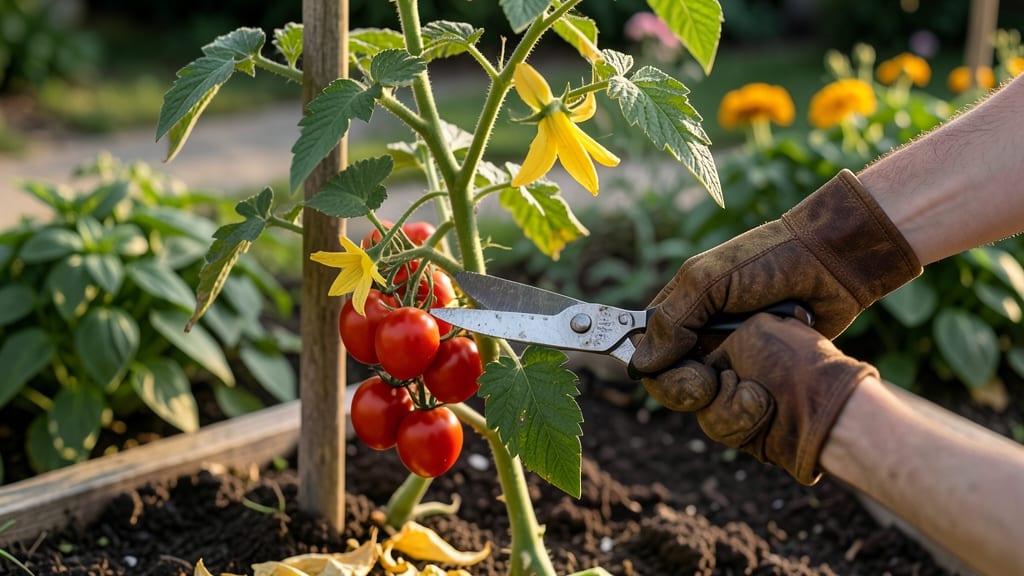
Pruning tomato leaves isn't just trimming—it's the secret to bigger, sweeter fruit and healthier plants. 🌱 I spent years watching my tomatoes struggle with disease and poor yields until I learned these three cuts that redirect energy where it matters most: to the fruit, not the foliage.
The first cut removes lower leaves that touch the soil, preventing rot and pests. Next, thin crowded stems to improve airflow, which cuts down on fungal diseases like early blight.
Finally, prune suckers—those little shoots between the stem and branches—to keep the plant focused on producing fruit instead of extra growth. It takes about 10 minutes per plant and makes all the difference.
What you'll end up with is a tomato plant that produces 30-50% more fruit than unpruned plants, with fewer diseases and stronger stems. The key is timing—prune in the morning when the plant is dry, and always use clean, sharp tools to avoid tearing the stems.
Works for both indeterminate (vining) and determinate (bush) varieties, though the approach differs slightly. Let's get those plants ready for a bumper crop!
📚 In This Guide
- What you need
- Instructions
- Tips and common mistakes
- Wrapping up and next steps
What you need
- ● Pruning shears or sharp bypass pruners – Look for sterilized, sharp blades (5-7 inches long) to avoid damaging stems or spreading disease.
- ● Clean, sharp scissors or garden knives – For smaller cuts or when shears aren’t ideal (e.g., trimming suckers).
- ● Rubbing alcohol (70% or higher) or bleach solution – To sterilize tools between cuts (1 part bleach to 9 parts water).
- ○ Gloves (optional but recommended) – Nitrile or leather gloves protect against thorns and sap irritation.
- ● Garden twine or soft plant ties – For staking or securing pruned plants if needed (1-2 rolls, ¼-inch width).
- ● Disposable bag or bucket – For collecting pruned leaves and debris (5+ gallon capacity).
- ● Hose with nozzle – To rinse tools and clean cuts post-pruning.
- ○ Plant growth regulator (optional) – Spray like Seaweed Extract to boost recovery after pruning.
- ● Sun hat & sunscreen – Because even tomato pruners need shade breaks!
- ● Notebook & pen – To track pruning dates and plant progress.
How to prune tomato leaves for bigger harvests
Here's the simple, science-backed method I use every season to turn floppy tomato plants into fruit factories.
✂️ Step 1: Remove Suckers Early and Often
Suckers are those little shoots growing in the crotch between the main stem and branches. These energy vampires steal nutrients from your fruit. I start checking for them when plants reach 12-18 inches tall—that's when they first appear. Use clean, sharp pruners to snip them off at the base, just above where they join the main stem.
Don't wait until suckers get big—tiny ones are easier to spot and remove. I like to do this on a dry morning when the plants aren't stressed. Watch for new suckers appearing every 1-2 weeks—they'll keep coming until flowering starts.
🌿 Step 2: Prune Lower Leaves for Airflow
Start when your plants hit 2 feet tall and remove the bottom 6-8 inches of leaves. This might seem counterintuitive, but those lower leaves block airflow and trap moisture where fungal diseases like early blight love to party. Use your fingers to gently twist leaves off—no need for pruners here.
Keep removing leaves that touch the soil as the plant grows. You're aiming for a clean stem for the bottom 12 inches of the plant. This also helps prevent soil-borne diseases from climbing up the stem. I always do this after watering when the plants are turgid and less likely to break.
☀️ Step 3: Thin Flower Clusters for Larger Fruit
When your tomato plant starts flowering, you'll see clusters of tiny blossoms. Leave only 3-4 flowers per cluster—the rest can be gently plucked by hand. This might seem wasteful, but it forces the plant to put all its energy into developing fewer, larger tomatoes instead of many small ones.
I focus on the first few flower clusters that appear. You'll know you're doing it right when you see small green fruits starting to swell within 2-3 weeks. Don't worry about removing flowers from the very top of the plant—those will set fruit later in the season when the plant has more energy.
⏰ Step 4: Stop Pruning When Fruit Sets
Once you see tomatoes the size of quarters starting to form, it's time to back off. Heavy pruning now stresses the plant when it needs all its energy focused on fruit development. I switch to just removing any diseased or yellowing leaves and maybe a few suckers if they're competing with existing fruit.
This is where many gardeners make the mistake of over-pruning. Your plant will tell you when it's had enough—look for leaves curling at the edges or new growth slowing down. That's your cue to let the plant focus on ripening what's already there rather than growing more foliage.
Tips & tricks for pruning tomato leaves
Here's what nobody tells you—these little tweaks make all the difference in your tomato harvest.
Timing is Everything: I've learned the hard way that pruning at the wrong time can backfire. In Step 1, when removing suckers, focus on dry mornings—this prevents stressing the plant and makes those tiny shoots easier to spot. For Step 2, always prune after watering when leaves are turgid (firm). This reduces breakage when you twist off those lower leaves. The key is working with the plant's natural rhythms, not against them.
The Right Tools Matter: While clean, sharp pruners work for suckers, your fingers are perfect for lower leaves in Step 2. For flower thinning in Step 3, I find a pair of clean nail clippers works best—they let me pluck blossoms quickly without damaging the stem. Sterilize your tools with rubbing alcohol between plants to prevent spreading diseases like early blight.
Visual Cues for Success: When you're thinning flower clusters in Step 3, look for small green fruits starting to swell as your confirmation. This tells you the plant is putting energy where it counts. For Step 4, watch for leaves curling at the edges—this is your plant's way of saying "I've had enough pruning!" These visual signals help you adjust your timing perfectly.
Seasonal Adjustments: In cooler climates, you might need to extend the pruning window slightly. If your growing season is short, don't stop pruning until you see tomatoes the size of quarters AND nighttime temperatures stay consistently above 55°F. This gives your plants enough time to recover before cold sets in.
Pro Tips for Pruning Tomato Leaves
- Here's what nobody tells you—these little tweaks make all the difference in your tomato harvest.
- Timing is Everything: I've learned the hard way that pruning at the wrong time can backfire. In Step 1, when removing...
- The Right Tools Matter: While clean, sharp pruners work for suckers, your fingers are perfect for lower leaves in Ste...
Frequently asked questions
Got questions about pruning tomato leaves?
You’re not alone! Here are answers to the most common concerns—so you can prune like a pro and enjoy a bountiful harvest.
When is the best time of day to prune tomato leaves?
Prune in the early morning when plants are hydrated and temperatures are mild. Avoid pruning in the heat of the day—it stresses plants and slows recovery. If you must prune later, do so before sunset to give leaves time to heal.
How often should I prune tomato plants?
Prune weekly or bi-weekly during the growing season (spring to early summer). Focus on removing suckers (side shoots) and lower leaves as they appear. Once fruit sets, shift to light maintenance—just trim dead or diseased leaves to keep airflow strong.
Will pruning tomato leaves reduce my yield?
Not if done correctly! Pruning increases yield by directing energy to fruit production. Over-pruning (removing too many leaves) can stress plants, but following the 3-key cuts (removing suckers, lower leaves, and diseased foliage) ensures a healthier, more productive plant.
Can I use scissors or should I pinch suckers by hand?
Both work, but hand-pinching is gentler and faster for small suckers. Use clean, sharp pruners for larger stems or diseased leaves to avoid tearing tissue. Sterilize tools with rubbing alcohol between cuts to prevent spreading disease.
What if my tomato plant looks stressed after pruning?
Stress is normal at first! Water deeply after pruning and avoid fertilizing for 1–2 weeks to help recovery. If leaves yellow or wilt excessively, check for over-pruning or pests. Shade the plant temporarily if temperatures soar—it’ll bounce back in 7–10 days.
Pro Tip: Save those clippings!
Drop pruned leaves around the base of the plant as mulch to retain moisture and nutrients. Just avoid piling them too thickly—keep it light and airy to prevent rot.
Wrapping up and next steps
Pruning your tomato plants isn’t just about tidying up—it’s a game-changer for bigger, healthier fruit! By focusing on the 3 key cuts (suckers, lower leaves, and diseased foliage), you’ll improve airflow, sunlight exposure, and energy flow to where it matters most: your tomatoes. 🍅✨
Now that you’re armed with the know-how, grab those pruners and get to work! Start small—even a few strategic cuts can make a difference. Next up? Keep an eye on your plants weekly, adjust as they grow, and watch your harvest thrive. Happy pruning!