
Pruning
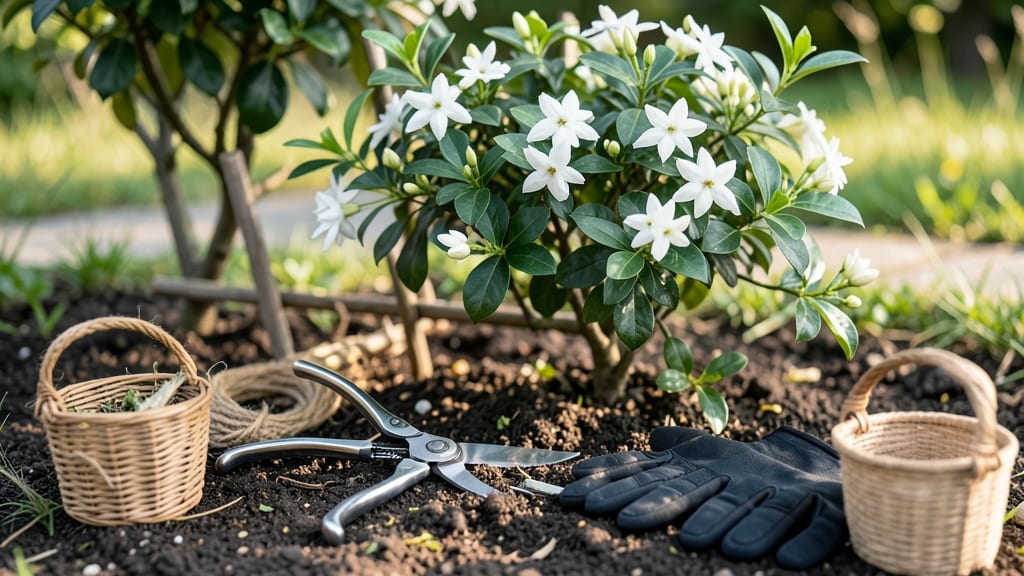
Pruning jasmine shrubs boosts growth and fragrance by trimming dead branches, refining the plant's shape, and improving airflow. Time your cuts for late winter or early spring before new shoots appear, using sterilized shears to make clean cuts just above leaf nodes.
Timing matters most with jasmine plants—pruning during dormancy (late winter/early spring) prevents stressing the shrub while it's still recovering from winter. 🌿 The key is to remove no more than one-third of the plant at once, as aggressive cuts can reduce flowering.
I always sterilize my shears with rubbing alcohol between cuts to prevent spreading disease, especially when working with multiple plants. Jasmine responds best to selective thinning rather than heavy shearing, which helps maintain that signature sweet fragrance while encouraging bushier, healthier growth.
For best results, focus on removing crossing branches and those growing inward—this opens up the center for sunlight and air movement. If your jasmine isn't flowering as expected, check for overcrowding or nutrient deficiencies, as these can limit blooms.
Remember, jasmine is forgiving but benefits from regular light maintenance rather than sporadic heavy pruning.
💡 In This Article
- Best Times and Techniques for Pruning Jasmine Shrubs
- Common Mistakes to Avoid When Pruning Jasmine Plants
Best times and techniques for pruning jasmine shrubs
Jasmine thrives when pruned during its dormant phase, typically between late winter (February) and early spring (March) in most climates. This timing aligns with the plant's natural cycle, allowing it to recover before summer's heat stress.
The science behind this is simple: dormant plants have stored energy reserves, making them less vulnerable to shock. Pruning at this stage also prevents disturbing new growth, which could be damaged by late frosts.
If you live in warmer regions, you might extend this window until early April, but always avoid pruning after buds form—this can reduce flowering by up to 40%. 🌸
Identifying branches to remove is crucial. Dead wood appears brown, brittle, and hollow when cut open, while healthy branches are green and firm. Look for crossing or rubbing branches—these compete for sunlight and can create wounds that attract pests.
Use your fingers to gently test branch flexibility: healthy growth bends slightly, while dead branches snap. For shaping, focus on thinning cuts (removing entire branches at the base) rather than heading cuts (trimming back current growth).
Thinning improves airflow, which reduces fungal diseases like powdery mildew—a common issue in dense jasmine foliage.
The cutting technique itself makes a difference. Make cuts at a 45-degree angle, about 1/4 inch above a leaf node (the bump where leaves attach). This angle prevents water from pooling on the cut, reducing rot risk.
Use clean, sharp shears—dull tools crush stems, creating larger wounds that heal poorly. For larger branches over 1/2 inch thick, use loppers and seal cuts with pruning sealant to minimize sap loss.
Pro tip: Prune on a dry, overcast day to reduce stress from sun exposure during recovery. 🌿
Jasmine responds differently to pruning based on its variety. Star jasmine (Trachelospermum jasminoides) is more forgiving and can handle light pruning year-round, while Arabian jasmine (Jasminum sambac) needs precise timing to maintain heavy blooming.
Over-pruning can reduce next year's flowers by 30-50%, as the plant diverts energy to regrowth instead of bud formation. If your jasmine isn't flowering well, check for overcrowded branches—these often block sunlight from reaching inner growth zones.
A good rule of thumb is to never remove more than one-third of the plant's foliage in a single session.
After pruning, monitor your jasmine for 3-4 weeks to ensure healthy regrowth. New shoots should appear within 2-3 weeks if the cuts were made correctly. If you notice yellowing leaves or slow growth, your cuts may have been too severe or made at the wrong time.
For container-grown jasmine, prune slightly more aggressively to encourage bushier growth, but always leave enough foliage to maintain photosynthesis. The goal is to shape the plant while preserving its natural fragrance—jasmine's signature trait. 🌟
One advanced technique is selective flowering pruning. If your jasmine blooms irregularly, prune just after the first flush of flowers in spring. This encourages a second, more robust blooming cycle in late summer.
For example, Jasminum officinale (common jasmine) often benefits from this method, producing 20-30% more flowers when pruned this way. Just remember: patience is key—jasmine may take 1-2 years to fully recover from heavy pruning, but the long-term benefits for fragrance and health make it worthwhile.