
Pruning
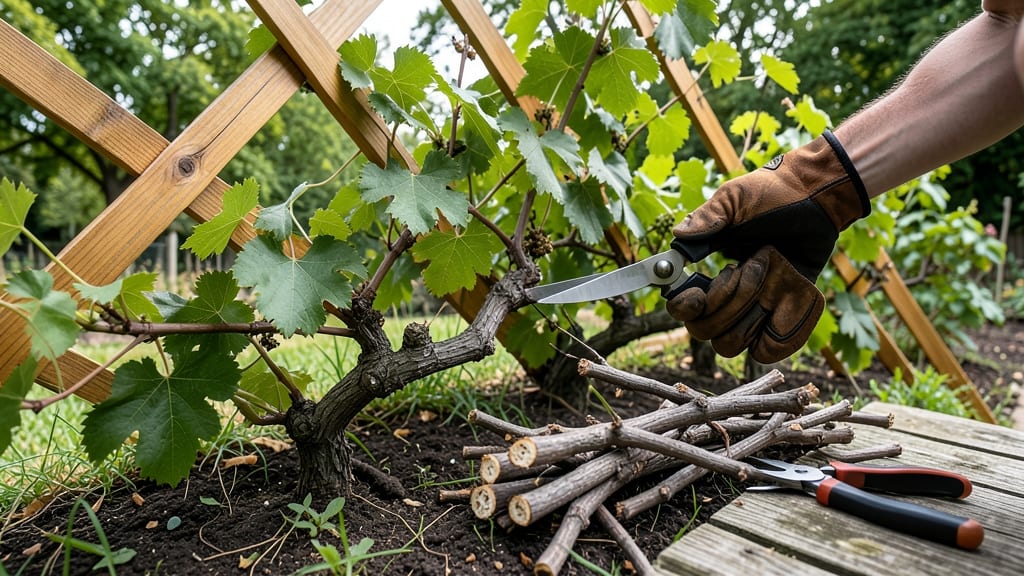
Pruning grape vines in spring isn't just about cutting back—it's about setting up your vines for a bigger harvest and healthier growth all season. 🌿 The best time depends on your climate zone, but most gardeners should wait until after the last frost when buds swell but haven't broken yet.
This timing ensures you remove dead wood while keeping the vine's energy focused on new growth, not winter recovery.
In cooler zones (like 5-7), prune in late March to early April when temperatures stay above freezing. Warmer climates (zones 8+) can start as early as February, but avoid pruning too soon—you risk encouraging early budding that could get nipped by late frosts.
The goal is to shape the vine into a balanced canopy with 4-8 main canes, each with 8-12 buds, for optimal fruit production.
What you'll notice after pruning is stronger canes that support heavier fruit loads and fewer disease issues from crowded, shaded wood. The vine redirects energy to new shoots and fruit clusters, leading to sweeter grapes and fewer rot problems.
Just remember: clean cuts heal faster, so use sharp pruners and sterilize them between vines to prevent spreading disease.
This method works for table grapes, wine grapes, and even muscadines—just adjust the timing slightly based on your local frost dates. Once you master the spring prune, your vines will reward you with years of reliable harvests and minimal winter dieback. Ready to get started?
📚 In This Guide
- What you need
- Instructions
- Tips and common mistakes
- Wrapping up and next steps
What you need
- ● Pruning shears: Bypass pruners (for clean cuts) or anvil pruners (for thicker canes). Choose sharp, high-quality tools (e.g., Felco or Corona) to avoid crushing stems.
- ● Loppers: 18-24 inch for thicker canes (3/4" diameter or larger). Look for ratcheting or bypass-style for precision.
- ○ Pruning saw: Hand saw with 7-8 TPI blade for stubborn, woody canes (optional but handy for mature vines).
- ● Disinfectant: 70% isopropyl alcohol or bleach solution (1 part bleach : 9 parts water) to sterilize tools between cuts and prevent disease spread.
- ● Gloves: Heavy-duty gardening gloves (e.g., Mechanix or Dr. McGill’s) to protect against thorns and sap.
- ● Work boots or sturdy shoes: Closed-toe, ankle-supporting for stability on uneven terrain.
- ● Pruning sealant: Tree wound paint or pruning wax (e.g., Tanglefoot Tree Wound Pruning Seal) to seal large cuts (controversial—skip if your climate is humid or rainy).
- ● Tarp or drop cloth: To protect the ground beneath your workspace and make cleanup easier.
- ● Measuring tape or ruler: 12-24 inch for marking cane lengths (critical for balanced growth!).
- ● Notebook & pen: To sketch your vine’s structure or note pruning decisions for future reference.
- ● Safety glasses: If working near your face or in windy conditions (sap or debris can fly!).
- ● Know your grapevine variety: Research if your vines are caned (e.g., Concord, Cabernet) or head-trained (e.g., Muscadine)—pruning methods vary!
- ● Check the weather: Aim for a dry, mild day (50–70°F) with no rain forecasted for 24–48 hours post-pruning.
- ● Review last year’s growth: Examine canes for disease, dead wood, or fruit clusters to inform your cuts.
- ● Clear the area: Remove weeds, debris, or competing plants within a 3-foot radius of the vine base.
Step-by-step guide for pruning grape vines in spring
Timing matters most—prune too early and you risk frost damage; too late and growth slows. Here's how to do it right for your climate zone.
⏰ Step 1: Determine Your Climate Zone and Prune Window
Grape vines need dormancy for proper pruning, so wait until after the last frost when buds begin to swell but before new growth appears. In zones 3-6, aim for late April to early May. Warmer zones (7-9) can prune as early as February, but never when temperatures dip below 40°F—new cuts heal poorly in cold.
Check for bud swell by gently squeezing a cane—you'll feel tiny bumps under the bark. If buds are still tight and dormant, wait a week. If they're already green and puffy, you've missed the window. I like to mark my calendar with local frost dates and prune 2-3 weeks after the last expected frost.
✂️ Step 2: Gather Tools and Prepare for Clean Cuts
Use only sharp pruners (bypass or anvil) and a handsaw for thick canes. Disinfect tools with rubbing alcohol between cuts to prevent disease spread. I keep a bucket of soapy water nearby to clean tools mid-pruning—grape vines are susceptible to fungal infections through open wounds.
Wear gloves to protect against thorns and sap. Clear the area around the vine of debris and old leaves, then tie back nearby branches to create a clean workspace. This isn't just about aesthetics—it helps you see the vine's structure clearly and spot dead wood or diseased canes.
🌿 Step 3: Identify and Remove Last Year's Fruit-Bearing Canes
Look for 1-year-old canes (last year's growth) that produced fruit—they'll be thicker and have visible scars where fruit clusters grew. These canes are now 3-5 years old and should be cut back to the ground. Keep only 2-4 of the strongest, most vigorous canes per vine, spacing them evenly around the center.
Make cuts just outside the bud at a 45-degree angle, leaving a 1/8-inch stub. This prevents water from pooling on the cut, which can rot the vine. If a cane is thinner than a pencil or shows signs of disease (black spots, oozing sap), remove it entirely—don't hesitate, even if it's young.
🌱 Step 4: Prune Remaining Canes to Encourage Fruit Production
For the canes you're keeping, trim back to 8-12 buds from the base. Count buds from the bottom up—each bud has the potential to grow into a new cane or fruit cluster. I like to leave 6-8 buds for table grapes and 10-12 buds for wine grapes, as they produce more fruit per cane.
Remove any suckers (shoots growing from the base or roots) and water sprouts (vertical growth from the trunk). These divert energy from fruit production. Cut them off at the base with clean pruners. After pruning, step back and admire your vine—it should look like an open umbrella with evenly spaced canes radiating outward.
💧 Step 5: Clean Up and Apply Post-Pruning Care
Rake up all pruned canes and dispose of them in the trash (not compost)—they can harbor diseases. Water the vine deeply to help it recover from the stress of pruning. I give my vines 1 gallon of water per inch of trunk diameter immediately after pruning, then again in 7-10 days to encourage new growth.
Apply a 2-inch layer of mulch around the base (but not touching the trunk) to retain moisture and regulate soil temperature. This is also a good time to fertilize lightly with a balanced 10-10-10 formula to support new growth. Avoid heavy fertilization—you want the vine to focus on establishing canes, not leaves.
Tips & tricks for pruning grape vines in spring
Timing and precision are everything when pruning grape vines—here's how to avoid common mistakes and get it right the first time.
Climate Zone Timing: The 2-3 week window after your last frost date is critical. I've missed this window twice and ended up with stunted growth, so don't rush! Check your local frost dates online, then add those weeks to your calendar. For zones 3-6, late April to early May is ideal, but if you're in zones 7-9, you can start as early as February. The key is to prune when buds are just starting to swell—not when they're still tight, and definitely not when they've already burst open.
Tool Preparation: Sharp tools make all the difference. I learned this the hard way after struggling with dull pruners that crushed canes instead of making clean cuts. Disinfect your tools between each vine with rubbing alcohol—this prevents spreading fungal diseases that can devastate your crop. Keep a small bucket of soapy water nearby to clean tools mid-pruning, especially if you're working with multiple vines. This might seem like overkill, but trust me, it's worth it for healthy vines.
Bud Counting Strategy: When trimming your remaining canes to 8-12 buds, count from the base upward. Each bud represents potential fruit clusters or new canes, so accuracy matters. For table grapes, aim for 6-8 buds—they produce smaller clusters but sweeter fruit. Wine grapes can handle 10-12 buds since they're bred for quantity over individual fruit size. I mark my target bud count with a small piece of tape on the cane to avoid miscounting.
Post-Pruning Care: That first deep watering after pruning is non-negotiable. I give my vines 1 gallon of water per inch of trunk diameter immediately after cutting, then again in 7-10 days. The mulch layer helps retain moisture, but don't pile it against the trunk—keep it 2 inches away to prevent rot. Light fertilization with a 10-10-10 formula at this stage gives the vine just enough nutrients to focus on establishing new canes rather than leaves.
Pro Tips for Pruning Grape Vines In Spring
- Timing and precision are everything when pruning grape vines—here's how to avoid common mistakes and get it right the first time.
- Climate Zone Timing: The 2-3 week window after your last frost date is critical.
- Tool Preparation: Sharp tools make all the difference.
Frequently asked questions
Got questions about pruning grape vines in spring? You’re not alone! Here are some of the most common concerns—and their answers—to help you prune with confidence. Whether you're a first-timer or a seasoned gardener, these FAQs will clear up doubts and keep your vines thriving.
When is the exact best time to prune grape vines in spring?
Prune grape vines after the last hard frost but before buds swell (typically late winter to early spring). In warmer climates (zones 8-10), prune in February–March. In colder zones (4-7), wait until March–April when temps consistently stay above freezing. Pro tip: Check local frost dates to avoid damaging tender new growth!
What if I missed the ideal pruning window? Can I still do it?
Yes, but act quickly! If buds have already swollen or leaves are emerging, prune only what’s necessary to reduce stress. Avoid heavy cuts—focus on removing dead wood and shaping the vine. Late pruning may reduce fruit yield, but it’s better than leaving the vine unpruned. Think of it as damage control!
How do I know if I’m pruning too aggressively?
Over-pruning leaves grape vines with fewer than 8–12 buds per cane (varies by variety). Signs of over-pruning include weak canes, sparse foliage, or no fruit. Aim to leave 2–4 mature canes per vine and 12–24 buds total. If in doubt, err on the side of caution—vines bounce back better with a little extra wood!
Will pruning in spring affect my grape yield this year?
Yes, but not negatively if done correctly! Pruning in spring stimulates new growth and fruit production for the current season. However, if you prune too late (after buds break), you may see delayed or reduced yields. For maximum fruit, pair spring pruning with summer thinning (removing excess clusters) to improve size and quality.
Can I use hedge shears instead of pruning shears for grape vines?
Not ideal! Hedge shears crush stems and leave jagged cuts, which can invite disease and slow healing. Use sharp, bypass pruners (or loppers for thicker canes) to make clean cuts at a 45-degree angle, just above a bud. Bonus: Disinfect tools with rubbing alcohol between cuts to prevent spreading pests.
What should I do if I see signs of disease or pests after pruning?
Act fast! Remove and destroy (don’t compost) any infected canes or leaves. Treat vines with a copper fungicide (for mildew) or neem oil (for pests) as a preventive measure. Keep the area around vines weed-free and ensure good airflow to reduce humidity—disease thrives in damp conditions.
Wrapping up and next steps
Pruning grape vines in spring isn’t just about trimming—it’s about setting the stage for a bountiful harvest. By following climate-zone timing and proper techniques, you’ll encourage stronger canes, better airflow, and healthier fruit.
Whether you’re a seasoned gardener or just starting out, every snip brings you closer to that perfect glass of homegrown wine or juicy table grapes!
Ready to take the next step? Mark your calendar for your zone’s ideal pruning window, gather your tools, and roll up your sleeves—your future vines (and taste buds) will thank you! 🍇✨