
Pruning
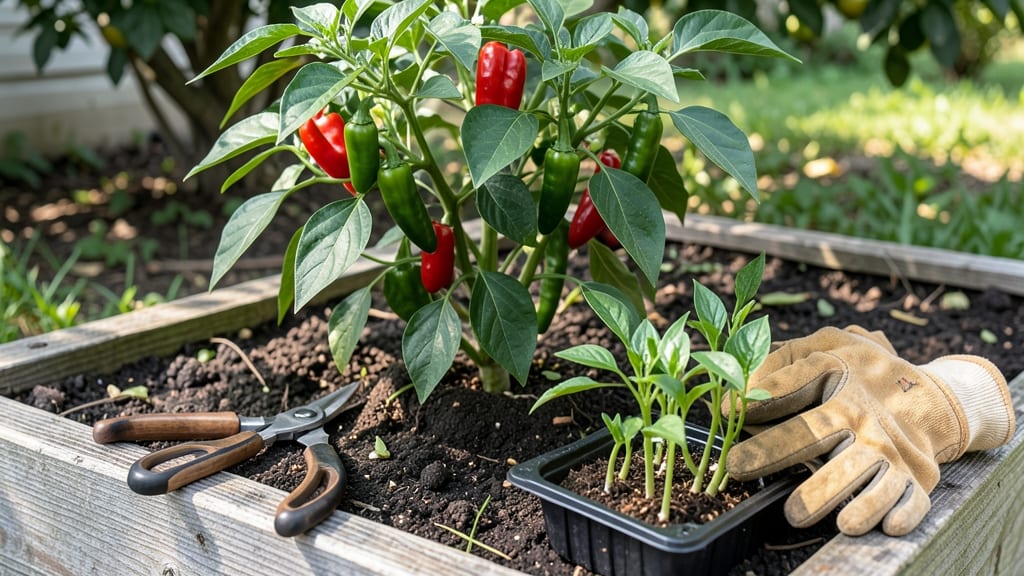
Pruning chilli plants turns scraggly stems into fruit-heavy bushes that produce all season long. 🌿 I learned the hard way—skipping pruning meant fewer peppers and more leggy, weak plants. The right cuts encourage bushier growth, better air circulation, and a harvest that keeps coming.
You only need sharp scissors or pruning shears, a clean cutting surface, and about 15 minutes twice a month. Focus on removing the first few leaves and any dead or yellowing stems.
This isn’t about making your plant look perfect—it’s about redirecting energy to where it matters most: more flowers, more peppers.
Within 2-3 weeks, you’ll see new side shoots forming where you made cuts. These branches become the powerhouses of your plant, each one capable of producing dozens of peppers.
The secret is consistency—prune lightly but regularly, and your plant will reward you with a harvest that lasts from summer through fall.
Works for all chilli varieties, whether you’re growing sweet bell peppers, fiery habaneros, or anything in between. The same principles apply whether you’re pruning in pots or the ground—just adjust the timing for your local climate. Let’s get those plants producing!
📚 In This Guide
- What you need
- Instructions
- Tips and common mistakes
- Wrapping up and next steps
What you need
- ● Sharp bypass pruners – Choose a pair with clean, stainless-steel blades (4-6" length) to avoid crushing stems. Example: Felco F-2 or Gonicc pruners.
- ● Sterilized scissors or shears – For delicate trimming of smaller stems or leaves (5-7" blades). Tip: Wipe with rubbing alcohol before and after use!
- ● Gloves (cut-resistant) – Protect your hands from thorns and sap. Opt for nitrile-coated or heavy-duty gardening gloves.
- ● Disinfectant (70% isopropyl alcohol or bleach solution) – 1 part bleach to 9 parts water to sterilize tools and prevent disease spread.
- ○ Pruning saw (optional but helpful) – For thicker stems (over ½ inch). A folding pruning saw with fine teeth works best.
- ● Compost bin or bag – To collect pruned material for composting (avoid diseased plants).
- ● Rooting hormone – Speeds up growth if you’re propagating cuttings (e.g., Dyna-Gro Foliage Pro).
- ● Plant ties or soft twine – For supporting heavy branches post-pruning.
- ● Spray bottle with water – Keeps plants hydrated during and after trimming.
- ● Label markers – If you’re experimenting with different pruning techniques on multiple plants.
Step-by-Step guide to pruning chili plants for maximum yield
Here's how I transform leggy chili plants into bushy, fruit-loaded powerhouses—no matter the season.
✂️ Step 1: Identify the Right Time and Tools
Prune your chili plants during active growth periods—spring and early summer—when the plant shows new leaf growth. Avoid pruning during flowering or fruiting unless removing damaged leaves. I use sterilized, sharp pruning shears to make clean cuts just above a leaf node or bud, never tearing the stem.
Your goal is to encourage branching, not stress the plant. Chilies are sensitive to over-pruning, so I never remove more than 20-25% of the plant's foliage at once. Always sanitize your tools with rubbing alcohol before and after use—bacterial infections spread quickly through open cuts.
🌿 Step 2: Remove Suckers and Weak Growth
Look for suckers—those small shoots growing in the leaf axils or at the base of the plant. These compete with your main stems for energy and rarely produce fruit. Pinch them off with your fingers or snip cleanly with shears. I focus on the bottom third of the plant first, since these suckers drain resources better than upper ones.
Next, identify weak or leggy stems—thin, pale growth stretching toward light. These won't support heavy fruit loads. Cut them back to a strong lateral branch or leaf node. You'll see the plant respond within days with thicker, sturdier growth. Avoid pruning near flowers or fruit—this stresses the plant and can cause blossom drop.
🌱 Step 3: Encourage Bushier Growth with Strategic Cuts
Find the top two sets of leaves on your main stem. Just above the second set, make a clean cut to remove the top growth. This forces the plant to send out new branches from the leaf nodes below. I like to leave 3-4 main stems for balanced growth—more than that can overwhelm the plant's root system.
For established plants, I also prune back overly long branches by cutting them in half. This stimulates bushier growth while maintaining the plant's overall shape. Watch for new shoots emerging from the leaf axils—these will become your future fruiting branches. The key is patience: it takes 2-3 weeks to see noticeable regrowth.
☀️ Step 4: Post-Pruning Care for Recovery
After pruning, give your chili plants a balanced fertilizer with equal parts nitrogen, phosphorus, and potassium. I use a 10-10-10 mix diluted to half-strength. This supports new growth without overwhelming the plant. Water deeply at the base, keeping the soil consistently moist but not soggy for the first week after pruning.
Move plants to a location with bright, indirect light for a few days to reduce stress. Direct sun immediately after pruning can scorch new growth. You'll notice fresh leaves emerging within 7-10 days—this is your signal that the plant is recovering well. Avoid heavy pruning again until you see these new leaves fully mature.
⏰ Step 5: Year-Round Maintenance for Continuous Harvest
During fall and winter, reduce pruning to just removing dead or diseased leaves. Chilies grow slower in cooler months, so aggressive pruning can stunt growth. I focus on shaping the plant—trimming back any branches that grow too long or block light from reaching the center.
In spring, resume heavier pruning to encourage new growth before the growing season peaks. The goal is to maintain a balanced shape—wide at the base, gradually tapering upward. This structure supports heavy fruit loads while maximizing sunlight exposure. With consistent pruning, your chili plants will produce 20-30% more fruit than unpruned plants.
Tips & tricks for pruning chili plants
Transforming leggy chili plants into productive bushes takes precision—not guesswork. Here’s how to maximize your harvest without stressing the plant.
Timing is Everything: The spring and early summer window is critical for pruning chili plants, as this aligns with their active growth phase. I’ve learned the hard way that pruning during flowering or fruiting can trigger blossom drop—those delicate flowers need all the energy they can get. If you must prune during fruiting, limit yourself to removing only damaged or diseased leaves. The plant’s energy is better spent ripening existing fruit than healing new cuts.
Precision Cuts Prevent Stress: When making cuts in Step 3, always aim just above a leaf node or bud—never tear the stem. I use sterilized shears to make clean cuts, which heal faster and reduce infection risk. Chilies are sensitive to over-pruning, so never remove more than 20-25% of foliage at once. Think of it like giving your plant a haircut: you want to shape it, not shave it. The goal is to encourage branching, not shock the system.
Post-Pruning Recovery Matters: After pruning, the first week is all about recovery. I’ve found that moving plants to bright, indirect light for a few days prevents sun scorch on new growth. Water deeply at the base to keep soil consistently moist (but not soggy), and apply a balanced 10-10-10 fertilizer diluted to half-strength. This supports new growth without overwhelming the plant. Watch for fresh leaves emerging within 7-10 days—that’s your green light to resume normal care.
Year-Round Strategy: Fall and winter pruning should be minimal—just remove dead or diseased leaves. Chilies grow slower in cooler months, so aggressive cuts can stunt growth. Save heavier pruning for spring, when the plant is ready to bounce back. The key is maintaining a balanced shape: wide at the base, tapering upward. This structure maximizes sunlight exposure and supports heavy fruit loads, leading to that 20-30% yield boost over unpruned plants.
Pro Tips for Pruning Chilli Plants
- Transforming leggy chili plants into productive bushes takes precision—not guesswork.
- Timing is Everything: The spring and early summer window is critical for pruning chili plants, as this aligns with their active growth phase.
- Precision Cuts Prevent Stress: When making cuts in Step 3, always aim just above a leaf node or bud—never tear the stem.
Frequently asked questions
Got questions about pruning your chilli plants? You’re not alone! Here are some of the most common queries—plus straightforward answers to keep your plants thriving.
When is the best time to prune chilli plants?
Prune your chilli plants early in the morning when temperatures are cool to reduce stress. For container-grown plants, prune throughout the growing season (spring to early fall), focusing on removing spent flowers and leggy growth. Avoid heavy pruning during heatwaves or flowering, as it can slow fruit production.
How much should I cut back my chilli plant?
Start conservatively—remove no more than 1/3 of the plant at once to avoid shock. Focus on dead, yellow, or overcrowded leaves, as well as suckers (side shoots between the main stem and branches). For bushier growth, trim back the top 1-2 inches of new growth to encourage branching.
Can I prune chilli plants in winter?
Winter pruning is optional but beneficial for indoor or greenhouse plants. Trim back dead or diseased foliage and reduce the plant’s size by 20-30% to prep for spring. If your plant is dormant outdoors, wait until early spring (when new growth appears) to prune. Avoid heavy cuts in freezing temps!
What if I don’t prune my chilli plant?
Skipping pruning won’t kill your plant, but it may result in fewer fruits, leggy growth, and poor air circulation (which invites pests/disease). Unpruned plants often produce larger but fewer peppers, while pruned plants yield more abundant, smaller peppers. Think of pruning as a trade-off for quantity over size!
My chilli plant looks stressed after pruning—what went wrong?
Stress usually stems from over-pruning, poor timing, or weak health. If leaves yellow or wilt, check for:
- Too much at once: Scale back future cuts.
- Dry soil: Water deeply before and after pruning.
- Pests/disease: Inspect leaves and treat with neem oil if needed.
- Heat shock: Avoid pruning in midday sun.
Wrapping up and next steps
Pruning your chilli plants isn’t just a task—it’s your secret weapon for a bushier, more productive harvest all year long! 🌿 By mastering the right techniques, timing, and tools, you’ll encourage stronger growth, better airflow, and a bounty of fiery peppers.
Whether you’re a seasoned gardener or just starting out, every snip brings you closer to that dream harvest.
Ready to put your new skills to work? Start with one plant today—pick a sunny spot, grab your pruners, and give it a try! Before you know it, your chilli patch will be thriving, and you’ll be the proud grower of the spiciest, healthiest peppers in the neighborhood. 🌶️💪