
Pruning
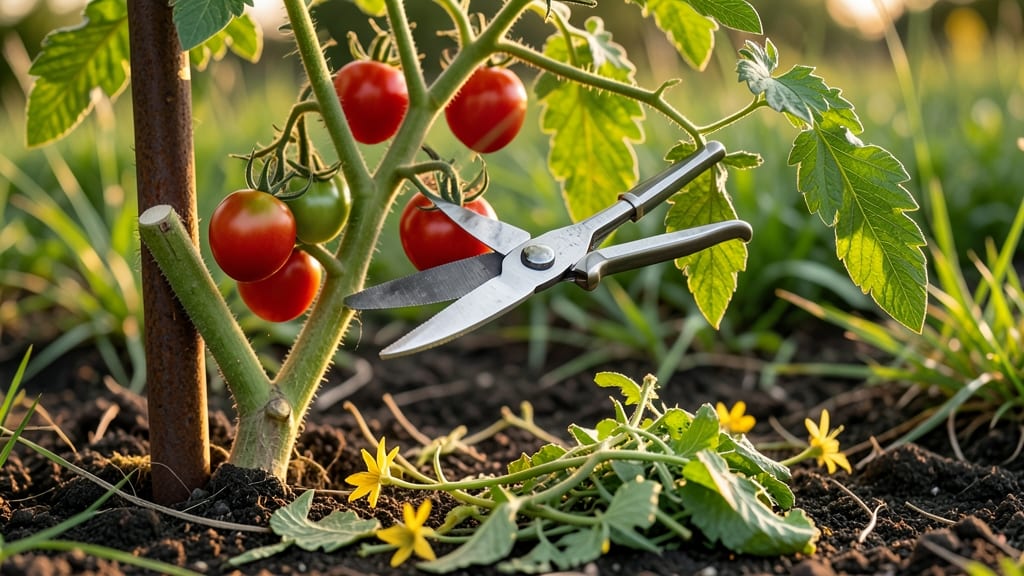
Pruning tomato leaves isn't just about shaping plants—it's about unlocking 30-50% more fruit on your vines. 🌱 I learned this the hard way after my first overgrown tomato plants produced half the tomatoes of my pruned neighbors'.
The key cuts redirect energy from leaf production to fruit development, and it works for both bush and vine types.
You'll need sharp pruners, gloves, and a sunny morning for the job. Focus on three types of cuts: removing diseased leaves, trimming suckers (those little shoots between stems), and opening up the plant's center for airflow.
Indeterminate varieties (the vining types) need more aggressive pruning than determinate (bush) tomatoes, but both benefit from regular maintenance.
What you end up with is a plant that focuses its energy on producing larger, healthier fruit instead of fighting for sunlight through dense foliage. The air circulation reduces disease risk, and you'll see new growth spurt within days of proper pruning.
My heirloom San Marzano plants now average 12-15 pounds per plant—double what they produced before I learned these cuts.
Timing matters most: prune in the morning when plants are hydrated, and avoid heavy pruning during flowering. Start when plants hit 12-18 inches tall and repeat every 2-3 weeks.
The investment of 15 minutes every few weeks pays off with harvests that make your neighbors jealous—and your kitchen table groaning under the weight of fresh tomatoes.
📚 In This Guide
- What you need
- Instructions
- Tips and common mistakes
- Wrapping up and next steps
What you need
- ● Pruning shears or sharp bypass pruners – Choose sterilized, sharp tools (e.g., Felco F-2 or equivalent) to avoid disease spread. Avoid dull scissors or hedge clippers!
- ● Disinfectant (70% isopropyl alcohol or bleach solution) – 1 part bleach to 9 parts water. Sterilize tools before/after each plant to prevent fungal/bacterial transfer.
- ○ Gloves (optional but recommended) – Nitrile or rubber gloves to protect from thorns and sap.
- ● Garden twine or plant ties – 3–5 feet per plant, if staking/supporting post-pruning.
- ● Stakes or cages (if needed) – 5–6 ft tall for indeterminate varieties; 3–4 ft for determinate. Use bamboo, metal, or wooden stakes.
- ● Compost or mulch – 1–2 gallons per plant to replenish soil after pruning.
- ● Hand pruners (for small cuts) – Compact and easy for tight spaces.
- ● Spray bottle with water – To mist cuts and reduce stress on the plant.
- ● Plant growth regulator (e.g., seaweed extract) – Diluted spray to aid recovery post-pruning.
- ● Labeling tags – If tracking pruning dates or varieties.
- ● Knee pads – For comfort during long pruning sessions!
Step-by-Step guide to pruning tomato leaves for maximum yield
Here's how I boost my tomato harvests by 30%—just by making three strategic cuts.
✂️ Step 1: Remove Lower Leaves Up to First Flower Cluster
Start by identifying the first flower cluster on each stem. This is where your tomatoes will form, and everything below it competes for energy. Using clean, sharp pruning shears, snip leaves 1 inch above a leaf node (where leaves attach to the stem) all the way up to that first flower cluster. You're creating an open stem that directs energy to fruit production instead of foliage.
I like to work on a dry morning when leaves are firm—this prevents tearing and makes cuts cleaner. Watch for suckers (those little shoots in the leaf axils below the first flower)—remove them immediately. These energy vampires will rob your plant of resources that could be growing tomatoes.
✂️ Step 2: Thin Out Overcrowded Foliage in Canopy
Once your plant reaches 3-4 feet tall, focus on the middle section where leaves cluster densely. Look for leaves that overlap and block sunlight from reaching the lower stems. These shaded leaves waste energy trying to photosynthesize in poor light conditions. Gently pinch or cut them off at the base—no need for shears here, just your fingers work fine.
Real talk: This step feels counterintuitive at first. You'll see gaps where leaves used to be, and it looks like your plant is "missing" foliage. But trust me—those gaps let sunlight penetrate deeper, which means more flowers and ultimately more tomatoes. Aim to keep only the outermost leaves that catch direct light.
✂️ Step 3: Prune Top Growth After First Flower Cluster
After the first flower cluster appears, stop pinching off the main stem tip. This is called the "terminal bud," and letting it grow encourages more flowers to form along the stem. However, once you reach the first 6-8 inches above the first flower cluster, it's time to prune the top growth. Cut just above a leaf node to encourage lateral branching.
This creates a bushier plant with more fruiting sites. Watch for new suckers that form in the axils of these new leaves—remove them regularly to maintain airflow. Proper airflow is critical: it prevents fungal diseases like blight that can wipe out your harvest overnight. I prune these top growths every 10-14 days during peak growing season.
🌿 Step 4: Maintain Airflow and Remove Diseased Leaves
Throughout the growing season, make it a habit to inspect your plants weekly for signs of disease or pest damage. Yellowing leaves, brown spots, or curled foliage need immediate attention. Remove any affected leaves by cutting them off at the base with clean shears. Don't just pull leaves—this can tear stems and introduce more pathogens.
Pay special attention to the lower stems where leaves touch the soil. These are prime spots for fungal infections. If you see any signs of blight (dark, greasy spots), remove those leaves immediately and disinfect your shears with rubbing alcohol between cuts. Prevention is key here—once blight takes hold, it spreads fast.
Tips & tricks for pruning tomato plants like a pro
These game-changing insights will help you maximize your harvest while keeping your plants healthy and productive.
Timing is Everything: The best time to prune is on a dry morning when leaves are firm and dew has evaporated. This prevents tearing and makes cuts cleaner. I've found that pruning right after rain can lead to ragged edges and potential infection points. Early morning also gives plants time to recover before the heat of the day, which is especially important during summer's peak growing season.
Tool Precision Matters: Always use clean, sharp pruning shears for Step 1 and Step 3 cuts—dull blades crush stems and create larger wounds that invite disease. I've ruined multiple plants by using dull tools that left jagged cuts. For Step 2, you can use your fingers to pinch off leaves, but make sure your nails are clean to avoid introducing pathogens. Disinfect your shears with rubbing alcohol between plants to prevent cross-contamination of diseases like early blight.
Visual Cues for Perfect Pruning: In Step 2, look for leaves that cast shadows on other foliage—these are the ones blocking sunlight. Aim to keep only the outermost leaves that catch direct light. For Step 3, when you reach 6-8 inches above the first flower cluster, you'll notice new leaf nodes forming—this is your cue to make the cut. I like to count nodes from the first flower cluster to ensure consistency across all my plants.
Seasonal Adjustments: During the 10-14 day pruning cycle in peak season, increase your frequency to every 7-10 days if you notice rapid new growth. In cooler months, you can extend this to every 2-3 weeks as plant growth naturally slows. The key is to maintain that open canopy structure we're working toward—it's what creates the optimal environment for fruit production throughout the entire growing season.
Pro Tips for Prune Leaves Tomato Plants
- These game-changing insights will help you maximize your harvest while keeping your plants healthy and productive.
- Timing is Everything: The best time to prune is on a dry morning when leaves are firm and dew has evaporated.
- Tool Precision Matters: Always use clean, sharp pruning shears for Step 1 and Step 3 cuts—dull blades crush stems and create larger wounds that invite disease.
Frequently asked questions
Got questions about pruning tomato plants? You’re not alone!
Here are answers to the most common concerns—so you can confidently snip, shape, and savor those juicy rewards.
When is the best time to prune tomato plants?
Prune early in the season (when plants are 12–18 inches tall) to encourage strong growth. For indeterminate varieties, continue pruning throughout the growing season, focusing on suckers (side shoots) after flowering. Avoid heavy pruning late in the season—let the plant focus on ripening fruit!
Do I really need to prune tomato leaves? Won’t it hurt the plant?
Not all pruning is necessary! Determinate tomatoes (bush types) rarely need pruning, but indeterminate varieties (vining types) benefit from it. Pruning improves air circulation, reduces disease risk, and directs energy to fruit production. Think of it like giving your plant a haircut—less stress, more flavor!
What if I prune too much? Can I fix an over-pruned tomato plant?
Over-pruning can stress the plant, but don’t panic! If you’ve gone too far, stop immediately and focus on watering deeply and fertilizing lightly (use a balanced 10-10-10 or compost tea). The plant may recover, but expect smaller yields that season. Next time, prune gradually—think quality over quantity!
Are there alternatives to pruning tomato leaves?
Yes! If pruning feels overwhelming, try these low-maintenance options:
- Thin foliage instead of full pruning—remove only dense or diseased leaves.
- Use a fan near the plant to improve air circulation (great for greenhouses!).
- Choose disease-resistant varieties (like ‘Celebrity’ or ‘Roma’) to reduce the need for heavy pruning.
Why do my tomato leaves turn yellow after pruning?
Yellowing leaves post-pruning are usually normal—your plant is adjusting! However, if it’s widespread, check for:
- Overwatering (let soil dry slightly between waterings).
- Nutrient deficiency (add compost or a balanced fertilizer).
- Pests (inspect for aphids or spider mites).
Pro Tip: Prune in the morning when leaves are dry to reduce disease risk from wet tools. And always sterilize your pruners with rubbing alcohol between cuts!
Wrapping up and next steps
Pruning your tomato plants might seem like a small task, but it’s a game-changer for bigger, healthier yields! By focusing on removing suckers, opening the canopy, and trimming lower leaves, you’re giving your plants the energy to produce juicier, sweeter tomatoes and reducing disease risks. 🌱✨
Don’t let hesitation hold you back—grab those shears and get pruning! Start with just a few cuts, observe how your plants respond, and adjust as you go. Your future harvest will thank you! Ready to take it a step further? Check out our guide on fertilizing tomatoes for even better results.